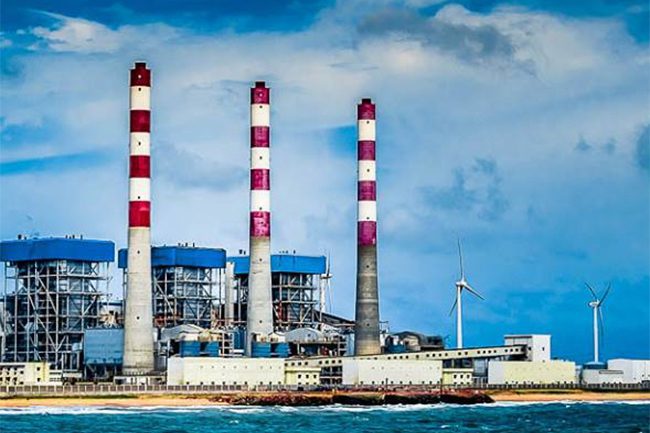

A report by the Public Utilities Commission of Sri Lanka (PUCSL) has ignited intense political debate across the country, revealing multiple concerns regarding the supply of inferior coal to the Norochcholai Lakvijaya Thermal Power Plant.
Key Findings from the Report
* None of the generators were able to reach maximum capacity
* Higher coal consumption required to generate electricity
* Risk of an electricity crisis due to shipment delays
* Estimated loss of nearly Rs. 8.5 billion
The controversy stems from the import of coal that appears to be of lower quality than previously supplied stocks. While earlier coal purchases, reportedly made without proper tender procedures performed efficiently, coal obtained through the latest formal tender process has raised serious concerns.
Electricity has once again become a central issue in public discussion. Efforts to restructure the Ceylon Electricity Board (CEB), which began over two decades ago, have now significantly altered its structure. At present, multiple operational and employee-related challenges persist, and there appears to be no clear long-term policy direction for the country’s energy sector. As the world increasingly shifts toward renewable energy such as solar power, questions are being raised as to whether local policymakers are hindering progress.
Initially, the government provided various explanations in response to allegations about inferior coal. However, recent findings by a committee of university experts and the PUCSL have confirmed through documented evidence that the coal supplied by the new tender-winning company is indeed of lower quality.
At a recent seminar held at the Colombo Foundation Institute, energy experts presented further evidence. Solar energy specialist Dr. Shyam Pathiraja highlighted that both laboratory reports and the PUCSL findings clearly indicate a decline in coal quality compared to previous suppliers.
According to the PUCSL report, nine out of thirteen coal shipments received so far from the selected supplier, Trident Chemphar, have been analyzed. All nine shipments were found to be substandard. The coal is used at the Norochcholai power plant, which has a total capacity of 900 MW, with three units of 300 MW each.
Reduced Power Generation Capacity
Previous coal supplies enabled all three units to operate at full capacity (300 MW each). However, the new coal has failed to achieve this level.
* One unit generated only 287 MW using coal from the first shipment
* Another recorded 292 MW from the second shipment
* Coal from the third shipment resulted in outputs of 254 MW, 265 MW, and 264 MW across the three units
The report confirms that none of the tested shipments allowed the plant to operate at full capacity.
Higher Coal Consumption
Another major concern is the increased coal consumption rate. Previously:
* Unit 1 consumed 113 metric tons per hour
* Units 2 and 3 consumed 107 metric tons per hour
With the new coal supply:
* Consumption increased to 114–117 metric tons per hour
This indicates that more coal is required to generate the same amount of electricity.
Efficiency and Calorific Value Issues
The PUCSL also found that:
*Earlier coal required about 364 grams to generate one kilowatt-hour
* New coal requires between 391 and 444 grams per kilowatt-hour
Additionally, inconsistencies were observed in the calorific value of coal between loading, unloading, and plant measurements—raising suspicions of data manipulation.
Operational Risks
The report also highlights technical risks. Due to poor coal quality, the plant has experienced higher-than-permitted temperature levels, potentially damaging equipment and reducing operational safety.
Environmental Concerns
The emission of fly ash has nearly doubled:
* From 0.046 kg/kWh to 0.093 kg/kWh
This indicates a significant increase in pollution levels.
Risk of Electricity Shortage
Delays in coal shipments pose a serious threat:
* A shortfall of 2–3 shipments could create a deficit of 180,000 metric tons
* If delays continue, coal stocks may only last until September 2026
* In a worst-case scenario, supplies could run out by late August
Given the expected electricity demand of over 3,000 MW in the coming months, any disruption in coal supply could lead to a major power crisis.
Financial Impact
The total value of this coal deal is estimated at around USD 150 million. Experts claim the supplier may be making an excessive profit of about USD 27 million.
Meanwhile, the PUCSL estimates that the government could incur losses amounting to approximately Rs. 8.5 billion due to the use of this inferior coal.
Despite these findings, no clear action has yet been taken to recover the losses or penalize the supplier for failing to meet tender specifications.