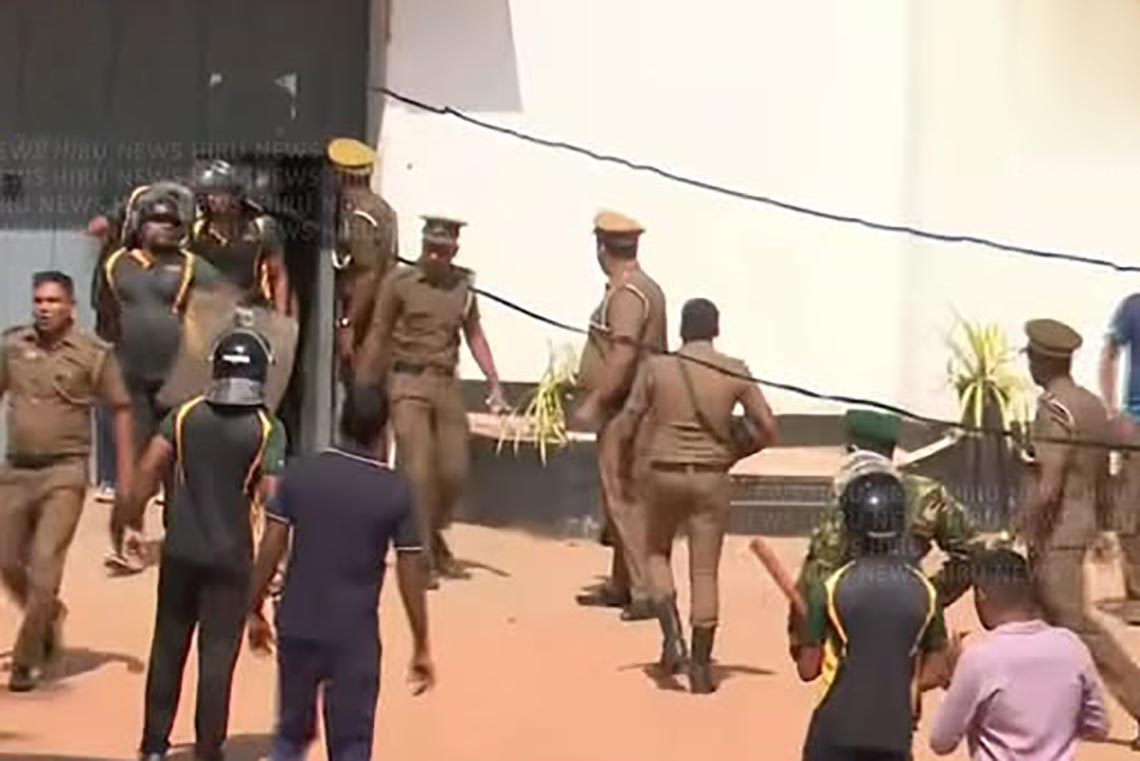

The Criminal Investigation Department (CID) and the Colombo Crime Division (CCD) have launched comprehensive investigations into the deadly violence at the Negombo Prison, where 26 people, including seven prison officers, have been killed in one of the worst prison riots in Sri Lanka’s recent history.
Investigations have commenced following a court order, as authorities seek to establish the circumstances that led to the unprecedented outbreak of violence and identify those responsible.

Justice Minister Attorney-at-Law Harshana Nanayakkara, who visited the prison on Sunday, said the death toll from the violence that unfolded over the past two days had risen to 26. Of the deceased, 19 were inmates while seven were prison officers.
The Minister said 23 prison officers and 54 inmates remain hospitalized with injuries, while 18 critically injured prisoners have been transferred to the Colombo National Hospital for specialized treatment.
T-56 Rifle Still Missing After Deadly Violence
Authorities have also confirmed that one T-56 assault rifle issued to the Negombo Prison are still missing. Investigators suspect the weapons were seized by inmates during the clashes, prompting an intensive search amid fears that the firearms may still be in the possession of prisoners.
During his inspection, Minister Nanayakkara said the rioting inmates had completely destroyed the prison’s CCTV surveillance network and body scanners, indicating what he described as a deliberate attempt to cripple the institution’s security and operational capacity.
In response to the violence, prison authorities have transferred nearly 700 inmates from the Negombo Prison to the Angunakolapelessa, Bogambara, Anuradhapura, Polonnaruwa and Kuruwita prisons. A number of inmates identified as key instigators of the unrest have also been moved to the Angunakolapelessa and Welikada prisons under heightened security.
Rioting Inmates Destroy CCTV Network and Body Scanners
According to prison sources, the latest violence was preceded by a confrontation on Saturday that left two inmates dead and several others injured. Preliminary investigations suggest the dispute stemmed from information allegedly provided to prison authorities regarding a drug smuggling operation run by notorious inmate Katuwellegama Suresh, triggering hostilities between rival inmate factions.
Following the initial incident, inmates including female prisoners—launched a large-scale protest within the prison. During the unrest, prisoners reportedly forced open the locks of several cell blocks. Sources said the damaged locks were not immediately repaired, allowing inmates to move freely throughout sections of the prison overnight.
Prison sources further alleged that inmates looted the prison medical centre, taking large quantities of medicines, including painkillers and medication prescribed for inmates undergoing treatment for drug addiction.
Drug Smuggling Allegations Linked to Katuwellegama Suresh Believed to Have Triggered Clash
The situation deteriorated dramatically at daybreak on Sunday, when rival inmate groups reportedly resumed fighting shortly after breakfast while prison officials were preparing for the day’s routine activities.
Prison officers who attempted to restore order came under sustained attack, with several suffering serious injuries. One officer was allegedly assaulted in a prison toilet in what sources described as an exceptionally brutal attack.
Although authorities have since regained control of the prison, security sources said several high-risk inmates remain at the facility under tight security while investigations continue.
The CID and the CCD are now conducting parallel investigations to determine how the violence escalated into a deadly riot, how prison security was breached, the circumstances surrounding the disappearance of the two T-56 rifles, and whether organized criminal elements within the prison orchestrated the attacks.
The incident has raised serious concerns over prison security, the influence of organized criminal networks operating behind bars, and the urgent need for reforms within Sri Lanka’s prison system.
Join our WhatsApp / Telegram groups below.