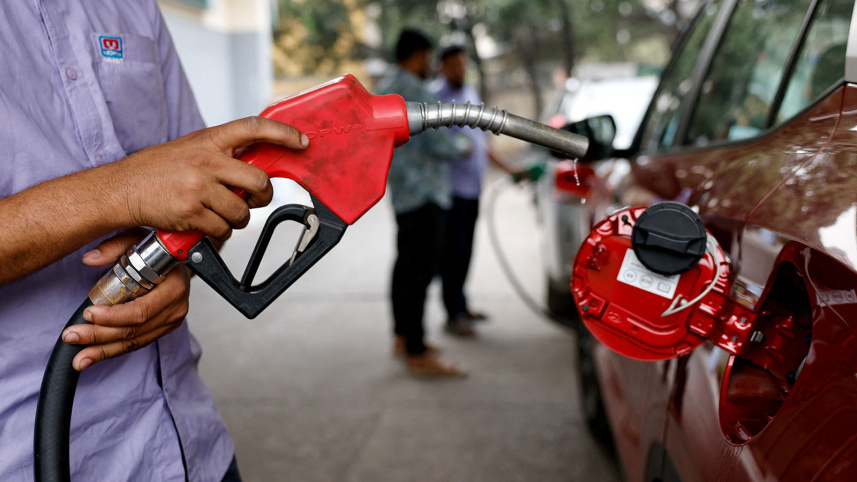

The excitement and enthusiasm surrounding Vesak this year were evident everywhere. Many people flocked to the streets to witness the colorful Vesak displays and celebrations. Yet, amid the festive atmosphere, another reality became impossible to ignore, the long queues of vehicles and the growing burden of fuel costs.
Had we left home for Vesak celebrations when petrol was priced at Rs. 410 per litre, we may well have returned to find it selling at Rs. 434. Diesel prices have followed a similar upward trend.
However, the issue extends far beyond the price of a litre of petrol or diesel. The growing concern is the country’s overall fuel consumption and its impact on Sri Lanka’s fragile economy.
Fuel Consumption Remains Unchecked
Recently, Central Bank Governor Dr. Nandalal Weerasinghe stated during a television interview that measures introduced to reduce fuel consumption have not produced the expected results. He revealed that Sri Lanka’s fuel import bill exceeded US$ 880 million in April alone.
According to the Governor, despite the introduction of the QR code system, fuel quotas, odd-even fuel distribution based on vehicle registration numbers, and substantial fuel price increases this year, consumption levels have remained largely unchanged.
He also pointed out shortcomings in the implementation of the QR code system.
There is some truth to this observation. Many fuel stations do not strictly verify whether vehicle numbers correspond to the QR codes being presented. In some cases, fuel can still be obtained through informal arrangements with station operators. Three-wheeler drivers, meanwhile, complain that their allocated quotas are insufficient, forcing them to seek additional fuel through other means.
Subsidies Continue to Drain State Finances
The Central Bank Governor also highlighted another concern: the fuel subsidy remains a heavy burden on public finances.
According to officials, the government continues to subsidize diesel by approximately Rs. 100 per litre. The Chairman of the Ceylon Petroleum Corporation has repeatedly stated that losses continue to be incurred on both petrol and diesel sales.
Meanwhile, hopes that foreign reserves would receive a boost from the US$ 695 million expected from the International Monetary Fund, together with funding from the Asian Development Bank and the World Bank, may prove short-lived if fuel imports continue at current levels.
With monthly fuel import costs exceeding US$ 800 million, even substantial inflows of foreign exchange can be rapidly depleted.
The Strait of Hormuz: The World’s Most Critical Oil Chokepoint
Sri Lanka’s challenges are closely linked to developments in the Middle East, particularly the situation surrounding the Strait of Hormuz.
The Strait handles nearly 20 percent of global oil supplies, making it one of the most strategically important waterways in the world.
In its latest Energy Intelligence Report, Wood Mackenzie warns that a prolonged disruption in the Strait of Hormuz could trigger the most severe global energy crisis in decades.
The report assesses three possible scenarios:
1. Quick Peace
Under this optimistic scenario, a peace agreement would be reached quickly and the Strait would reopen by June.
Wood Mackenzie predicts that the global economy could return to its pre-war growth trajectory by the fourth quarter of 2026. Brent crude prices could gradually decline to around US$ 80 per barrel by the end of 2026 and potentially fall further to approximately US$ 65 per barrel in 2027.
Although global growth would slow from around 3 percent in 2025 to 2.3 percent in 2026, recovery would remain achievable.
2. Summer Settlement
The second scenario assumes that negotiations continue throughout the summer, delaying the reopening of the Strait until around September.
This would prolong shortages of oil and liquefied natural gas (LNG) supplies during the third quarter of the year.
Under this scenario, the world economy could experience a mild recession in 2026. Global growth could fall below 2 percent, leaving a lasting economic impact even after the crisis ends.
3. Extended Disruption
The most severe scenario envisages the Strait remaining largely closed until the end of 2026.
Wood Mackenzie warns that Brent crude prices could reach US$ 200 per barrel under such circumstances.
Global oil demand could decline by as much as six million barrels per day during the second half of 2026, while more than 11 million barrels per day of crude oil and condensate supplies would remain disrupted.
Diesel and jet fuel prices could climb to US$ 300 per barrel at major refineries, while the global economy could contract by 0.4 percent in 2026. Such a downturn would represent the third global recession of the 21st century.
Even Peace Will Not Bring Immediate Relief
Economic analysts point out that even if the Strait of Hormuz were reopened tomorrow, the effects of the crisis would continue for several months.
Global supply chains require time to stabilize, and fuel markets do not recover overnight. Experts estimate that the consequences of the current disruption could continue to affect economies for at least three to four months after a resolution is reached.
How Other Countries Are Responding
Governments around the world are attempting to cushion the impact on consumers.
Countries such as Vietnam, Bangladesh, Nepal, the Maldives and several Southeast Asian nations have reduced fuel prices where possible. India has reportedly reduced fuel costs for international aviation by approximately 27 percent, improving the competitiveness of its airlines.
By comparison, fuel prices in Sri Lanka remain among the highest in the region, exceeded only by a few countries such as Pakistan.
Public Transport Remains the Missing Solution
One of the major obstacles to reducing fuel consumption in Sri Lanka is the poor state of public transport.
Although bus fares remain relatively affordable, the reliability and quality of services continue to be major concerns. Many suburban and rural areas lack adequate bus services, particularly during peak commuting hours.
Passengers travelling by train often find that connecting bus services are unavailable or unreliable, forcing them to rely on motorcycles, three-wheelers and private vehicles.
As a result, many families find it more convenient—and in some cases cheaper—to use private transport despite high fuel costs.
The Railway Crisis Adds to the Burden
The prolonged disruption of the upcountry railway line following recent disaster-related damage has further complicated matters.
Residents of Kandy, Matale and surrounding areas have lost access to one of the country’s most affordable transportation options. Even if the Strait of Hormuz reopens, there is no guarantee that these domestic transport issues will be resolved quickly.
The Challenge of Cutting Diesel Consumption
Power and Energy Minister Aruna Karunathilake recently stated that daily diesel consumption should be reduced by approximately 500 metric tonnes.
Current daily diesel usage stands at around 4,200 metric tonnes.
However, diesel remains the primary fuel supporting Sri Lanka’s industrial, commercial and transportation sectors. Any attempt to reduce consumption must therefore be carefully balanced against economic activity.
Compounding the problem is the reported reduction in generation capacity at the Norochcholai Coal Power Plant due to concerns over coal quality. As a result, additional diesel is being used for electricity generation, creating further pressure on fuel imports.
Tough Days Ahead
Chairman of the Parliamentary Committee on Public Finance, Dr. Harsha de Silva, has warned that the burden on the public is likely to increase further.
He argues that the eventual removal of fuel subsidies, combined with pressures on foreign reserves, could worsen the situation significantly.
Even if peace returns to the Middle East tomorrow, Sri Lanka’s fuel crisis is unlikely to disappear overnight.
The country must either adapt by embracing alternative work arrangements, reducing unnecessary travel and using technology more effectively, or find ways to provide relief before public frustration reaches a breaking point.
Yet Deputy Minister of Social Services Wasantha Piyatissa has acknowledged that providing substantial relief may be difficult due to commitments made under Sri Lanka’s programme with the International Monetary Fund.
For now, one reality is becoming increasingly clear: even if the war ends tomorrow, the oil crisis may remain with us for many months to come.