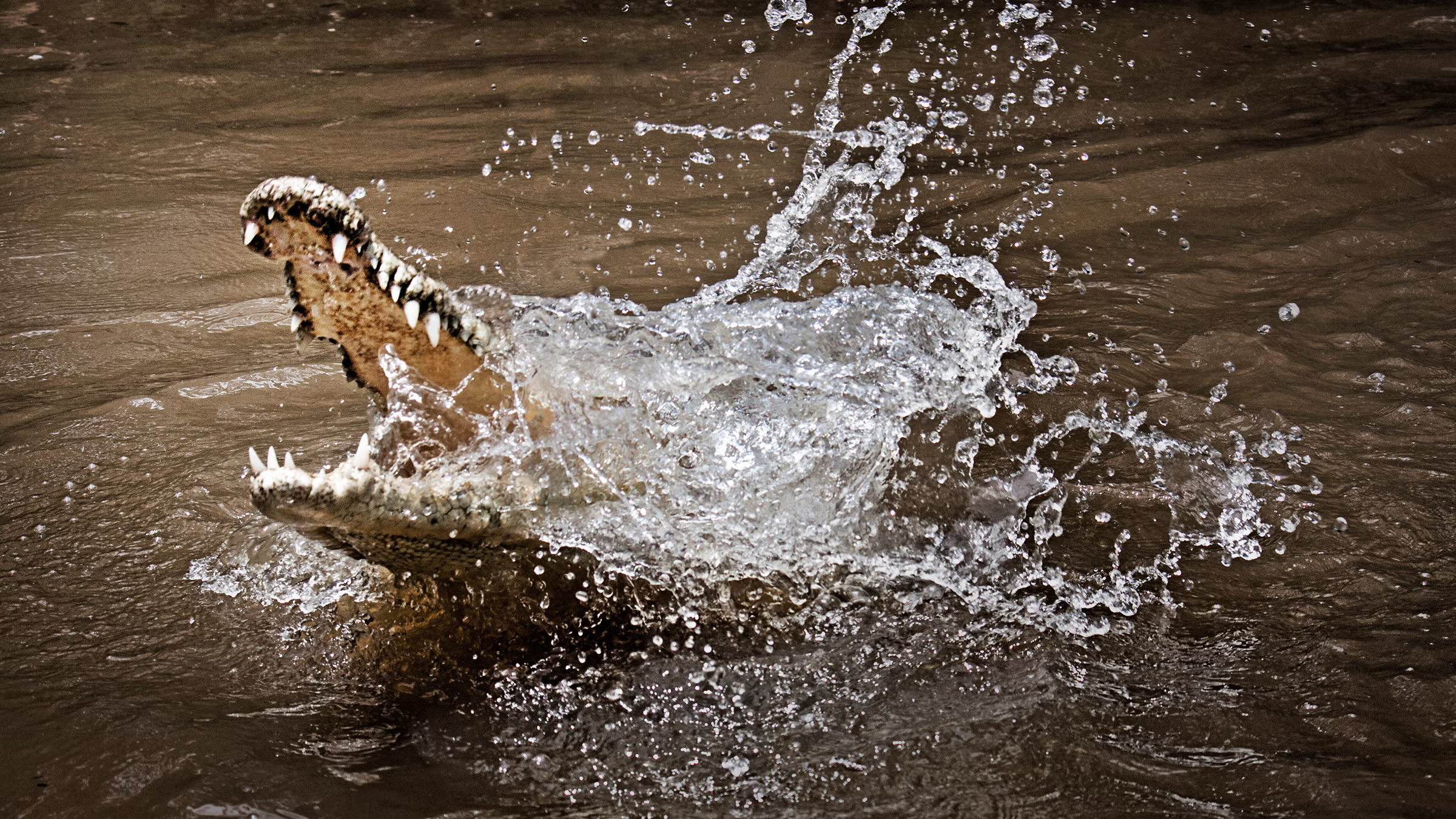

A 32-year-old fisherman drowned in Ambalangoda yesterday (25) after a crocodile struck a small fishing boat, capsizing it and throwing two local residents into the water.
The incident occurred in the early hours of yesterday (25) along the Madu Ganga (Madu River) in the Wathugedara area of Ambalangoda, a coastal region known for its rich mangrove ecosystem.
According to the Ambalangoda Police, the two men had gone fishing in a small boat when a crocodile suddenly hit the vessel, causing it to overturn. One man managed to reach safety, while the 32-year-old victim drowned. Police have launched an investigation into the incident.
The Madu Ganga wetland’s dense mangrove forests are celebrated as a Ramsar Wetland of International Importance and a popular eco-tourism destination that attracts thousands of visitors annually for boat safaris. However, the area also highlights the ongoing challenges of human-crocodile coexistence in Sri Lanka’s coastal and riverine regions.
The estuary and surrounding mangrove systems provide suitable habitat for the saltwater crocodile(Crocodylus porosus), Earth’s largest living reptile. Known for its size and territorial behavior, this species frequents coastal rivers, lagoons, estuaries, and mangroves—habitats that frequently overlap with human activities. In contrast, the smaller mugger crocodile (Crocodylus palustris) is primarily found inland in freshwater bodies such as ancient reservoirs and irrigation tanks.
Across rural and semi-urban Sri Lanka, communities rely heavily on local waterways for fishing, agriculture, bathing, and washing. Experts note that encounters are often linked to these routine daily activities where human and crocodile territories intersect, rather than purely random events.
Wildlife officials and conservationists have observed that intense monsoonal rains and subsequent flooding—exacerbated by climate variability—can temporarily disrupt river boundaries and push crocodiles closer to human settlements and fishing areas.
Both crocodile species are strictly protected under Sri Lankan law, which prohibits culling. Regional authorities and the Department of Wildlife Conservation therefore rely on non-lethal mitigation measures, including the installation of Crocodile Exclusion Enclosures (protective barriers) at high-risk bathing and washing spots, public awareness campaigns, and the selective translocation of problem animals.
While human-crocodile conflict is historically most pronounced in specific hotspots, particularly the Nilwala River in southern Sri Lanka, where multiple fatalities have been recorded over the years, challenges of safely sharing water resources continue to affect various coastal and riverine “fringe” areas across the island.