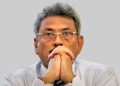
President Anura Kumara Disanayake reaffirmed his unwavering commitment to protecting public funds, declaring that not a single rupee of taxpayers’ money will be misused or lost to corruption. He emphasized that any politician or public official involved in misconduct will face the full force of the law, regardless of rank or influence.
Addressing the nation at the launch of the “Tax Power” national programme held this morning (June 2) at the Presidential Secretariat, President Disanayake outlined a bold vision to rebuild Sri Lanka’s economy through transparency, accountability, and an efficient tax system. The event also marked the beginning of “Badu Shakthi – National Tax Week” under the theme “Your Tax – Your Future.”
The President noted that the current administration inherited a country in a state of economic collapse. He stressed that rebuilding the nation requires a structured and fair tax system, and called on all citizens to support efforts toward a self-reliant economy. He also emphasized that Sri Lanka must make its current extended credit agreement with the IMF its final such programme.
A New Tax Culture
The “Tax Shakthi” National Tax Week, which runs from June 2–7, aims to reshape public perceptions of taxation. The campaign focuses on educating citizens about the importance of tax contributions, how tax revenues support national development, and the tangible benefits they bring to society.
As part of the initiative, the Inland Revenue Department launched a new online platform for filing individual income tax returns. Demonstrating leadership by example, President Disanayake became the first person to file his 2024/25 return using the system.
In parallel, the Sri Lanka Customs Department introduced the ASYHUB system, a modernization effort supported by the German government and UNCTAD. This digital platform enables importers to complete customs procedures before goods arrive in the country, enhancing efficiency and reducing risk. A new mobile app was also launched by the Excise Department to verify legally produced alcoholic beverages through secure labeling.
Restoring Public Trust in the Tax System
In his keynote speech, President Disanayake acknowledged the deeply rooted public mistrust in the tax system, driven by decades of corruption and inefficiency. Citing concerning statistics, he revealed that:
- Only 43% of registered companies submitted tax returns.
- Only 23% of individuals liable for income tax complied.
- PAYE compliance stands at just 18%.
These figures reflect a widespread culture of evasion and non-compliance, fueled by public resentment over how taxes have been historically misused.
The President pledged to reverse this trend through a disciplined, accountable leadership model. He stated that he had already curtailed many of the privileges associated with his office and reduced presidential expenses to safeguard public funds.
Cracking Down on Corruption
President Disanayake condemned the existence of a deeply entrenched “shadow system” within public institutions — a network of corruption involving officials, political actors, smugglers, and even members of the media. He referenced incidents of passport fraud, illicit cash stockpiles, and customs irregularities as examples of how state institutions have failed.
He vowed to dismantle this underground system and promised equal justice for all, without regard to status or background. “If even one rupee is misused, I will ensure the strongest legal action is taken,” he said.
Support for Honest Business, Infrastructure for Growth
Addressing concerns from entrepreneurs about the tax burden, President Disanayake offered a firm but fair approach: “We will provide you with electricity, land, water, and roads — but you must pay your taxes. No more concessions in the name of development.”
He called on industrialists and taxpayers to view tax not as a burden but as a shared responsibility toward building a fair and functioning society.
Reviving a Stalled Nation
President Disanayake described the Sri Lankan economy as having reached a complete standstill at the time of his administration’s inception, with halted investments, projects, and foreign loans. He stated that his government is now actively working to restart these projects, particularly those backed by foreign investments, within the next few months.
He also reflected on the broader reasons for the nation’s collapse — most notably, the failure to maintain a healthy tax revenue stream. He revealed that Sri Lanka’s tax revenue has dropped from 23% of national income in 1996 to just 7.3% in recent years, contributing heavily to the economic crisis.
Toward Economic Sovereignty
Finally, President Disanayake addressed Sri Lanka’s current dependency on external oversight due to the IMF programme. He stressed that the country must break free from this guardianship by increasing revenue and managing its economy independently.
“Our goal is to turn this IMF programme into our last,” he said. “We must replace external control with internal discipline and transparency.”
The event was attended by key government officials including the Minister of Labour and Deputy Minister of Economic Development Anil Jayanta Fernando, Deputy Minister of Finance Harshana Suriyapperuma, Central Bank Governor Dr. Nandalal Weerasinghe, as well as provincial governors and private sector representatives.