Following the unfolding saga of the seized drug known as “ice” (crystal methamphetamine), it feels as though we are trapped in an endless maze. Either “Backhoe Saman” is deliberately leading us astray, or unseen forces are drawing us into an unpredictable game of chess. This piece is not intended to tell the authorities how to do their job, but rather to reflect on the many stories being told and to listen with an open mind.
The Two Containers
The trail began in October last year, when whispers from an American intelligence agency reached Sri Lanka. Their message carried weight: two containers were on their way, carrying not what the documents claimed, but something far more sinister. The details, precise and alarming, were passed on to the Police Narcotics Bureau and officials at the Colombo Port.
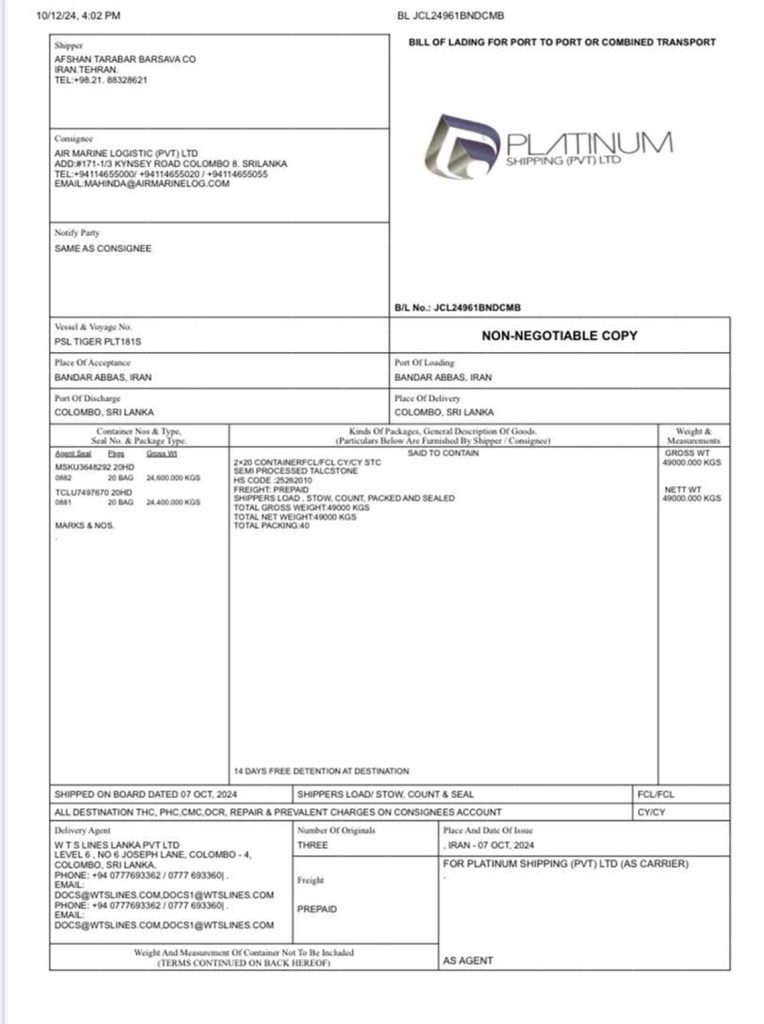
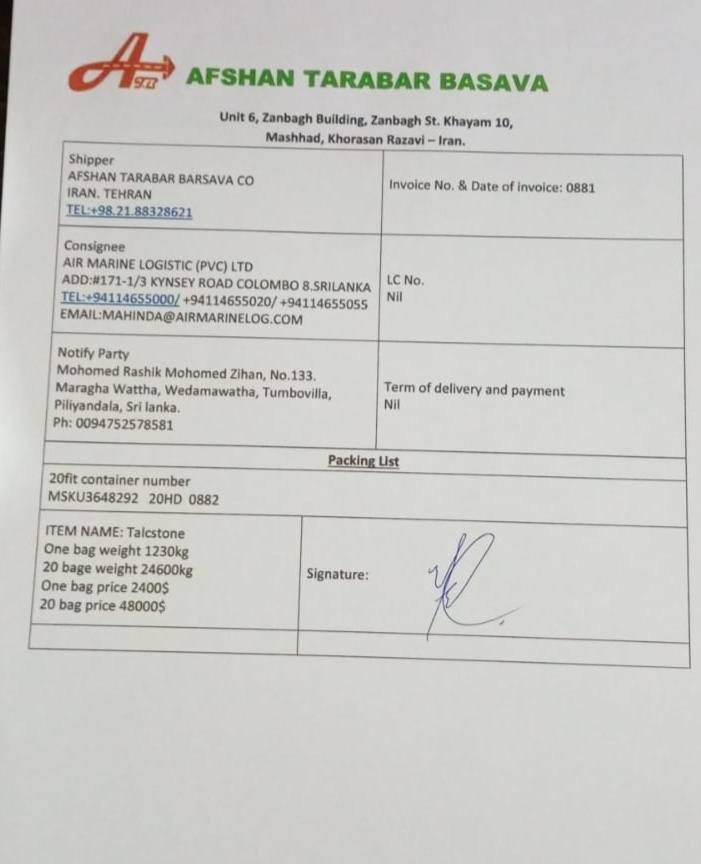
The shipment’s journey was traced back to Bandar Abbas Port in Iran. Behind it stood a Tehran-based supplier, AF Shan Tarabar Barsava Co. On the receiving end in Sri Lanka was Air Marine Logistic (Pvt) Ltd., a company tucked away on Kinsey Road. Curiously, it was acting on behalf of an individual with an address in Maragahawatta, Wedamawatha, Thumboville, and Piliyandala.
The paperwork painted an innocent picture
Two containers filled with semi-processed talc rocks. One 20-foot container listed 24,600 kilograms, the other 24,400 kilograms, together amounting to 49,000 kilograms of talc headed for Colombo. But the weight of suspicion hung heavier than the cargo itself.
Carrying this questionable consignment was the PSL TIGER, a vessel sailing under the obscure flag of Comoros, a little-known African state. From Bandar Abbas, it charted a course across the seas, its arrival in Colombo fixed for September 7, a date that would soon etch itself into the unfolding story.
What Are Semi-Processed Talc Rocks?
Talc, scientifically known as magnesium silicate, is a natural mineral with a deceptively simple appearance. Once ground into a fine, inert powder, it finds its way into everyday products: the softness of baby powder, the smoothness of cosmetics, the binding of pharmaceuticals, even the glaze of ceramics and the finish of paints. It is, in many respects, a harmless raw material.
What stands out, however, is that semi-processed talc rocks play no role in the chemical synthesis of methamphetamine, the substance we call “ice.” Their value to drug traffickers lies elsewhere: talc can be used as a filler, bulking up ice, cocaine, or heroin, stretching both the quantity and the profit.
This raises a troubling possibility. Could the containers declared as talc have also concealed the hidden chemicals needed to manufacture ice? Could those substances have slipped through, masked beneath the weight of an ordinary mineral? The suspicion lingers — that what was declared might only be part of the story.
Is There a Chance of That?
Yet, according to information that has since circulated on social media, such a possibility appears slim. Reports suggest that all forty packages across the two suspect containers were opened and inspected, despite the uneasy relationship between the Police Narcotics Bureau and Customs, who searched jointly. Photographs are said to exist of these very moments, and sources claim the containers were fully scanned before a single seal was broken.
After these inspections, both the Narcotics Bureau and the Colombo Port authorities are said to have informed the same American intelligence agency that had sounded the alarm in the first place: nothing suspicious had been found. In such an environment, the containers were eventually released. When contacted by Lankasara, Police Media Spokesperson Senior Superintendent of Police F. U. Wootler confirmed both the inspection process and the decision to release the cargo.