When disaster happens, every second is important. Whether it’s an earthquake, a wildfire, or a sudden flood, the difference between life and death often comes down to how quickly and effectively emergency teams can respond. Today, artificial intelligence (AI) is emerging as a powerful tool in disaster management, helping save lives and minimize damage in ways we could only dream of a decade ago.
Predictive Intelligence
AI’s predictive powers are helping us stay one step ahead of disasters. By analyzing vast amounts of historical data, weather patterns, and geographical information, AI systems can now forecast natural disasters with remarkable accuracy. For instance, flood prediction systems use AI to process data from river sensors and rainfall patterns and alert the communities before several days.
Machine learning models are now intelligent enough to identify minor patterns that might escape human notice. In coastal areas, AI systems analyze ocean temperatures, wind patterns, and atmospheric pressure to predict hurricanes with increasing precision, often providing accurate forecasts up to a week in advance.
Real-Time Analysis
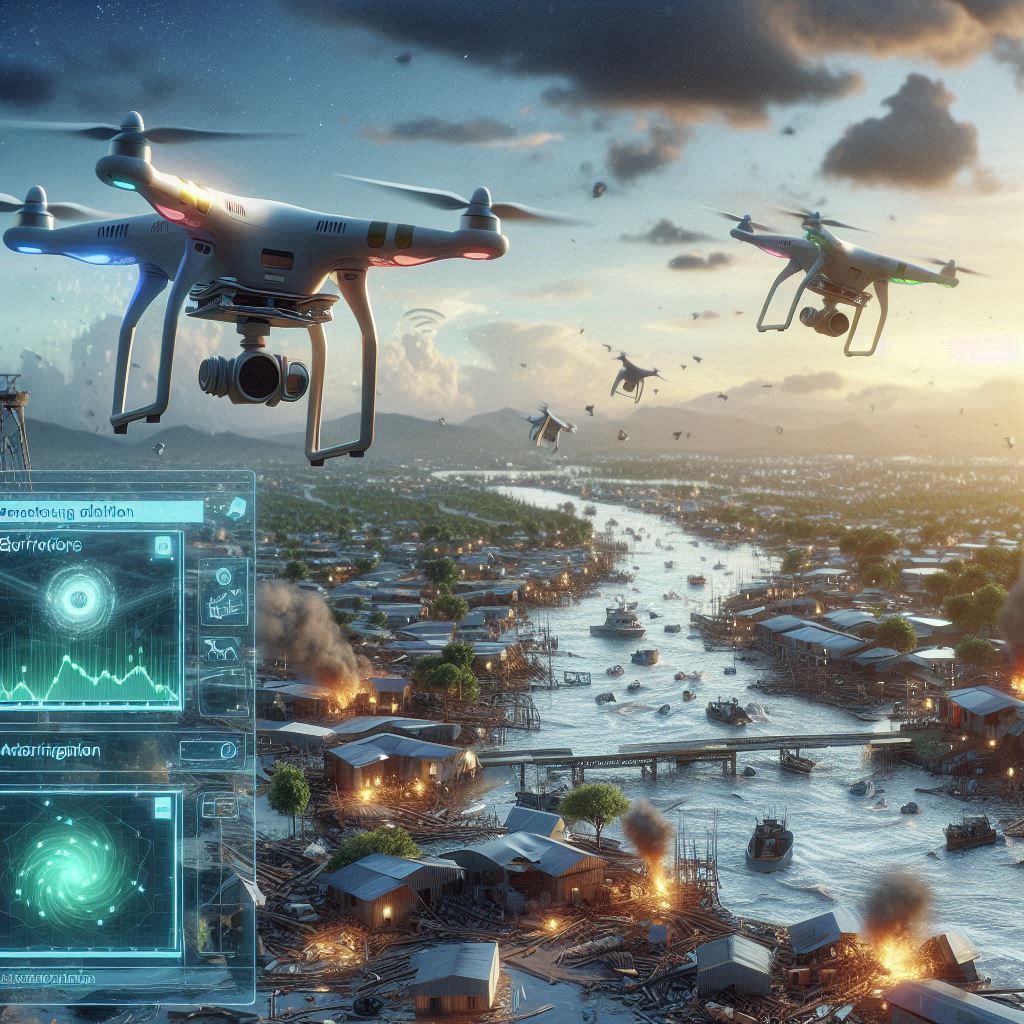
When disaster strikes, AI becomes an invaluable partner in real-time situation assessment. Drones equipped with AI-powered cameras can quickly look about damaged areas and can identify survivors and dangerous situations that humans might miss. These drones can cover large areas in minutes, creating detailed maps of destruction that would take teams of people days to complete.
During floods, AI algorithms process satellite images to identify safe evacuation routes. Advanced image recognition systems can assess structural damage to buildings and infrastructure, helping prioritize rescue efforts and resource allocation. Some cities are now deploying AI-enabled sensor networks that can detect everything from water levels to air quality, providing real-time environmental data during crises.
Coordination and Resource Management
AI is revolutionizing how emergency response teams coordinate their efforts. Smart systems now help emergency operations centers to manage the resources when a disaster occurs. Imagine a central system that can instantly process thousands of emergency calls, identify patterns, and direct responders to where they’re needed most. That’s exactly what cities like Los Angeles and Tokyo are implementing today.
These systems can also manage logistics chains supplies in a disaster time, ensuring that resources are distributed efficiently. AI algorithms can predict supply needs based on population density, damage assessments, and historical data from similar disasters.
Real-World Impact
During Hurricane Maria in Puerto Rico, AI-powered damage assessment tools helped relief organizations identify the most severely affected areas within hours, not days. This meant food, water, and medical supplies reached those who needed them most.
In Japan, AI systems help to analyze social media posts during earthquakes, creating real-time maps of damage to help the emergency services to use and prioritize their response.
Emergency workers in Nepal are now using AI-powered apps that can translate multiple languages in real-time, breaking down communication barriers between international rescue teams and local communities.
What’s Next in AI Disaster Management?
Researchers are developing AI systems that can predict the cascade effects of disasters, helping communities prepare more comprehensively. Advanced natural language processing is breaking down language barriers within world to enabling better coordination between teams from different countries.
Machine learning algorithms are getting better at predicting the long-term impacts of disasters, helping communities plan for recovery. Some scientists are even working on AI systems that can model complex climate interactions to predict and prepare for future natural disasters decades in advance.
Challenges and Considerations
But challenges remain. AI systems are only as good as the data they’re trained on, and many regions lack the historical data needed for accurate predictions. There’s also the critical need for infrastructure that can survive disasters long enough to keep these systems running when they’re needed most. And of course, there’s the ongoing challenge of ensuring these technologies are accessible to communities that need them most, not just wealthy nations and cities.
Privacy concerns must also be addressed, particularly when AI systems process personal data during emergencies. Finding the right balance between effective response and data protection remains an important consideration.

As we face an increasingly unpredictable climate and growing population density in some areas, AI-powered disaster management is becoming essential. The technology offers hope that we can not only respond better to disasters but perhaps prevent some of their worst effects.
Author: Riyaji Devindu
Reviewed by: Sammani Vishara, Kavithi Kulatunge, Dinuk Pathiraja, Mihara Inuri