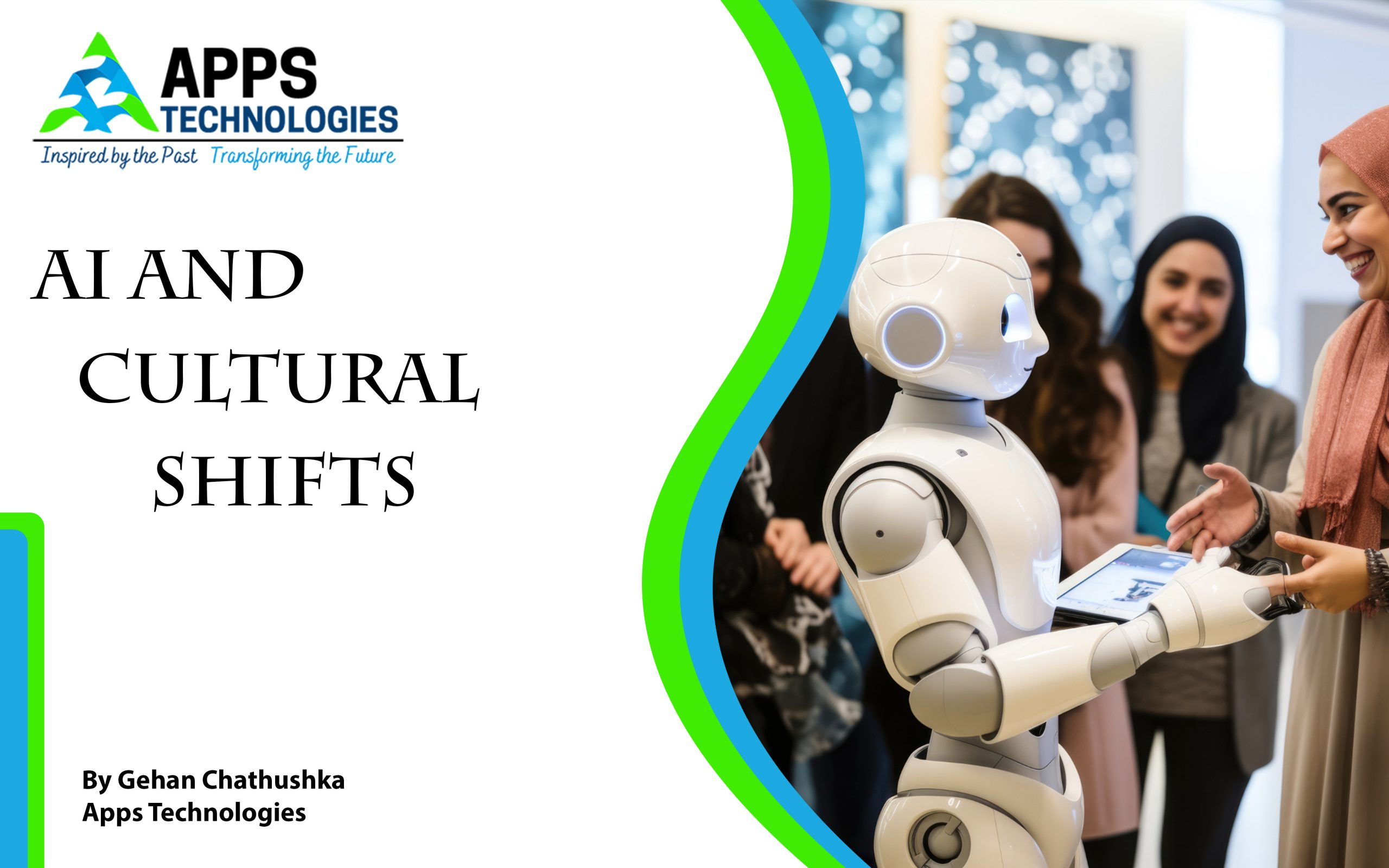

Artificial Intelligence (AI) has quickly become one of the most transformative technologies of our time. From chatbots that help with customer service to selfdriving cars that could change the way we travel; AI is revolutionizing industries worldwide. But the influence of AI goes beyond technology. It is also causing
significant cultural shifts, reshaping how we live, work, and interact with one another. In this article, we’ll explore how AI is influencing culture, making life easier, creating challenges, and changing the way we see the world.
AI in Daily Life

Just a decade ago, AI was something most people associated with science fiction. Today, it’s embedded in our everyday lives. Virtual assistants like Siri, Google Assistant, and Alexa have become common household names, helping us set reminders, play music, and control smart home devices with simple voice commands. AI-powered recommendation systems on platforms like Netflix and YouTube are constantly suggesting content based on our viewing habits.
This level of personalization is becoming the norm. AI is no longer just a tool for experts; it’s accessible to everyone. By learning from our preferences, AI algorithms make suggestions that fit our tastes and help us navigate the overwhelming amount of information online. As a result, people are getting used to this tailored experience, and the relationship between technology and daily life is evolving rapidly.
How is this changing culture?
This easy access to AI is changing our expectations. We now expect instant solutions and personalized recommendations. Our way of consuming media has shifted too, with more reliance on what AI suggests rather than traditional sources like television schedules or movie theaters. In a way, AI is shaping our culture by subtly
influencing our choices, tastes, and daily habits.

Work and the Rise of Automation
One of the biggest cultural shifts driven by AI is in the workplace. Automation has started to replace certain jobs, particularly in manufacturing and repetitive tasks. Robots and AI systems are now being used to perform tasks that once required human effort. While this brings efficiency and cost savings for companies, it raises concerns about job security and the future of work.
However, AI is not just taking jobs, it’s also creating new ones. The rise of AI has led to a growing demand for data scientists, AI developers, and professionals who can work alongside AI systems. Many jobs now require people to understand and interact with AI tools, even if they don’t have a technical background. In sectors like healthcare, AI helps doctors diagnose diseases more accurately, and in education, AI-powered platforms offer personalized learning experiences for students.

What does this mean for society?
As AI continues to influence the workplace, the definition of ‘work’ is evolving. There is a growing emphasis on creativity, problem-solving, and emotional intelligence skills that AI cannot easily replicate. Workers are now encouraged to adapt, learn new technologies, and focus on what makes humans unique: empathy, critical thinking, and creativity. This shift is causing a cultural rethinking of what it means to have a fulfilling career.
AI and Ethics
With great power comes great responsibility. As AI becomes more integrated into our lives, ethical questions are emerging. How should AI be used? Who is responsible when an AI system makes a mistake? These questions are sparking debates around the world.
One area of concern is data privacy. AI systems rely on massive amounts of data to function, often using personal information to make predictions or recommendations. While this improves the accuracy of AI systems, it also raises concerns about how much of our personal data is being collected and how it is being used. People are becoming more aware of the need to protect their privacy in the digital age.
Another ethical issue is bias in AI. Since AI systems are trained on data, they can inherit the biases present in that data. For example, facial recognition technology has been criticized for being less accurate in identifying people of certain ethnicities, leading to concerns about fairness and discrimination. AI can only be as fair as the data it learns from, meaning developers must be mindful of these biases when building AI systems.
The Cultural Shift in Ethics
These ethical concerns are sparking cultural changes in how we think about technology. People are starting to demand more transparency from tech companies and more accountability for how AI systems are used. Discussions around ethics, fairness, and inclusivity are now part of the broader conversation about technology.
As AI continues to evolve, society is becoming more conscious of its potential impact, pushing for more responsible and ethical use of AI in daily life.
Global Impact
AI is not just changing culture in one part of the world; it’s having a global impact. Different countries are adopting AI at different rates, but the influence is being felt everywhere. In developed nations, AI is making businesses more efficient, while in developing countries, AI is being used to solve unique challenges like healthcare access and agricultural productivity.
For example, AI is being used in Africa to predict crop yields and improve food security, while in Asia, AI is revolutionizing industries like manufacturing and finance. However, the way AI is integrated into society varies depending on cultural values, government policies, and economic conditions. In some countries, there is more caution about adopting AI, while others embrace it wholeheartedly.
Bridging Cultures through AI

AI is also acting as a bridge between cultures by making global communication easier. Translation apps powered by AI allow people to communicate across language barriers, bringing the world closer together. Social media platforms use AI to connect people from different backgrounds, encouraging cross-cultural exchanges. In this way, AI is helping to create a more connected global society.
The cultural shifts brought about by AI are profound and far-reaching. From changing how we work to raising important ethical questions, AI is not just a technological revolution; it’s a cultural one. While it offers many benefits, it also presents challenges that society must address. As AI continues to evolve, so too will its influence on culture, shaping the world in ways we are only beginning to understand. The key to navigating these changes is balance. By embracing the benefits of AI while addressing its ethical concerns, we can create a future where AI enhances our lives without compromising our values. In this rapidly changing world, one thing is clear: AI is here to stay, and it will continue to shape the future of culture for generations to come.
Author: Gehan Chathushka
Reviewed By: Sammani Vishara, Charith Lakshan, Dinuk Pathiraja, Vihanga Fernando, Kavithi Kulatunge