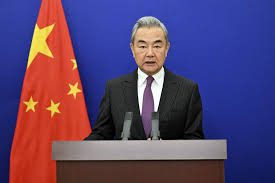

Chinese Foreign Minister Wang Yi has described the recently brokered US-Iran ceasefire as “very fragile,” calling on the international community to firmly oppose any moves that could unravel the hard-won truce or reignite confrontation in the Gulf region.
In a telephone conversation with his Pakistani counterpart, Deputy Prime Minister and Foreign Minister Mohammad Ishaq Dar, Wang emphasized that preserving the momentum of the ceasefire remains the top priority. He expressed Beijing’s readiness to contribute further to de-escalation efforts while encouraging Pakistan to play an even larger mediating role.
The remarks come amid heightened uncertainty following the collapse of high-stakes talks in Islamabad over the weekend. Pakistan had hosted negotiations aimed at transforming a temporary two-week ceasefire, agreed on April 8 into a more durable “Islamabad Agreement” or pact. This initiative, supported by a joint China-Pakistan five-point peace plan, envisions an immediate halt to hostilities, reopening of the Strait of Hormuz for safe shipping, protection of civilians and infrastructure, and a pathway to broader UN-backed talks.
China’s Strategic Stance on the Islamabad Process
China has maintained a low-profile but influential presence throughout the crisis. Beijing, a major buyer of Iranian oil and a close strategic partner of Pakistan, collaborated closely with Islamabad on the peace blueprint unveiled in late March. This plan positioned Pakistan as the primary facilitator, with China providing diplomatic weight and potential guarantees behind the scenes.
Wang Yi’s latest comments reaffirm China’s consistent advocacy for diplomatic solutions over military escalation. Analysts note that Beijing’s approach reflects its broader interests: safeguarding energy security, protecting vital maritime routes like the Strait of Hormuz, and enhancing its image as a responsible global player without becoming directly entangled in the conflict.
“China would be pleased to see Pakistan playing a greater role in helping resolve the conflict,” the Chinese Foreign Ministry quoted Wang as saying, underscoring the deep China-Pakistan alliance as a stabilizing force.
Current Situation: Fragile Truce Under Strain
The two-week ceasefire, mediated primarily by Pakistan with quiet Chinese support, halted weeks of intense US-Israeli strikes on Iran. Iran agreed to reopen the Strait of Hormuz, while the US and Israel paused attacks. However, follow-up talks in Islamabad failed to produce a breakthrough, with both sides accusing the other of shifting demands at the last minute.
Reports indicate the truce is holding for now, but tensions persist. Potential US moves toward a naval blockade and lingering disputes over Iran’s nuclear program and regional influence add layers of risk. Iranian officials have voiced frustration, claiming they were close to an agreement before US overreach derailed progress.
China’s message is clear: all parties must exercise restraint to avoid derailing the fragile gains. By championing Pakistan’s mediation and offering its own contributions, Beijing is signaling continued engagement in what could become a pivotal moment for Middle East stability.
As the ceasefire clock ticks, the world watches whether the Islamabad process can evolve from a temporary pause into a lasting framework with China and Pakistan positioned as key architects of any potential breakthrough.