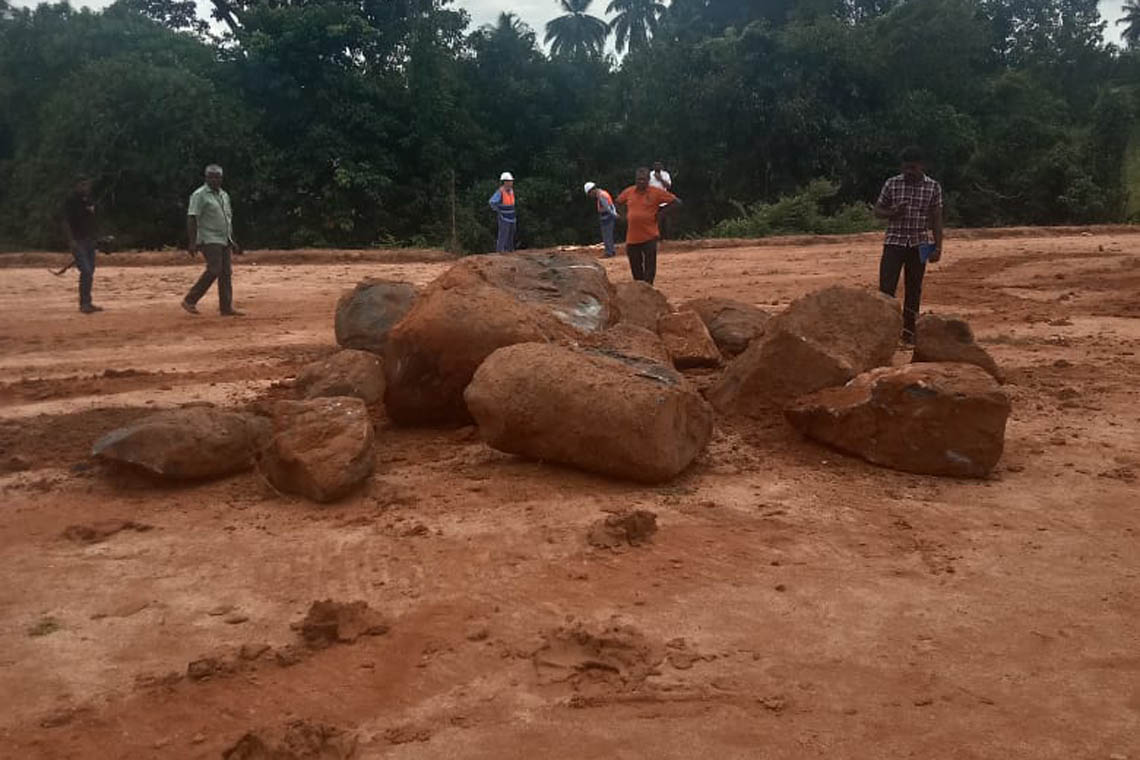

In a dramatic series of events that left a trail of controversy, wasted resources, and widespread criticism, a treasure hunt spearheaded by the Veyangoda Police and the Special Task Force (STF) came to a futile end after two days of excavation in the Wandurawa area of Veyangoda. Despite significant efforts, including the temporary suspension of construction on the Mirigama-Colombo Central Expressway, no treasure was found. Instead, the endeavor resulted in a fragmented underground rock, now being broken further for scanning.

The operation, which was initiated following a court order, has drawn intense backlash for its reckless execution. Experts have pointed out that the hunt ignored scientific recommendations from the Department of Archaeology, the designated authority on such matters, which had repeatedly advised against the excavation. The Archaeology Department’s warnings were disregarded, leading to a national embarrassment that has tarnished the credibility of both the judiciary and the government.
The Origins of the Treasure Hunt
The myth of hidden treasure in Wandurawa has long attracted treasure seekers, leading to multiple instances of illegal digging in the area. These excavations were based on unsubstantiated claims, fueled by folklore rather than historical or archaeological evidence. Over the years, individuals caught in the act were fined and released, with the Department of Archaeology confirming on each occasion that no antiquities had been damaged and no treasure existed.
Despite this, the Veyangoda Police, seemingly undeterred by scientific findings, secured court orders to involve the STF, claiming the need to investigate an “unidentified underground object” detected with basic scanning equipment. The court granted permission, and the excavation began with significant resources mobilized, including backhoes, police officers, archaeological experts, and representatives from the Geological Survey and Mines Bureau.
A National Spectacle
The treasure hunt became a spectacle, attracting crowds from nearby villages and even foreign onlookers. Local myths about ancient royal treasures buried beneath the site gained traction, further sensationalizing the event. With two backhoes at work and dozens of officials on-site, the effort culminated in the discovery of a black stone far from the treasure many had anticipated.
The Fallout
The failed hunt has caused substantial financial and reputational damage. The Road Development Authority reported that earlier illegal digging at the site had caused damages exceeding two million rupees. The latest excavation, involving heavy machinery and government personnel, has resulted in an estimated loss of 10–15 million rupees, excluding the cost of delays to expressway construction.
Moreover, the event has inadvertently reinforced harmful myths about buried treasures, which continue to fuel destructive practices across the country. Critics have decried the irresponsibility of the police and the STF in pursuing a baseless claim, highlighting their lack of understanding of the limitations of their scanning equipment, which is designed for security purposes rather than geological exploration.
A Lesson in Accountability
The Wandurawa treasure hunt serves as a cautionary tale about the dangers of prioritizing myths over science and the high cost of unchecked actions by state institutions. It has sparked widespread calls for accountability and a renewed emphasis on public education to dispel false beliefs about buried treasures.
The incident underscores the urgent need for better resource management, adherence to scientific expertise, and the importance of safeguarding national interests from the influence of superstition and folklore.
(Written based on an article written by Janaka Liyanaarchchi for the Lankasara Sinhala website)