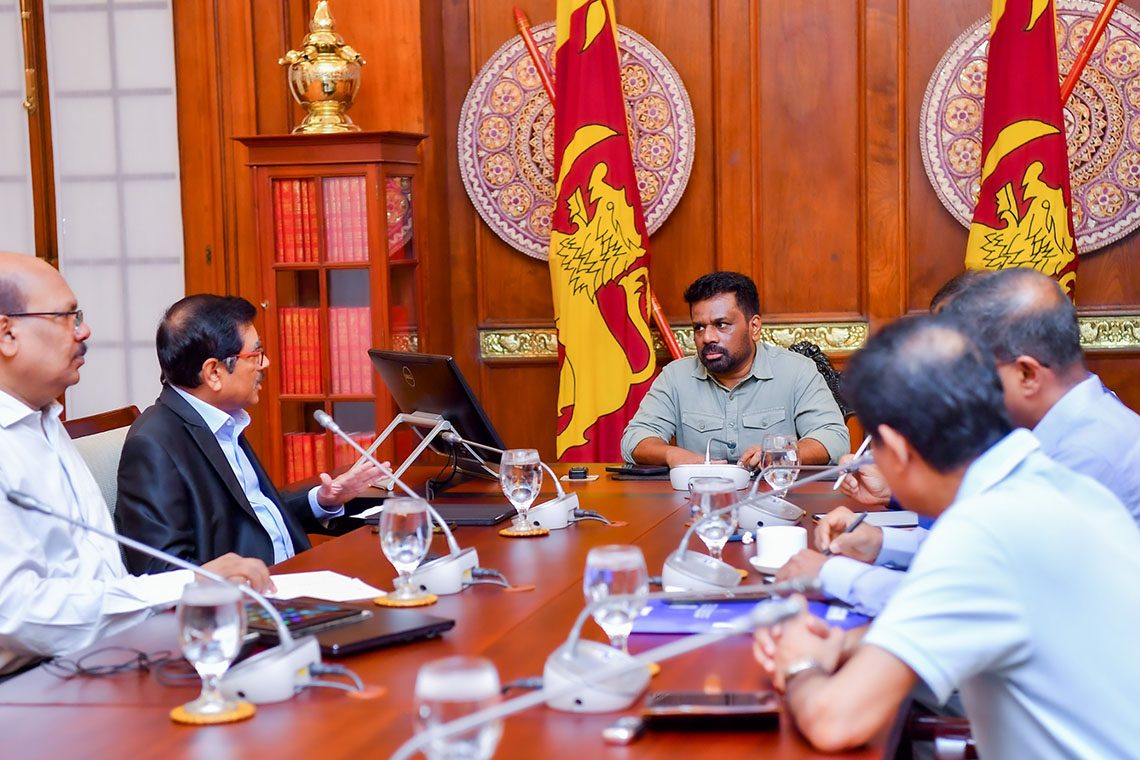

President Anura Kumara Dissanayake convened a special discussion this morning (July 10) at the Presidential Secretariat to review the United States’ decision to impose a 30 percent tariff on all Sri Lankan exports starting August 1.
The meeting was attended by Dr. Anil Jayantha Fernando, Minister of Labour and Deputy Minister of Economic Development; Dr. Harshana Suriyapperuma, Secretary to the Ministry of Finance; Dr. Nandalal Weerasinghe, Governor of the Central Bank; K. A. Wimalenthirajah, Secretary to the Ministry of Trade, Commerce, Food Security and Cooperative Development; and Duminda Hulangamuwa, Senior Economic Advisor to the President.
The US announced the new tariff under its reciprocal tariff strategy, revising down an earlier proposed 44 percent levy. The White House, in a letter addressed to President Anura Kumara Dissanayake late last evening, stated that this reduction reflects America’s intention to maintain strong trade ties with Sri Lanka despite the existing trade deficit.
“It is a great honor for me to send you this letter… the United States of America has agreed to continue working with Sri Lanka despite having a significant trade deficit with your great country,” President Trump wrote.
The letter further warned that any increase in Sri Lanka’s own tariffs would result in a proportional rise in US tariffs imposed on Sri Lankan goods. It added that if Sri Lanka opens its markets to US products and removes tariff and non-tariff barriers, the United States might consider adjusting its decision.
President Trump also suggested that Sri Lankan companies could avoid the tariff by manufacturing within the US, assuring swift approval processes for such investments.
During today’s meeting, President Anura instructed officials to assess the impact of the tariff on key export sectors and to formulate immediate diplomatic and trade responses to protect Sri Lankan industries.
According to the US Treasury, Sri Lanka currently charges tariffs amounting to 88 percent on US products, including non-tariff barriers and currency manipulation policies.
The US has imposed similar tariff revisions on other Asian countries in recent weeks under its wider trade rebalancing agenda.