
Government’s Paddy Price Controversy: Farmers Demand Rs. 150 per Kilogram as Protests Loom
Minister’s Explanation vs. Farmers’ Claims: A Growing Tension Over the Guaranteed Paddy Price

The debate over the government-set guaranteed price for paddy continues to escalate as farmers across Sri Lanka, especially those in the Mahaweli B Zone, voice their dissatisfaction. Kapila Cyril Pathirana, the Vice Chairman of the Senapura Division Farmers’ Organization in the Mahaweli B Zone, has announced that if the government does not revise the paddy price to at least Rs. 150 per kilogram, massive protests will be launched at both the provincial and national levels. The protestors’ discontent is rooted in what they perceive as an insufficient price set by the government.
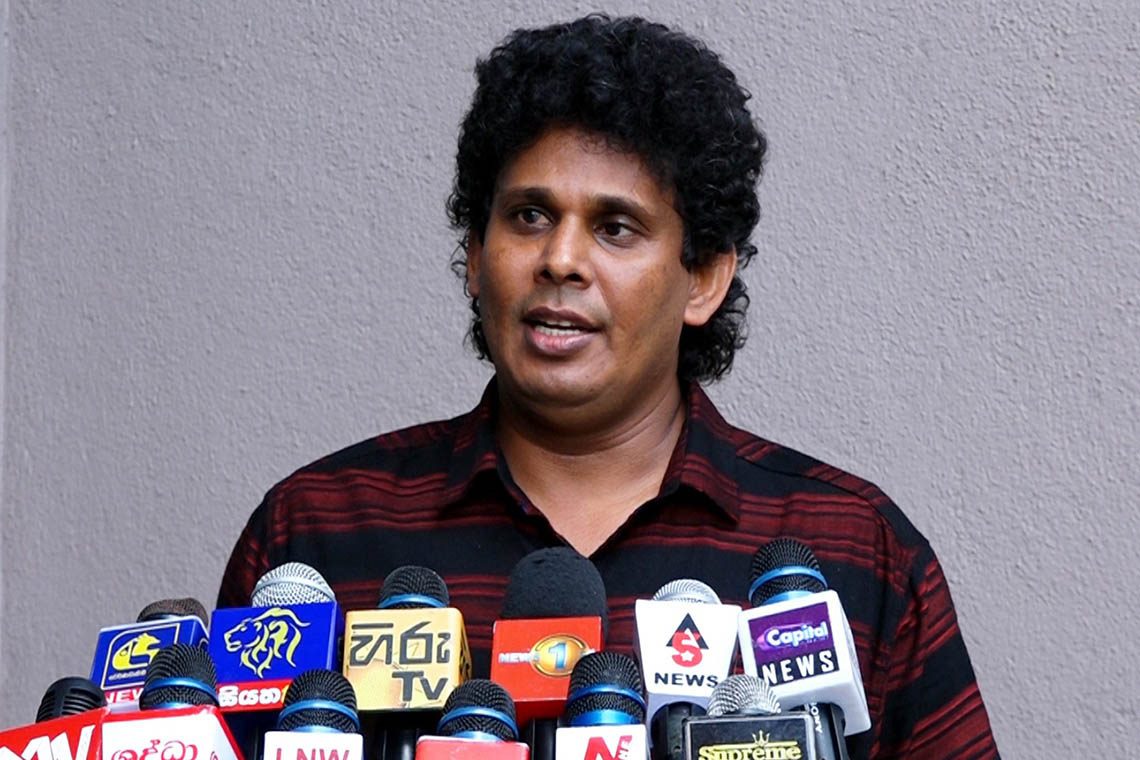
In a media briefing held at Sri Dharma Vijayarama in Monarathenna, Welikanda, Polonnaruwa, on February 6, Pathirana strongly criticized the government’s paddy price structure, highlighting that the current prices do not cover the actual production costs, which range from Rs. 110 to Rs. 120 per kilogram. “The price set by the government is absolutely unfair,” he said. “To make a profit from paddy farming, the price must be at least Rs. 150 per kilogram.”
The controversy stems from the government’s recently announced paddy price of Rs. 120 per kilogram for Nadu rice, Rs. 125 for Samba, and Rs. 132 for Kiri Samba. Pathirana expressed disbelief at the stark contrast between these figures and what farmers were demanding years ago, when former agricultural representatives, including current Minister Namal Karunaratne, had called for a minimum price of Rs. 150 per kilogram of paddy. “Namal Karunaratne and T.B. Sarath, when they were with the All Ceylon Farmers’ Organization, encouraged us to protest and even visited the fields to demand Rs. 150 per kilogram,” Pathirana remarked. “Now, they’ve set the price at Rs. 120 without shame.”

Pathirana further claimed that many farmers are now forced to sell their unprocessed paddy to private traders, who are purchasing it at competitive rates. This, he argues, undermines the intentions of the government’s guaranteed price scheme, which he claims disproportionately benefits large-scale rice mill owners, particularly those in Polonnaruwa. “The beneficiaries of this scheme are not the farmers but the large-scale mill owners,” he stated. “The real victims are the farmers who are forced to bear the brunt of inadequate prices.”
The Vice Chairman also pointed out the logistical challenges faced by farmers, particularly as the Maha season’s paddy harvest approaches in just ten days. With storage facilities not yet prepared and high transportation costs looming, farmers fear that the government’s price structure will further exacerbate their financial struggles. “We have to transport our paddy to storage facilities at high costs, which is an added burden,” he noted.
Farmers’ organizations are not alone in their criticism. Sujan Kumar, Chairman of the Monarathenna D-02 Irrigation Farmers’ Organization, and B.M. Sarath, Treasurer of the Ruhuneke Irrigation Farmers’ Organization, also echoed Pathirana’s sentiments, urging the government to immediately withdraw its announced guaranteed price and implement a minimum price of Rs. 150 per kilogram.
The Minister’s Response: A Call for Fairness
In response to the growing discontent, Minister of Trade, Commerce, Food Security, and Cooperative Development, Vasantha Samarasinghe, defended the government’s decision, stating that the guaranteed paddy price was set after careful calculations and consideration of the country’s economic realities. According to Samarasinghe, the government’s decision was based on data provided by the Hector Kobbekaduwa Agrarian Research Institute, which took into account the production costs and the need to ensure that farmers could sustain their livelihood during off-seasons.
“We understand the challenges faced by farmers, and we have set the price after thoroughly assessing the production costs,” said Samarasinghe. “Our intention is to provide a fair price that benefits both consumers and farmers, and we are committed to maintaining that price despite the challenges.”
The minister also reassured that efforts would be made to address the supply chain issues that farmers are facing, such as inadequate storage facilities and high transportation costs. “We are working on improving infrastructure and ensuring that farmers can store their harvest without incurring exorbitant costs,” he added.
Farmers’ Plea for Action
Despite the minister’s reassurances, farmers remain unconvinced. For them, the Rs. 120 price for paddy does not reflect the reality on the ground. With costs of production rising and logistical challenges mounting, they argue that the government’s price fails to meet their needs. If the issue is not addressed, Pathirana and other farmer leaders have vowed to escalate their protests.
“The government must understand that without farmers, the country cannot function,” Pathirana warned. “If our demands are not met, we will not hesitate to take to the streets and demand what we deserve.”
The farmers’ calls for a revision of the paddy price to Rs. 150 per kilogram are expected to grow louder in the coming days, especially as the Maha season harvest approaches. With protests likely to intensify if the government does not act, the pressure is on the authorities to respond and find a resolution that is fair to both the farmers and the broader population.
As this tension between the government and farmers escalates, it remains to be seen whether a compromise can be reached, or if the protests will take a larger political turn, reshaping the relationship between Sri Lanka’s agricultural sector and the state.