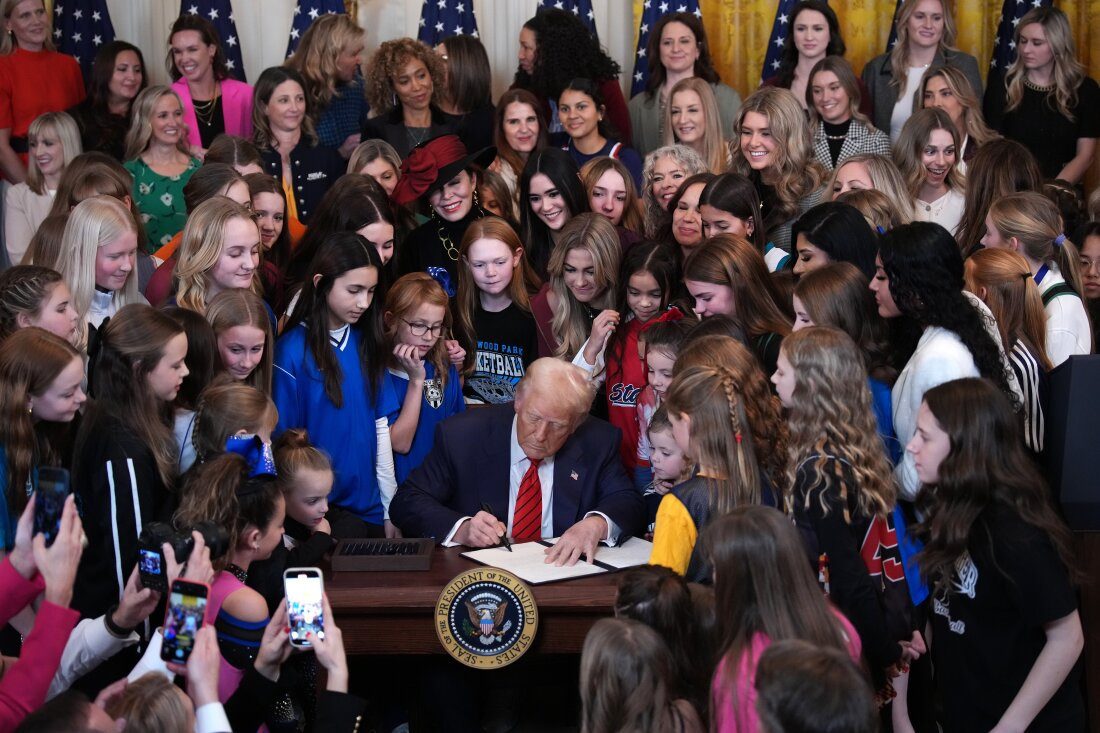

Trump Signs Executive Order Banning Transgender Athletes from Women’s Sports, Sparking Backlash
In a controversial move, former President Donald Trump signed an executive order on February 5, 2025, barring transgender women and girls from competing in female sports categories. The order, titled “Keeping Men Out of Women’s Sports,” directs federal agencies to enforce Title IX based on sex assigned at birth and threatens to withdraw federal funding from institutions that allow transgender athletes to compete in women’s divisions.

Trump: “We Must Protect the Integrity of Women’s Sports”
At a press conference announcing the order, Trump declared, “We must protect the integrity of women’s sports. Allowing men to compete in women’s competitions is unfair, and it will end.”
The executive order has ignited a fierce debate across the political and sports landscape. Conservative groups and some female athletes praised the decision, arguing it ensures fairness in competition. On the other hand, LGBTQ+ advocates, civil rights organizations, and many sports governing bodies have condemned the move as discriminatory and an attack on transgender rights.
Legal Challenges and NCAA Response
Following the order, the National Collegiate Athletic Association (NCAA) announced that it would align its policies with the new federal directive, effectively barring transgender women from women’s sports in college athletics. NCAA President Charlie Baker stated, “The NCAA remains committed to upholding fairness in women’s sports, and we will comply with federal regulations as required.”
However, some states and organizations are resisting the mandate. Minnesota’s high school sports governing body declared it would continue to follow state law, allowing transgender athletes to compete based on gender identity, thereby openly defying the federal order. “Our commitment is to inclusivity and fairness,” a spokesperson for the Minnesota State High School League said.
Impact on International Sports
Trump’s directive has also clashed with global sports authorities. The International Olympic Committee (IOC), which has allowed transgender participation since 2004, is facing pressure from the U.S. government to exclude transgender athletes from international women’s competitions ahead of the 2028 Los Angeles Olympics.
A spokesperson for the IOC responded, “The Olympic Games are committed to inclusivity and ensuring fair competition. Policies regarding transgender athletes are determined based on scientific and ethical considerations, not political mandates.”
Notable Transgender Athletes Weigh In

Several prominent transgender athletes have spoken out against the order.
Lia Thomas, the first openly transgender athlete to win an NCAA Division I championship, said, “This policy erases years of progress for transgender athletes who simply want to compete in the sports they love.”
Chris Mosier, a trailblazing trans male triathlete, criticized the order, stating, “This is not about fairness. This is about discrimination and restricting trans people’s participation in society.”
What’s Next?
Legal challenges are already underway, with the National Women’s Law Center and the American Civil Liberties Union (ACLU) preparing lawsuits against the federal government, arguing that the order violates Title IX protections.
With the 2028 Olympics on the horizon and state-level opposition growing, the fight over transgender participation in sports is far from over. While supporters of the ban claim it restores fairness, critics argue that it fuels discrimination and sets a dangerous precedent for transgender rights in the U.S.
As the legal battles unfold, the future of transgender athletes in competitive sports remains uncertain.