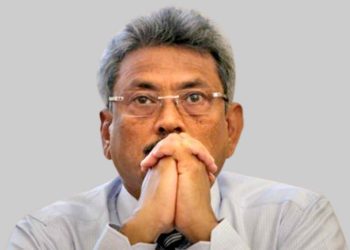
The Iranian people have been plunged into mourning following reports that the Leader of the Islamic Revolution, Ayatollah Seyyed Ali Khamenei, was killed in a joint U.S. Israeli strike on Saturday, February 28. The pro-Iranian Tasnim News Agency first reported the death, which Iranian state media later confirmed, stating that members of his family were also killed in the attack.
The 86-year-old cleric, who had ruled Iran for more than three decades as its Supreme Leader, leaves behind a complex and deeply contested legacy , one that shaped Iran’s political system, regional posture, and ideological direction.
From Mashhad’s Seminaries to Revolutionary Politics
Born in 1939 in the holy Shiite city of Mashhad in northeastern Iran, Ali Khamenei grew up in a deeply religious household. His father was a respected cleric of Azerbaijani origin, while his mother, Khadija Mirdamadi, was known for her devotion to the Quran and love of literature influences that would mark Khamenei’s intellectual and spiritual formation.
Khamenei began Quranic studies at the age of four and later pursued theological education in Iran’s leading Shiite seminaries. Though he never attended conventional university, his religious scholarship and teaching of Islamic jurisprudence helped him build influence among young seminarians increasingly disillusioned with the rule of the Shah.
His political awakening came amid the turbulence surrounding the 1953 coup that overthrew Prime Minister Mohammad Mossadegh and restored the Pahlavi monarchy. Like many clerics of his generation, Khamenei grew sharply critical of Western involvement in Iran.

Revolutionary Years and Rise to Power
During the final years of the Shah’s rule, Khamenei became an active participant in the revolutionary movement led by Ayatollah Ruhollah Khomeini. His activism brought repeated arrests by SAVAK, the Shah’s feared secret police, and periods of internal exile.
Following the 1979 Islamic Revolution, Khamenei quickly rose through the ranks of the new Islamic Republic. He briefly served as defense minister and later supervised the Islamic Revolutionary Guard Corps (IRGC) during the early years of the Iran–Iraq War.
In 1981, he narrowly survived an assassination attempt by the opposition group Mujahedin-e Khalq (MEK), an attack that left his right arm permanently paralyzed. Later that same year, he became Iran’s president — the first cleric to hold the office.
Supreme Leader After Khomeini
The death of Ayatollah Khomeini in 1989 marked a decisive turning point. After Khomeini sidelined his originally designated successor, Ayatollah Hossein Ali Montazeri, the path opened for Khamenei to assume the position of Supreme Leader.
His early years in power were dominated by the task of rebuilding a country devastated by the eight-year war with Iraq, which had left more than a million people dead and the economy badly damaged.
Analysts widely agree that the war profoundly shaped Khamenei’s worldview. Deep suspicion of the United States and the West became a defining feature of his leadership.

Architect of Iran’s Security State
Under Khamenei, the Islamic Revolutionary Guard Corps (IRGC) evolved from a revolutionary military force into a dominant security, political, and economic powerhouse. He strongly backed the expansion of the Basij paramilitary network, investing heavily in ideological training for younger generations.
His doctrine emphasized what Iranian officials termed a “resistance economy” a strategy aimed at self-reliance under Western sanctions. Supporters viewed this as necessary strategic resilience; critics argued it entrenched isolation and empowered hard-line institutions.
During the disputed 2009 presidential election and subsequent nationwide protests, security forces linked to the IRGC and Basij were deployed to suppress unrest, reinforcing Khamenei’s reputation as a leader willing to use force to preserve the Islamic Republic.
A Nation Changing Beneath Him
By the 1990s and 2000s, Iranian society particularly its youth was evolving rapidly. Many younger Iranians showed less attachment to the revolutionary ideology that had mobilized their parents’ generation.
The landslide 1997 election of reformist President Mohammad Khatami reflected growing public appetite for engagement with the West and domestic reform. Yet Khamenei remained wary of rapprochement, consistently prioritizing regime security and ideological continuity.
Periodic waves of protests, especially those driven by economic hardship, increasingly exposed the gap between the leadership and segments of the population seeking political and economic change.
Final Chapter and Uncertain Future
Khamenei’s reported killing marks one of the most consequential moments in the Islamic Republic’s history since 1979. Iranian authorities have declared a 40-day national mourning period, underscoring the magnitude of the loss for the state’s power structure.
To supporters, he was the guardian of the revolution and the strategist who fortified Iran against external pressure. To critics, he presided over decades of repression, economic strain, and deepening isolation.
What is certain is that Ali Khamenei’s long shadow over Iran and the region will endure well beyond his death, as the country now faces a potentially transformative and uncertain new chapter.