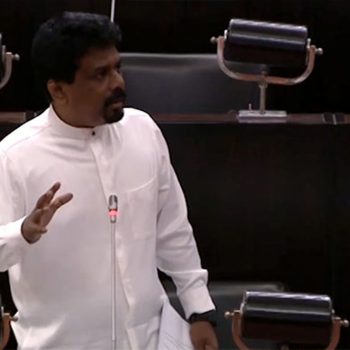

The Government’s 2026 Budget, to be presented in Parliament on Friday by President Anura Kumara Dissanayake in his capacity as Finance Minister, is expected to feature a mix of relief for low-income groups, incentives for exporters and small and medium industries, and measures to expand the tax net, according to a Sunday Times report.
A senior Government source has told the Sunday Times that the new Budget will prioritise strengthening revenue collection by the Sri Lanka Customs, Inland Revenue Department, and Excise Department, with a combined revenue target of Rs. 4.6 trillion — an increase of about Rs. 600 billion from the previous year. The move forms part of broader fiscal reforms aligned with the recommendations of the International Monetary Fund (IMF), under which Sri Lanka has committed to improving tax compliance and widening the revenue base by bringing in sectors that have long evaded taxation.
The source added that while the Government faces pressure to boost foreign exchange inflows through higher exports and greater Foreign Direct Investment (FDI), it intends to maintain the existing tax structure to avoid unsettling the business community and investors. Taxes on vehicle imports will also remain unchanged in the coming year.
For low-income households, the Budget is expected to introduce a special relief package to ease the burden of rising living costs and ensure access to essential goods.
Meanwhile, the Treasury has acknowledged ongoing challenges in servicing external debt obligations owing to foreign currency shortages earlier this year. These shortfalls were mitigated through foreign exchange obtained from the Central Bank of Sri Lanka and the disbursement of USD 350 million under the fourth tranche of the IMF programme.
According to the Treasury’s Mid-Year Fiscal Position Report 2025, released last Friday, total debt-service payments from 1 January to 30 June 2025 amounted to USD 1,358.9 million — comprising USD 863.6 million in principal repayments and USD 495.3 million in interest. The report further noted that as of the end of June 2025, the Government had no outstanding external payment arrears.
Sri Lanka’s total external debt as of end-June 2025 stood at USD 37.1 billion, with multilateral debt accounting for 36 per cent, commercial debt 34 per cent, and bilateral debt 30 per cent. Around 81 per cent of commercial debt comprised outstanding International Sovereign Bonds (ISBs), with the remainder consisting of syndicated loans and other foreign-currency term financing facilities.