On January 19, 2025, Sri Lanka bid farewell to one of its most fearless and thought-provoking journalists, Victor Ivan. Known for his unflinching critiques of the political system, his profound impact on Sri Lanka’s judicial and media landscapes, and his tireless fight for justice, Ivan’s death marks the end of an era, but his imprint will resonate for generations to come.
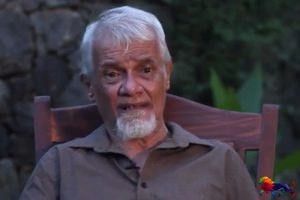
Victor Ivan was not merely a journalist; he was a symbol of resilience and intellectual rigor in a time when speaking truth to power came with grave personal costs. His career was a unique journey through Sri Lanka’s political lnandscape , from the early days of radical activism to becoming a leading voice in investigative journalism.
Born into a period of rising political unrest, Ivan’s path was shaped early by his involvement with the Janatha Vimukthi Peramuna (JVP), Sri Lanka’s Marxist-Leninist party. As a young man, he was an enthusiastic member, passionate about the cause and determined to be part of a revolution. However, a failed attempt to make a Molotov cocktail during the 1971 insurrection led to severe injuries, costing him the use of both his hands. This moment of physical loss, however, did not deter his spirit. Instead, it seemed to fuel his resolve to fight for what he believed in—though his focus shifted from the fire of rebellion to the pen of critique.
Political Prisoner
Victor’s journey from insurgent to journalist was not without its struggles. During his time as a political prisoner, he experienced what he would later call his “university years,” a time spent in introspection, rethinking the very ideals that had once driven him to violence. When he emerged from prison, it was not to continue his work with the JVP, but to engage in a different form of activism—one rooted in the power of the press.
In 1980, Ivan founded Ravaya, a Sinhala-language newspaper that would become the backbone of independent journalism in Sri Lanka. Ravaya quickly gained prominence for its bold stance against government corruption and its relentless exposure of judicial misconduct. Ivan’s critique of the judiciary, especially during the tenure of Chief Justice Sarath Nanda Silva, became legendary. One of the most significant battles he fought was the case of Tony Fernando, an innocent man unjustly imprisoned by Silva’s court. Ivan’s relentless advocacy for Fernando and his exposure of judicial overreach brought international attention and helped secure Fernando’s release, a victory that highlighted the importance of a free press in holding power to account.
Ground-Breaking
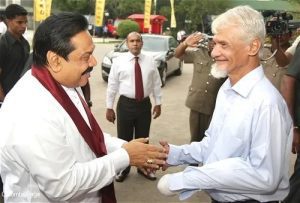
Ivan’s journalism was not limited to exposing corrupt politicians or fighting for judicial reform. He was also a staunch critic of the state’s handling of the ethnic conflict, exposing the horrors of enforced disappearances during Sri Lanka’s civil war. His work offered a platform for voices from all corners of Sri Lankan society, especially those who had been silenced by the powers that be. His investigations were ground-breaking, revealing shocking truths—such as the case of a magistrate who raped a prisoner’s wife, a story that shocked the nation and led to a film adaptation by a renowned director.
Despite his success as a journalist, Ivan’s career was not without personal sacrifice. The financial difficulties of running Ravaya often meant that he had to make difficult decisions to keep the paper afloat. Yet, no matter the struggles, he remained unyielding in his commitment to independent, investigative journalism. His colleagues remember him as a man who valued integrity over convenience, and his unwavering principles earned him both admiration and animosity from those in power.

In addition to his work with Ravaya, Ivan was a published author, with books exploring the socio-political landscape of Sri Lanka, including Queen of Deceit, which critiqued former President Chandrika Kumaratunga’s government, and Paradise in Tears, a photo essay on Sri Lanka’s history. His writing often challenged the status quo, sparking debates about caste, politics, and social justice.
Mahatma Gandhi
Victor Ivan’s life was one of transformation. From the fiery youth who had once embraced revolutionary violence, he became a reformer, advocating for a more just society through peaceful means. His intellectual pursuits were influenced by figures like Bertrand Russell and Mahatma Gandhi, and this intellectual maturation reflected in both his professional and personal life.
Even as he aged, Ivan remained an unflinching critic of the system, continuing to speak out against corruption and injustice until his final days. His death may have marked the end of his physical presence, but his legacy lives on in the work he did, the publications he inspired, and the changes he fought for.
Silence Broken
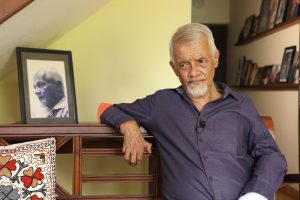
Victor Ivan will be remembered not just as a journalist, but as a trailblazer who dared to challenge the powerful when others remained silent. He was a man who transformed personal hardship into a force for good and left an indelible mark on Sri Lanka’s history. As the nation reflects on his life, one thing is certain: the path he carved will continue to guide those who seek truth and justice in Sri Lanka for years to come.
Go well, Victor Ivan. Your words have changed the world