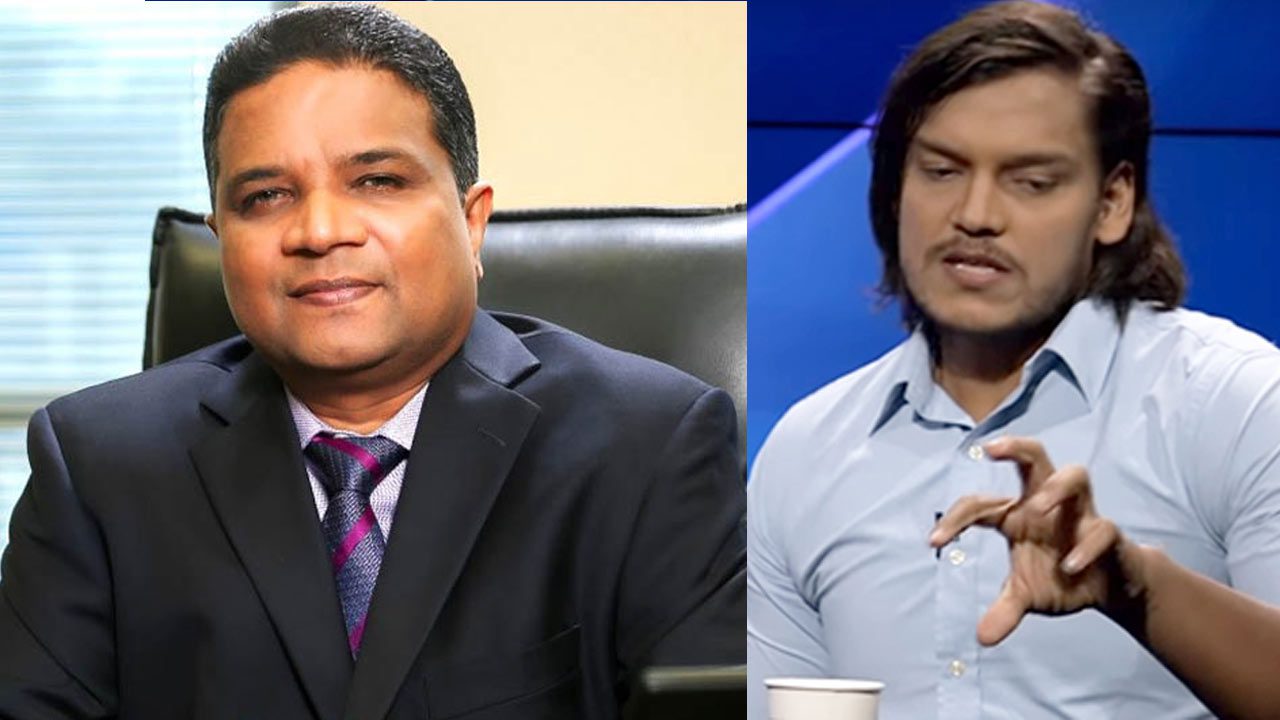

The SupremeSAT satellite project has resurfaced in public discussion following a recent statement by Prime Minister Harini Amarasuriya, who clarified in Parliament that the project did not use public funds but was entirely privately financed. This revelation has reignited interest and controversy around SupremeSAT, a project often linked to Rohitha Rajapaksa—commonly known as Chichi—the younger son of former President Mahinda Rajapaksa.
For years, SupremeSAT has been at the center of political debates and election rhetoric, frequently cited as evidence of alleged misuse of state resources by the Rajapaksa family. However, several years ago, a comprehensive interview with Mr. R. M. Manivannan, chairman of Supreme Global Holdings—the parent company behind SupremeSAT—provided an in-depth account that challenges many of the misconceptions surrounding the project and Rohitha Rajapaksa’s involvement.
SupremeSAT is a communication satellite launched in 2012 by Supreme Global Holdings, marking Sri Lanka’s first and only venture into space and satellite technology. Mr. Manivannan explained that SupremeSAT is not a myth or unverified claim; the satellite’s launch was real and verifiable, with photos and videos available on the internet. The satellite continues to operate from a state-of-the-art control center located on a 10-acre facility in Pallekele, Kandy. It serves multiple foreign companies and institutions, making SupremeSAT a recognized regional leader in satellite and teleport operations. The company has steadily grown, bringing substantial foreign direct investment (FDI) into Sri Lanka and creating numerous jobs.
Addressing rumors about the project’s funding, Mr. Manivannan firmly stated that SupremeSAT’s $320 million investment came entirely from private sources. Among the investors was a young billionaire from China who contributed $20 million. Contrary to popular belief and political allegations, no public or government funds were used in the project. These false claims have unfairly damaged the company’s reputation, making international clients wary of engaging with SupremeSAT and affecting its growth potential.
The interview also tackled misleading comparisons between SupremeSAT and India’s Chandrayaan lunar mission. Mr. Manivannan highlighted that Chandrayaan is an exploratory mission focused on the moon, whereas SupremeSAT is a communication satellite with very different objectives and technology. The cost of communication satellites worldwide ranges from $300 to $500 million, reflecting their complexity and longevity—designed to operate for at least 15 years.
Regarding Rohitha Rajapaksa’s role, Mr. Manivannan clarified that Rohitha was never an owner or principal of the project. Instead, Rohitha served as Chief Technical Director at SupremeSAT from 2012 to 2014. His appointment was based strictly on merit, as he was then studying aerospace engineering and working on a PhD thesis in the related field. He was a regular salaried employee and left the company to pursue further education abroad. The current Chief Technical Director is also a qualified Sri Lankan aerospace engineer who studied overseas.
Mr. Manivannan acknowledged that Rohitha’s involvement attracted political attacks but insisted that hiring qualified individuals should not be hindered by their family background. Whether Rohitha worked or not, critics found reasons to question his role or the company’s integrity.
Additionally, Mr. Manivannan dismissed claims that SupremeSAT was launched due to his friendship with former President Rajapaksa. He recounted his journey beginning in cargo shipping and trading, eventually leading to his interest in space and satellite technology—an interest inspired by reading science fiction writers such as Arthur C. Clarke.
Despite over a decade of operation and serving numerous international clients, SupremeSAT’s progress has been impeded by ongoing misinformation and politically motivated controversies. Mr. Manivannan emphasized that the company never received government support and that Rohitha Rajapaksa never used his position to gain any improper advantage.