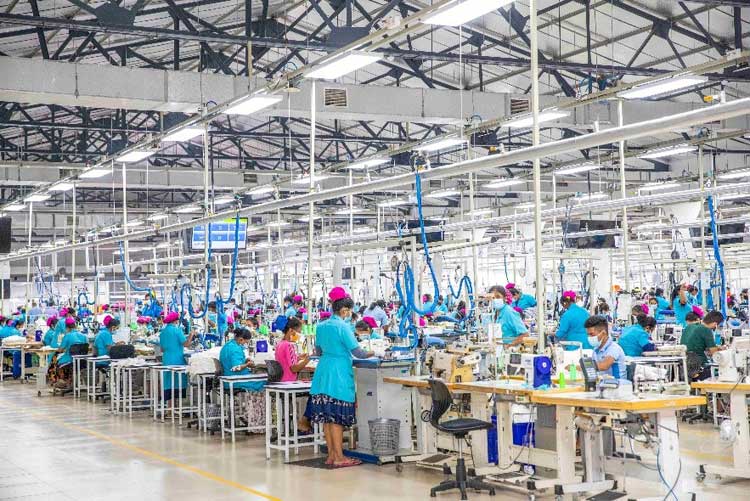

The imposition of a 44 percent tariff on Sri Lankan exports under US President Donald Trump’s reciprocal tariff policy will severely impact the country’s garment industry, warned Felix Fernando, Vice President of the Joint Apparel Association Forum (JAAF).
He cautioned that the tariff could put 350,000 direct jobs at risk and jeopardize Sri Lanka’s total garment exports to the US, valued at $3.159 billion.
Mr. Fernando stated that some US garment buyers have already inquired whether the Sri Lankan government is engaging with the Trump administration to address the issue and mitigate the economic fallout.
He highlighted that India had swiftly sent representatives to Washington on the same day the US announced the tariff hike, which resulted in a reduction of tariffs imposed on Indian exports. Additionally, India has lowered tariffs on US imports in response. Vietnam has also initiated discussions with the US regarding the tariff policy.
“No matter how much American buyers prefer Sri Lankan garments, they will not purchase them if they have to pay an additional 44 percent,” he said.
President Trump issued an executive order imposing a 44 percent tariff on Sri Lankan imports, citing Sri Lanka’s existing 88 percent import duties and trade barriers on US goods. Hidden taxes, such as the Commodity Export Subsidy Scheme (CESS) and the Port and Airport Development Levy (PAL), were identified as trade barriers.
The US has increased tariffs on around 60 countries, imposing:
– 37 percent on Bangladesh
– 34 percent on China
– 36 percent on Thailand
– 26 percent on India
– 20 percent on the European Union
Previously, the US levied a 12 percent tariff on Sri Lankan imports.
When asked about the new tariff policy, Advocata’s Chief Operating Officer, Dhananath Fernando, emphasized the need for Sri Lanka to simplify its tariff structure to enhance the competitiveness of its exports.
Sri Lanka imported $368 million worth of goods from the US last year.
In response to the tariff increase, President Anura Kumara Dissanayake has appointed a committee to assess the economic impact and recommend solutions. The committee met with the President this evening.
In response to the tariff increase, President Anura Kumara Dissanayake has appointed a committee to assess the economic impact and recommend solutions. The committee, which met with the President this evening, includes the Secretary to the Ministry of Finance, the Governor of the Central Bank, the Chairman of the Board of Investment of Sri Lanka, the Chairman of the Export Development Board of Sri Lanka, and the Director General of Economic Affairs of the Ministry of Foreign Affairs. Additionally, Senior Economic Advisor to the President Duminda Hulangamuwa, Chief Economic Policy Advisor of the Sri Lanka Chamber of Commerce Shiran Fernando, and members Ashraf Omar, Sherad Amaleen, and Saif Jafferjee have been appointed to contribute their expertise.