
Fibre cuts, power failures, deadly landslides and surging floods cripple essential services as the island faces one of its worst weather disasters in recent years
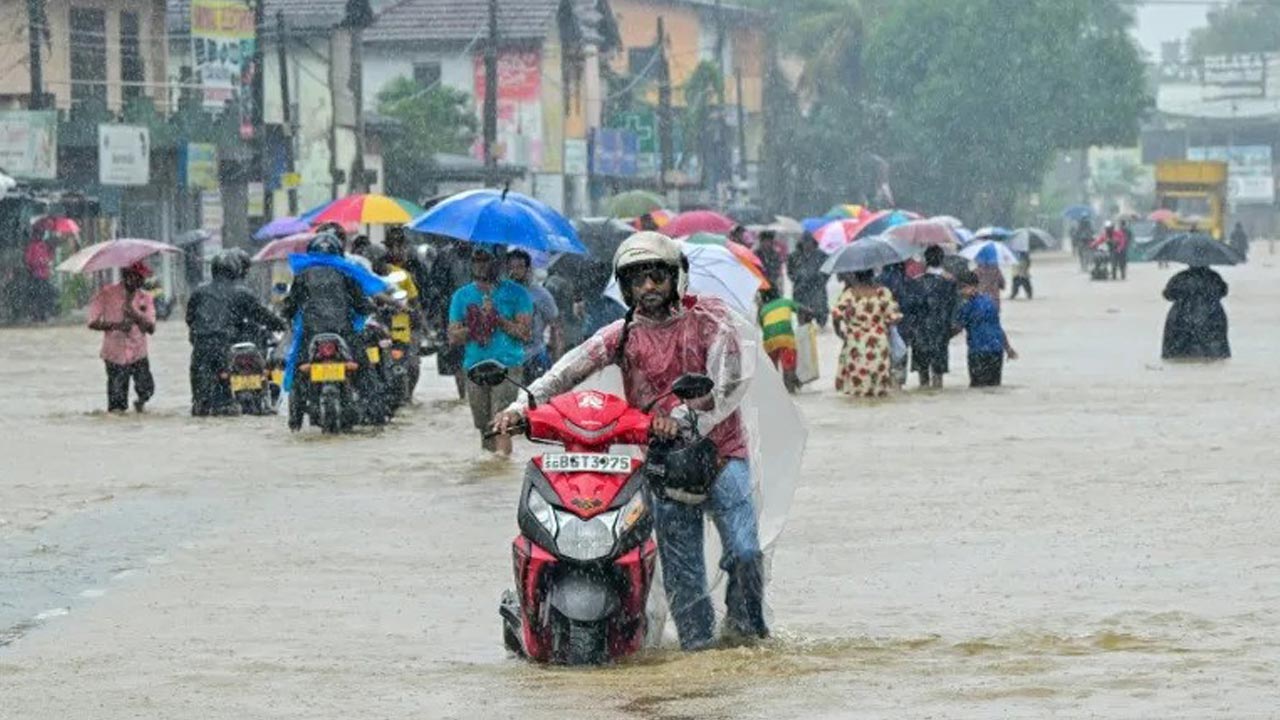
Sri Lanka is grappling with a communications crisis layered on top of a fast-escalating national disaster, as Cyclone Ditwah brings relentless rain, landslides, and floods across multiple districts. With death tolls rising, thousands displaced, and infrastructure collapsing under pressure, authorities warn that restoring communication and power will remain one of the toughest challenges in the days ahead.
Deputy Minister of Digital Technology Eranga Weeraratne said that widespread connectivity failures are not the result of technical glitches but direct consequences of the ongoing adverse weather. “Fibre connections have been disconnected in several places due to landslides and floods,” he said, adding that power outages were further compounding network failures.
Restoration teams began repairs early yesterday, but access to sites has been repeatedly disrupted. The Passara-A fibre line had four breaks; three were repaired by Thursday, with the final repair delayed due to unstable terrain. Repair work in Kadugannawa stalled for hours because of active landslides, despite support from army units. Meanwhile, the Kurunegala–Chilaw fibre line also went down, with crews working since dawn on Thursday to restore it.
“We hope to restore all fibre connections within a few hours once teams can safely access the affected areas,” Weeraratne said, though officials cautioned that safe access remains uncertain as long as floodwaters rise and slopes continue to fail.
A Country Under Siege: Deaths Mount, Communities Missing
Across the country, emergency numbers reveal the scale of devastation.
By 7.30 p.m. Thursday, the Disaster Management Centre (DMC) reported 153 deaths, with 191 people still missing—numbers that continue to rise with every passing hour.
The persistent low-pressure system remains stalled over the island, pulling in moisture-laden winds and generating repeated waves of severe rainfall. Highlands are fully saturated, increasing the likelihood of catastrophic landslides. Major reservoirs across the Central, Western, and Sabaragamuwa provinces are nearing spill level.
The DMC says its greatest challenge is persuading people in high-risk zones to evacuate. Several Divisional Secretariats reported that certain residents—despite warnings—refused to leave unstable slopes.
A Surge of Solidarity: Global and Local Relief Efforts Mobilise
Even as the island struggles, international support has begun to arrive. The Indian Air Force deployed two MI-17V5 helicopters on Thursday evening carrying 22 personnel and humanitarian supplies. Pakistan’s visiting naval ship delivered dry rations and drinking water. The Maldives announced USD 50,000 in support along with 25,000 cases of tuna cans, while the United States committed USD 2 million for urgent relief.
China, too, expressed condolences and confirmed that assistance is “on the way.”
Locally, Cardinal Malcolm Ranjith urged all Catholic institutions to mobilise for relief, while the Sri Lankan cricket team announced that they will donate all match fees from the Pakistan series to flood victims.
Despite the solidarity, officials warn that relief access remains restricted in several zones due to washed-out bridges, submerged roads, and ongoing landslides.
Infrastructure Breaking Down: Water, Power, Transport Hit Hard
Critical infrastructure is being battered. Nearly 200,000 homes were without power on Thursday afternoon, according to the Ceylon Electricity Board. The Greater Kandy Water Treatment Plant in Gatambe is out of operation after floodwaters entered the facility, cutting supply to thousands. The National Water Supply and Drainage Board warned that if the Kelani River rises further, water services in the Western Province may also fail.
By mid-day, all entrance roads to Hanwella had been restricted due to rising floods.
Transport disruptions are widespread:
Main Line train services were suspended due to track flooding in Daraluwa and Gampaha.
Several roads, including the Welimada–Nuwara Eliya stretch, remain blocked by landslides.
Bandaranaike International Airport continued to face delays and cancellations after multiple aircraft were diverted to Mattala, Trivandrum, and Cochin.
To ease communication barriers, mobile operators agreed not to disconnect phone lines in affected districts and to provide free calls and limited data for users with low balances.
Landslides and Floods: Deadliest Phase of the Disaster
The most severe developments remain in the landslide-prone Central and Sabaragamuwa regions. In Kothmale, a massive landslide over a four-kilometre stretch killed 15 people and injured 50 others. In Hasalaka, at least five bodies were recovered near Yahangala Mountain, with twelve more still missing.
In Rambuk-ela, Kandy District, around 50 houses were damaged in an early-morning landslide. Rescue teams have been unable to enter some locations due to unstable slopes and continuous earth movement.
Meanwhile, the Kelani River continues to rise, inching dangerously close to its critical level. Officials warn that if the Nagalagam Street gauge moves beyond seven feet, unprecedented flooding is likely.
Cyclone Ditwah Moves North, But the Crisis Is Far From Over
The Meteorology Department reports that Cyclone Ditwah is now 80 km northeast of Jaffna and moving north-northwest. Rainfall is expected to reduce from Friday, but the danger remains high due to already saturated ground and swollen rivers.
Nearly 100,000 people are affected in the Colombo District alone, with more than 6,000 people housed in safe centres.
The government has declared a State of Public Emergency and designated essential services to ensure medical, electricity, water, transport, and fuel operations continue.
A Nation in Need of Patience and Preparedness
Sri Lanka’s emergency response teams, volunteers, and international partners continue to work around the clock. Yet with communication lines fragile, power unstable, and terrain dangerous, officials warn that full recovery will take time, and disruptions may persist as long as landslides and floods continue.
As Cyclone Ditwah slowly moves away, Sri Lanka faces not an ending—but the beginning of a long and difficult recovery.