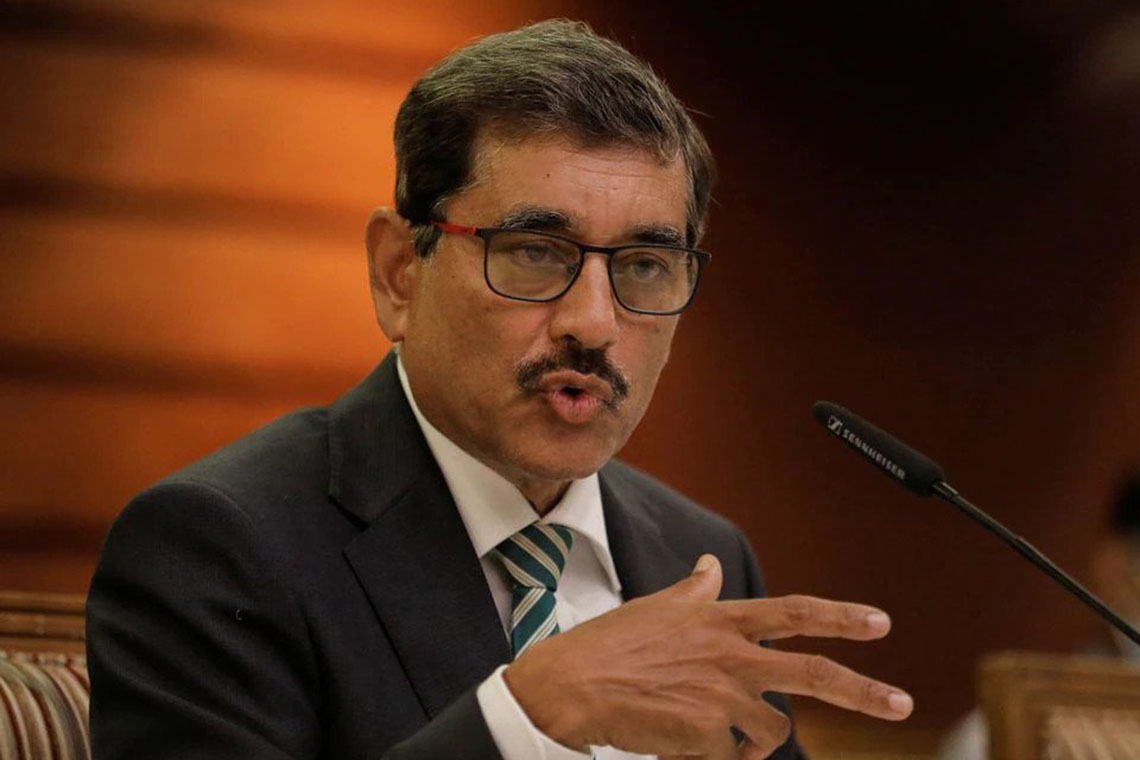

Governor of the Central Bank, Dr. Nandalal Weerasinghe, says the vast majority of small and medium-sized enterprises (SMEs) in Sri Lanka do not obtain business insurance, forcing the government to use public funds to rebuild them after natural disasters. He stressed that this situation must change in the future.
He explained that if businesses were properly insured, losses caused by disasters could be covered through insurance payouts. Instead, the government is compelled to use money collected from the public as taxes, as well as funds that banks are required to pay to depositors as interest, to support affected businesses.
CBSL Governor made these remarks at a seminar held yesterday (20) at the Kandy City Centre, aimed at educating SMEs in the Central Province on the assistance available from state and private banks to rebuild businesses damaged by natural disasters.
The seminar was organized at the initiative of Kandy City Centre Managing Director Thusitha Wijayasena and was attended by the heads of seven public and private banks. Following the seminar, business owners were given the opportunity to meet bankers, receive guidance on rebuilding their businesses, and obtain advice on available loan facilities. At the event, Thusitha Wijayasena also presented a memento to the Central Bank Governor.
Addressing the gathering, he emphasized the responsibility of both public and private banks to ensure that entrepreneurs seeking loans after disasters are treated fairly and without inconvenience.
“It is the duty of the banking system to act in a way that does not lead to complaints to the Central Bank when providing loans to entrepreneurs who are trying to restart their businesses after disasters,” he said. “Although procedures have been clearly communicated through circulars, there are instances where poor communication within banks causes unnecessary difficulties for borrowers.”
Highlighting the importance of financial stability, the Governor noted that around 80% of the money held by banks belongs to depositors, while about 10% is owned by shareholders and the remaining 10% is borrowed. He said total deposits in the banking system amount to nearly Rs. 20 trillion, representing the savings of the country’s 22 million people.
Protecting the stability of the banking system
“The banking system is the custodian of this money. If something happens to the system, the savings of the entire country could be lost. This has happened in other countries. Protecting the stability of the banking system is the responsibility of the Central Bank, and the system is regulated with that objective,” he said.
Dr. Weerasinghe also addressed concerns about inflation following natural disasters, stating that supply chain disruptions may cause a temporary increase in inflation, but it usually returns to normal within about two months. He noted that current inflation is around 2% and even if it rises to 3–5%, there is no need to increase interest rates, as monetary policy decisions are based on projected future inflation.
He cautioned against excessive reliance on free government assistance, pointing out that when relief is provided at no cost, even those who do not genuinely need it may seek such support. “The government is distributing money collected from citizens as taxes. While it is important for the government to support people who are truly affected, this should not place an unnecessary burden on the banking system,” he said.
Emphasizing the importance of insurance, Dr. Weerasinghe said SMEs often view insurance as unnecessary. However, when major losses occur, these businesses struggle to recover, forcing the government to provide relief using public funds.
Village funeral welfare society
He compared insurance to village funeral or welfare societies, where members contribute a small amount regularly and receive comprehensive support in times of need. “Insurance is not money wasted. It is money paid for peace of mind and protection,” he explained.
The Governor warned that Sri Lanka is likely to face more natural disasters in the future and urged businesses to be better prepared. “Do not always expect others to rebuild your business. Insurance allows you to recover using your own strength. If you cannot insure, you must at least set aside funds for emergencies. Otherwise, it is unfair to pass that burden on the public,” he said.
He also advised entrepreneurs to borrow responsibly, even when loans are offered at low interest rates. “Take only what you need. If you do not require government relief, allow it to be used for other essential purposes,” he added.