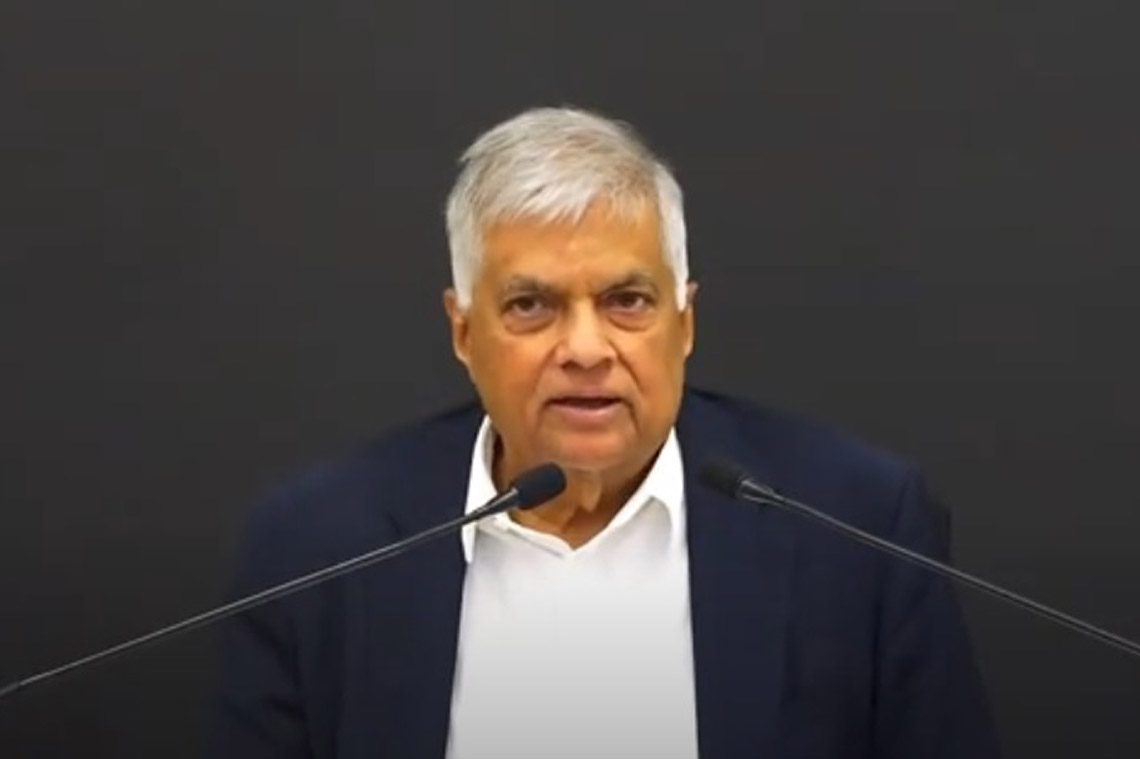

Former President Ranil Wickremesinghe raised concerns on Monday about how President Anura Kumara Dissanayake became aware of his private communication with the Bribery Commission regarding the scheduling of his testimony.
Wickremesinghe said he was initially asked to appear before the Commission to Investigate Allegations into Bribery and Corruption (CIABOC) on April 15 to answer questions related to a public statement he had made on April 10, 2025. However, he informed the Commission that he would be unable to attend as he was away from Colombo during the Sinhala and Tamil New Year holidays. A new date of April 25 was proposed, but Wickremesinghe again declined, citing that his lawyer was overseas at the time. He emphasized the importance of his lawyer’s presence since he had been named a suspect in the case.
Despite this private exchange, President Dissanayake reportedly stated at a public event in Batticaloa that Wickremesinghe had declined to appear on April 15 due to New Year celebrations. “How did the President know about my communication with the Bribery Commission?” Wickremesinghe asked.
The former President also alleged that the Bribery Commission initially refused to let his lawyer accompany him.
Wickremesinghe eventually appeared before the Bribery Commission and gave a statement that lasted over three hours. He defended the withdrawal of funds from the Uva Provincial Council’s bank account, saying it was not unlawful. The investigation relates to the actions of former Uva Province Chief Minister Chamara Sampath Dassanayake, who is accused of withdrawing council funds during Wickremesinghe’s administration.
He argued that spending government-allocated funds on regular and capital expenses stimulates economic activity, unlike keeping the money idle in bank accounts. “Not spending the money is what harms the economy,” he said, adding that circulating funds is essential for growth.
Wickremesinghe also referred to the Public Financial Management Act of 2024, noting that it provides clear guidelines and conditions for the legitimate use of public funds. He further mentioned that in 2008, government funds were moved from higher-interest bank accounts to those offering lower interest, and that his administration in 2002 allowed deposits in banks with better rates.