
Authorities warn of cascading risks across Colombo, Central, Sabaragamuwa and North Central regions as floodwaters submerge vital national systems
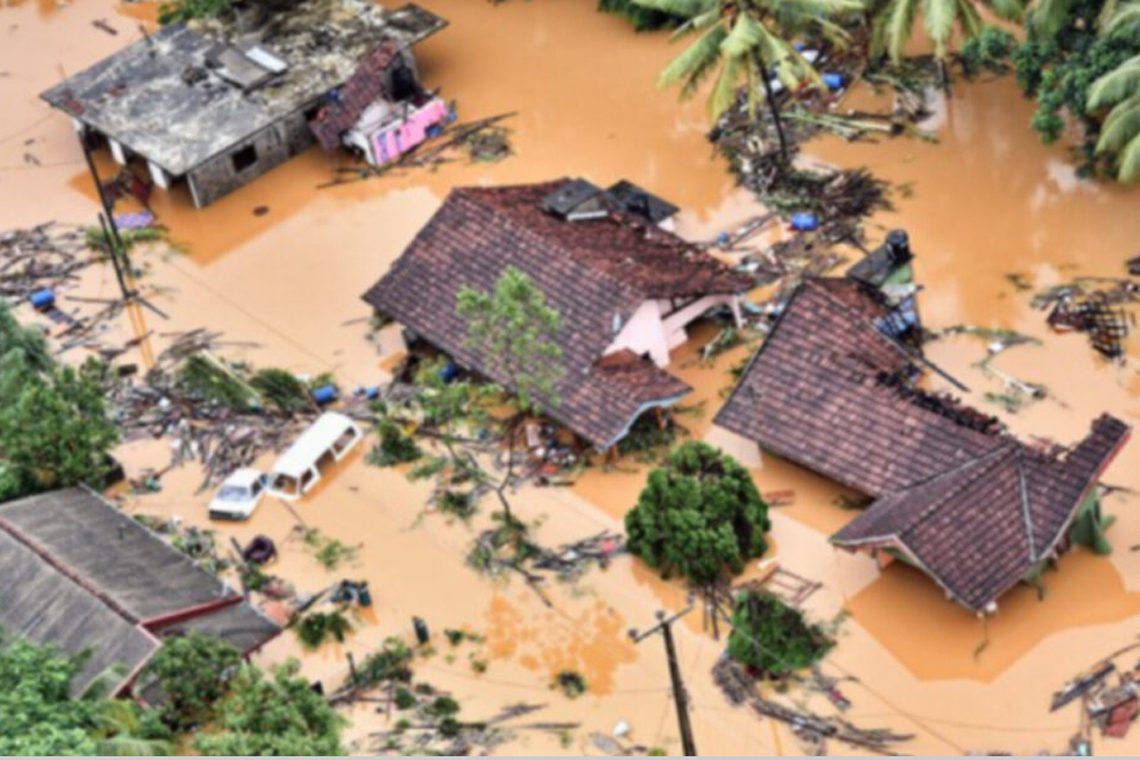
Sri Lanka’s critical infrastructure is buckling under the escalating impact of Cyclone Ditwah, with major transport, water, and power systems either partially or fully shut down as torrential rains and severe winds continue nationwide. Colombo Port — the country’s busiest maritime hub — temporarily suspended operations on Friday due to hazardous weather, while multiple water purification plants and pumping stations across several provinces have been submerged, threatening drinking-water supplies to millions.
The rapidly deteriorating situation prompted the Ministry of Health to declare a week-long health emergency, urging hospitals to activate 24-hour crisis protocols and cancel staff leave. Meanwhile, the national power grid has suffered islandwide failures, with more than 25% of the country experiencing electricity outages as floodwaters damage key transmission lines and hydropower stations.
Colombo Port Halts All Terminal Operations
The Sri Lanka Ports Authority (SLPA) announced that all terminal operations at Colombo Port have been temporarily suspended, citing unsafe conditions caused by persistent heavy rainfall and strong winds.
Colombo — a major transshipment hub in the Indian Ocean — handles over 70% of South Asia’s container traffic, making operational interruptions rare and economically significant. Officials said port activities will resume only when wind speeds decrease and visibility improves.
Water Supply Crisis Looms as Pumps and Treatment Plants Submerged
The National Water Supply and Drainage Board (NWSDB) confirmed that many key water sources and purification centres have been inundated by rising floodwaters, particularly in the Central, North Central, Uva, and Sabaragamuwa Provinces.
Chairman Chandana Bandara said some facilities are now completely inaccessible:
Kandy District: Several main pumping stations and purification plants are fully underwater, requiring significant time to restore.
Kegalle and Mawanella: Water supply disruptions are already widespread.
North Central Province: Pumping stations have been submerged following overnight floods.
Uva and Sabaragamuwa: Critical water-intake points are underwater and pumps cannot operate.
While the Western Province has not yet seen major water-supply interruptions, authorities warn that if the Kelani River rises another seven feet, the vital Ambatale purification plant — which supplies much of Colombo — will face operational failures.
“If that happens, Colombo City could face a serious water shortage. We are trying to stabilise the situation as much as possible,” Bandara said.
Health Ministry Declares Emergency; Hospital Leave Cancelled
With floodwaters rising and transport networks breaking down, the Ministry of Health declared a nationwide health emergency effective from November 28 to December 4.
A special circular signed by Secretary Dr. Anil Jasinghe instructs:
All hospital leave cancelled until further notice
Hospital directors must activate 24-hour emergency care staffing
Patients receiving non-critical residential treatment in affected districts should be safely discharged when medically appropriate
ICU equipment, neonatal units, and critical-care wards located in vulnerable buildings must be immediately relocated to higher floors or safer facilities
The circular emphasises full mobilisation of medical teams in disaster-hit regions.
Power Grid Under Strain as Major Lines Collapse
The ongoing severe weather has damaged several parts of the national electricity grid, with nearly 25% of the island experiencing outages.
Ceylon Electricity Board (CEB) General Manager Shirly Kumara said restoration efforts are extremely challenging due to inaccessible areas and submerged infrastructure.
Among the most serious damages:
The 132,000 kW transmission line between Rantembe–Randenigala–Mahiyanganaya has collapsed
Floodwaters have made the damaged tower inaccessible
Another tower between Bowahtenna and Ukuwela has toppled
As a precaution, the Bowahtenna power station has been shut down
Kotmale and Upper Kotmale hydropower stations have been partially or fully taken offline due to mud-laden water, debris, and safety risks
One generator at Kotmale has been shut down due to a water leak, with two others still operating
“All other hydropower and thermal stations are running at maximum output,” Kumara said, though engineers warn further disruptions are possible if rainfall continues.
A National System Under Pressure
With ports halted, water systems failing, hospitals under emergency protocols, and the power grid compromised, Sri Lanka is now confronting one of its most widespread infrastructure emergencies in recent memory.
Officials stress that while contingency plans are underway, the coming days — as Cyclone Ditwah continues to influence weather patterns — will be crucial in determining whether the country can prevent a deeper humanitarian crisis.