
Over 774,000 affected; nearly 101,000 sheltering in evacuation centres as Navy conducts rescue missions and international aid arrives
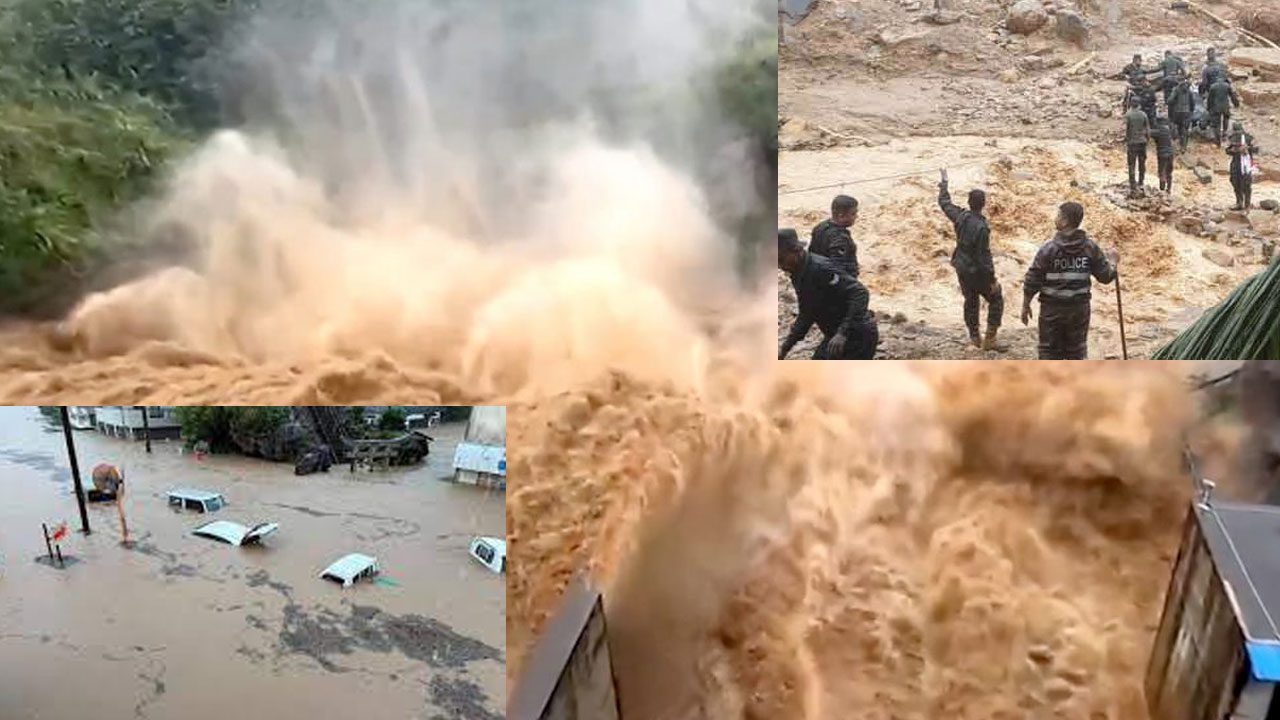
Sri Lanka’s humanitarian crisis deepened on Friday as the number of confirmed deaths linked to Cyclone Ditwah climbed to 153, with 191 people still missing, according to the Disaster Management Centre (DMC). The cyclone, which unleashed days of heavy rain, flooding, and landslides across all 25 districts, has now become one of the most destructive weather events in recent years.
The DMC’s latest situation report at 6.00 p.m. confirms that 774,724 people from 217,263 families have been affected islandwide. Of them, 100,898 individuals are currently housed in 798 evacuation centres, signalling both the scale of displacement and the pressure on emergency shelters.
Navy Deploys Rapid Relief Teams to Trincomalee and Ampara
Responding to intensifying floods overnight, the Sri Lanka Navy deployed multiple rescue teams to Trincomalee and Ampara, where rivers overflowed and entire neighbourhoods became inaccessible. Officers reported rescuing residents from Shafi Nagar, Muthur, Mayala Panchaveli in Kinniya, and Kalmunai, transferring families to high ground and safer temporary shelters.
Boats, lifesaving teams, and inflatable craft were deployed from early morning, with the Navy describing conditions as “extremely challenging” due to fast-moving floodwaters and debris.
International Aid Aircraft Lands in Colombo With Emergency Supplies
Amid escalating needs, a humanitarian aid aircraft carrying 12 metric tons of emergency supplies — including tents, tarpaulins, blankets, hygiene kits, and ready-to-eat meals — arrived in Colombo. The consignment is expected to be distributed through government channels and humanitarian partners supporting relief across the island.
Officials said more foreign assistance is being coordinated, though exact details have not been fully disclosed.
Early Warnings Issued — but Many Residents Say They Weren’t Reached
As Sri Lanka’s emergency response unfolded, questions emerged over the effectiveness of early-warning systems and community-level communication.
Although the DMC activated national emergency mechanisms earlier in the week, many residents told the Sunday Times they only realised the gravity of the cyclone late on Thursday night, by which time evacuation routes had begun flooding.
Communities in districts like Kandy, where power cuts began early, said they received no advance advice to charge phones, prepare torches, or secure alternative communication devices — leaving them cut off as the storm intensified.
Several others described confusion over the locations of designated “safe centres,” with some saying the instructions repeated on television or radio did not translate to practical, household-level guidance.
Under Sri Lanka’s disaster-response framework, warnings and evacuation messages must be relayed through Grama Niladharis attached to District Secretariats. The Sunday Times could not independently confirm whether these alerts reached high-risk communities consistently or on time.
Residents Hesitate to Evacuate as Landslide Risk Spreads
In multiple districts, evacuation orders were issued for landslide-prone areas. Yet despite repeated alerts, officials said some residents were reluctant to leave their homes, believing the storm “would not be that bad.”
A severe landslide in Badulla on Friday underscored the risks, with images showing homes destroyed and rescue teams working through unstable terrain.
Access to essential supplies — including drinking water, dry rations, medical items and fuel — remains uneven, with some roads cut off by floods or earth slips. Residents also reported difficulties reaching evacuation centres due to washed-out footbridges and submerged village lanes.
DMC: National Mechanisms Fully Activated Under Disaster Management Act
Deputy Director of the DMC, Janaka Handunpathiraja, said all national systems were formally activated in line with the National Disaster Management Act of 2005.
Under this framework, the President appoints a special council during emergencies, enabling the tri-forces, police, district authorities, and first responders to coordinate under a unified command.
Handunpathiraja added that the National Emergency Operation Plan (2017) is automatically triggered during a major disaster, guiding communication, logistics, evacuations, and inter-agency coordination. He emphasised that the tri-forces are operating “within this structure” and that regional administrations have been instructed to prioritise rescue operations.