
Around 200 metric tons of crude oil were released into the sea following a leak that occurred early this morning (14) during the transfer of oil from a tanker vessel to the Ceylon Petroleum Corporation.
Samantha Gunasekera, Chairman of the Marine Environmental Pollution Authority (MEPA), stated that the oil spill was caused by an explosion in a pipeline carrying crude oil from the tanker MT ASP Avana. The vessel was anchored in deep sea near the Colombo Port at a crude oil unloading buoy operated by the Sri Lanka Petroleum Corporation.
He explained that the explosion occurred in a pipeline extending approximately three and a half nautical miles from the Colombo New Harbour. As a result of the explosion, the transfer of oil from the vessel to the pipeline was temporarily halted.
Based on available information, Mr. Gunasekera estimated that about 200 metric tons of crude oil may have leaked into the seawater. He said the explosion took place around 3.00 a.m., and it is believed that the oil entered the deep sea within 20 minutes, by approximately 3.20 a.m.
According to observations made this morning (14), the oil slick was seen gradually drifting southward in the deep sea, influenced by ocean currents and wind direction.
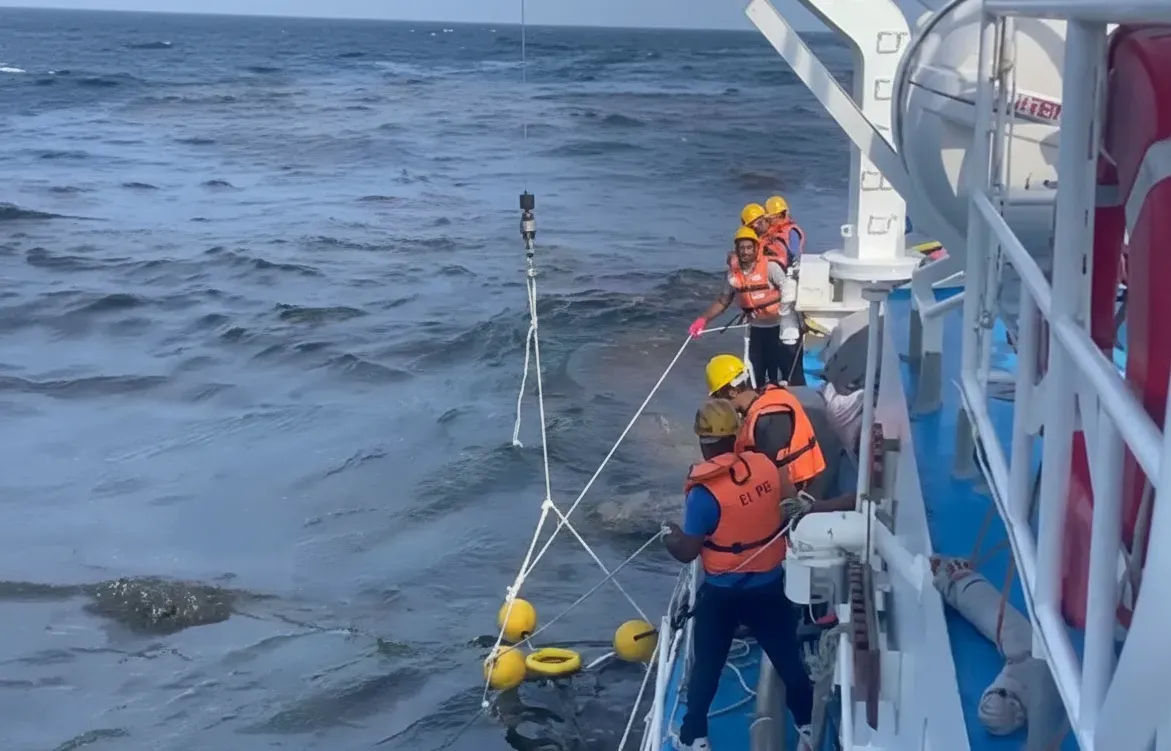
The Chairman further stated that, with the assistance of port staff, the Sri Lanka Navy, and the Coast Guard, several vessels including two tugboats were deployed to the Wellawatte area to monitor the oil slick visible offshore.
He noted that response teams made every effort to recover the spilled oil, including dispatching an additional tanker to assist in collection. The recovered oil was transported to shore using vessels equipped with oil storage facilities.
Mr. Gunasekera also said that aerial monitoring conducted with the assistance of the Sri Lanka Air Force indicated that the estimated volume of oil leaked was consistent with the observed spread captured in video footage.
Emphasizing containment efforts, he assured that all possible measures are being taken to prevent the oil slick from reaching the shoreline and that efforts will continue to remove the oil while it remains in deep sea waters.