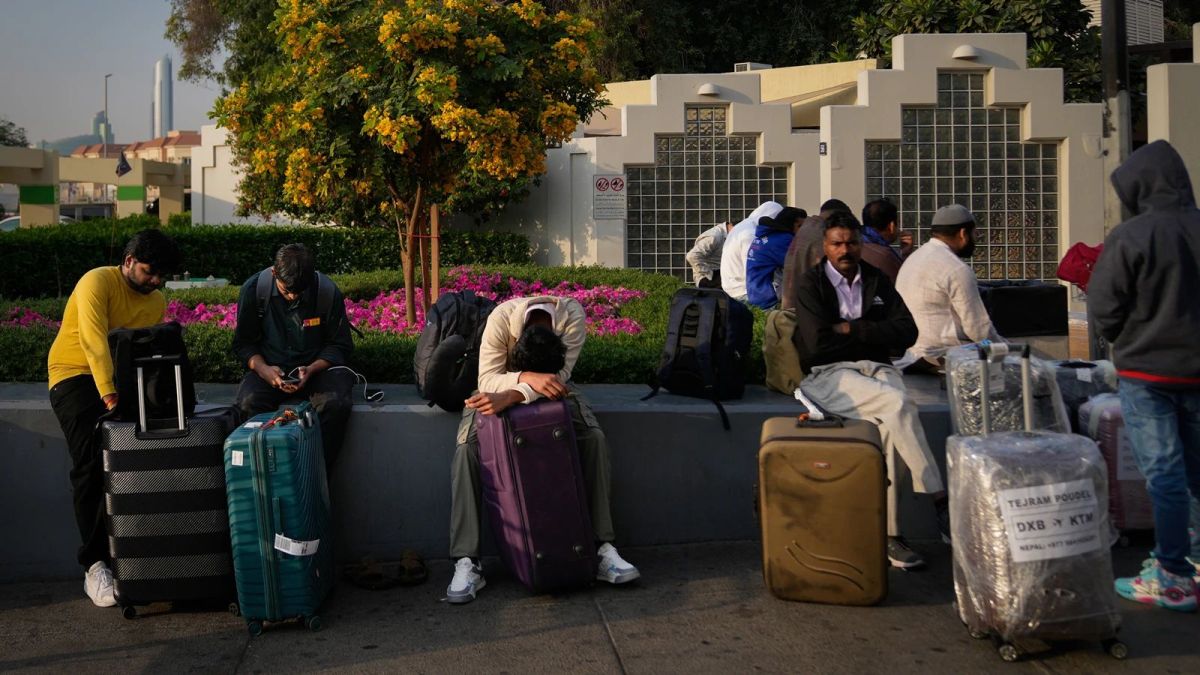

In the bustling airport of Colombo thousands of Sri Lankans have long boarded flights to the Gulf, chasing dreams of steady paychecks that support families back home. The Middle East – particularly the oil-rich Gulf Cooperation Council (GCC) countries of Saudi Arabia, the United Arab Emirates, Qatar, Kuwait, Oman, and Bahrain has been a lifeline for migrant workers from Sri Lanka and across the developing world. From construction labourers and domestic helpers to nurses and engineers, these nations employ millions, funnelling remittances that keep economies afloat. For Sri Lanka, where worker remittances hit a record US$8.076 billion in 2025 (with nearly half from the Middle East), this job corridor is not just an opportunity it is economic oxygen.
Yet, as of April 2026, that corridor feels increasingly uncertain. A fragile two-week ceasefire brokered between the US, Iran, and Israel (with implications for Hezbollah in Lebanon) has offered a momentary pause after weeks of escalation that began in late February. Strikes disrupted the Strait of Hormuz, displaced over a million in Lebanon, and rattled global energy markets. Earlier tensions, including Houthi actions and the fragile Gaza ceasefire from October 2025, have already delayed flights, frozen some recruitments, and heightened safety fears. For Sri Lankan families reliant on Gulf salaries, the question looms: What does the future hold for jobs in a region scarred by conflict?
A Region of Resilience Amid Volatility
The Middle East’s job market has always been a tale of contrasts – vast opportunities powered by petrodollars, tempered by local policies favouring nationals. The GCC alone hosts around 35 million foreign workers, who make up over half the population in several member states. South Asian migrants, including Sri Lankans, dominate sectors like construction, hospitality, domestic work, healthcare, and logistics.
Despite the wars, GCC economies are projected to grow robustly at 4.1–4.5% in 2026, outpacing the global average. The driver? Diversification away from oil. Saudi Arabia’s Vision 2030, the UAE’s tech and tourism hubs, and Qatar’s post-World Cup infrastructure push continue apace. Non-oil sectors – AI, renewables, finance, logistics, and entertainment – are creating demand for skilled labour even as low oil prices and fiscal caution slow some mega-projects.
However, nationalisation policies are reshaping the landscape:
Saudi Arabia: Saudization (Nitaqat) is intensifying. From April 2026, 69 more administrative professions face 100% localisation, while retail quotas rise and marketing/sales roles must be 60% Saudi. The kingdom aims to add 340,000 private-sector jobs for nationals between 2026 and 2028. Expats remain vital for specialised skills, but entry-level and mid-tier roles are tightening.
UAE and Qatar: Emiratisation and Qatarisation follow suit, prioritising nationals in banking, government contracting, and services. Short-term visas offer flexibility for project work, but companies face quotas and penalties for non-compliance.
Kuwait, Oman, Bahrain: Similar trends, with a focus on replacing low-skilled foreign labour.
The wars add another layer of caution. Project awards in infrastructure dipped sharply in 2025 due to uncertainty, and expats in Dubai and elsewhere report anxiety not over missiles, but over layoffs, visa cancellations, and delayed contracts. “We’re not scared for our lives,” one anonymous Dubai worker told reporters. “The fear is the economy. Am I going to be laid off?”
In war-affected pockets beyond the GCC – Lebanon (over 1 million displaced since March), Yemen, Iraq, Syria, and Jordan – job markets are in tatters. Unemployment in Gaza hovers near 80%, while reconstruction in conflict zones could eventually create opportunities, but stability remains elusive.
The Sri Lankan Stake: Remittances Under Pressure
For Sri Lanka, the stakes are personal and national. An estimated over 1 million Sri Lankans work in the Middle East. In early 2026, daily departures averaged 666 to the Gulf out of 862 total foreign employment slots. Kuwait, UAE, and Saudi Arabia top the list. Remittances from these workers stabilise foreign reserves and lift households out of poverty.
Recent escalations have already bitten. Flight cancellations, recruitment halts in construction and hospitality, and fears of contract non-renewals threaten thousands of jobs. Analysts warn that prolonged conflict could slash monthly opportunities by nearly 20,000, potentially pushing up domestic unemployment by 5% and straining household incomes (average monthly remittance per worker: around US$509).
Yet the Gulf’s need for labour persists. Essential services – delivery, healthcare, security, and infrastructure maintenance – rely on migrants even amid heightened risks. Human Rights Watch notes that millions of foreign workers continue vital roles despite the dangers.
Looking Ahead: Cautious Optimism with a Skills Imperative
The short term is bumpy. A fragile ceasefire offers hope, but renewed flare-ups could delay projects and prompt more repatriations. Lower oil revenues and global supply-chain ripples (from earlier Red Sea disruptions) may slow hiring in traditional sectors.
The long term, however, points to transformation. GCC growth is increasingly non-oil driven, favouring professionals in technology, green energy, tourism, and AI. Sri Lankan workers who upskill – through vocational training in IT, healthcare, or logistics – stand to benefit. The region’s mega projects (Saudi’s NEOM, UAE’s smart cities) will still need talent from abroad, even as nationals fill more roles.
For Sri Lanka’s government and recruitment agencies, the moment calls for action: stronger pre-departure training, diversified destinations (Europe and East Asia are slowly growing), and robust welfare support for returning migrants. Bilateral agreements ensuring fair contracts and emergency repatriation are more critical than ever.
The Middle East’s job market has weathered wars, pandemics, and oil crashes before. Its wealth, ambition, and demographic realities ensure it will remain a global employer. For Sri Lankans scanning the horizon from Kandy to Kilinochchi, the message is clear: the Gulf is changing, but it is not closing. Adaptability in skills, mindset, and policy will determine who thrives in the uncertain years ahead. In a region where conflict and opportunity have long coexisted, the future belongs to those ready for both.
Sri Lanka Still Resilient Amid Middle East Crisis – CBSL Governor