
The country is in a terrible crisis. A state where the economy has completely collapsed and declared bankruptcy is preparing for the worst. Another concern is food security and starvation.
All of these disasters have resulted in a two hundred percent increase in the price of goods, including all essential food items, in another country. The VAT will hit the bun and the bun will be 100 rupees. In such an environment, tobacco cultivation, which destroys the fertile land of this country and destroys agriculture, is still thriving and entertaining. Taxes on cigarettes are being viciously avoided. The state’s vicious thieves will not allow a fair tax on cigarettes, which create the country’s leading respiratory disease without drugs and kill 25,000 people a year.
This is the first in a series of articles on the disaster. Saman Dharmakeerthi, Professor of Soil Science, University of Peradeniya, speaks out about the scientific basis for the destruction of this land by the deadly cultivation that destroys food security.
Question: What is the effect of tobacco cultivation on the soil?
There are several adverse effects on soil resources if Tobacco fields are not properly managed. It is a crop that digs into the soil for nutrients such as Nitrogen Phosphorus and Potassium. As it spreads as a crop, it removes large amounts of vital oil nutrients from the field.
Therefore, if plant nutrients are not adequately supplied to the soil as organic or chemical fertilizers, over time the nutrient storage in the soil will deplete and make the soil less fertile for growing crops.
Tobacco is usually grown without weeds to minimize competition for resources and maximize production. Therefore, tobacco is considered to be the crop with the highest potential for soil erosion. Erosion of fertile top soil leads to sedimentation in some water resources.
Tobacco is a continuous single crop. It is a frequently cultivated crop and is prone to frequent pests and diseases. Therefore, tobacco cultivation generally uses a large number of pesticides (insecticides, herbicides, fungicides and fumigants) and growth regulators. Some of them may accumulate in the soil, threatening the functioning of the soil ecosystem. At the same time, runoff water, which contributes to water pollution, can be diverted to streams.
Another concern is water. This crop needs a lot of water to grow. Therefore, if cultivated in a dry environment, soil water can be reduced and the land can become dry.
Question: Does it affect other crops grown close to tobacco?
The chemical called Nicotine, which contains in Tobacco plants can be released into the soil through the root system or after the Tobacco waste is incorporated into the soil.
Therefore Tobacco cultivation should not be close to other crops prescribed for human or animal nutrition.
Question: How does the destruction of tobacco in developing countries affect the sustainability of other crops or plants?
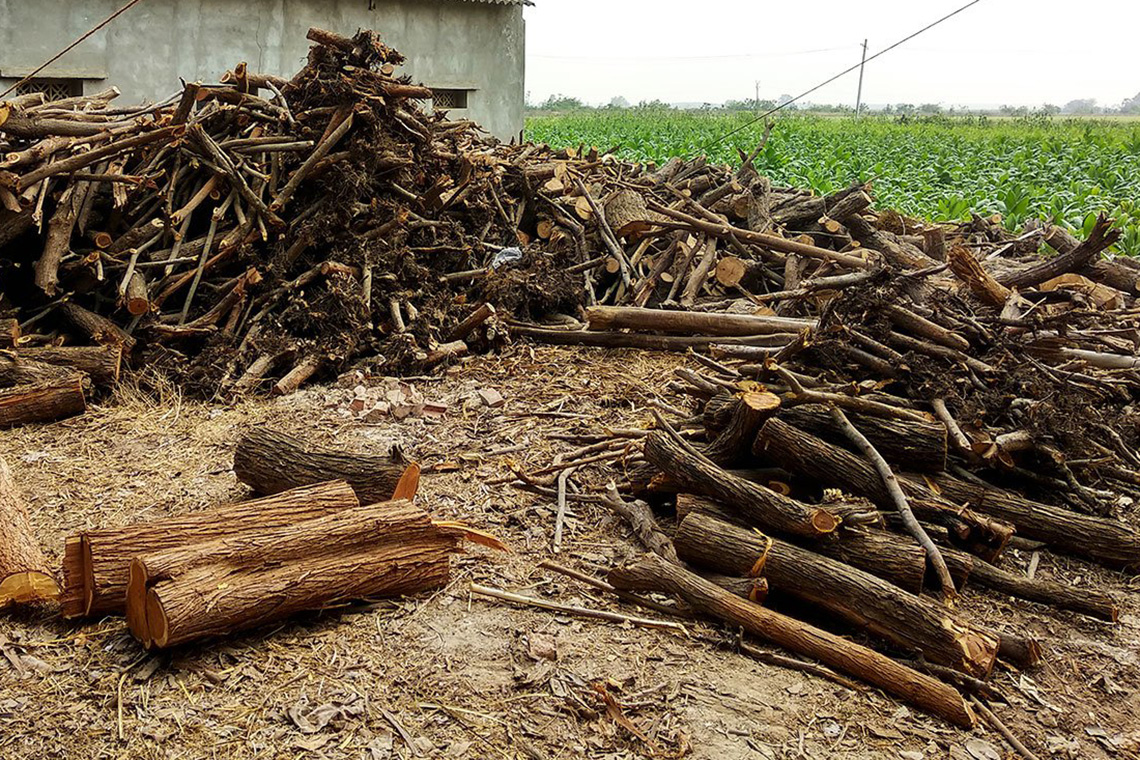
When a crop become very profitable, people tend to acquire land to grow such crops. Tobacco has been identified as a very profitable crop. When lands are limited, there is a tendency to invade forests for tobacco cultivation and to use natural materials to obtain firewood for tobacco processing.
People around the world are already witnessing the devastation caused by the expansion of tobacco cultivation. Therefore, it is clear that the expansion of tobacco cultivation is a threat to the country’s limited reserve forests.
Question – How does tobacco cultivation affect other food crops in the home, especially in today’s food insecure context?
The amount of land we can cultivate is very limited. Many of these lands have already been used for food crops and plantations.
Even now we are in the verge of a food crisis. We are already facing already facing a food shortage in the country. Farmers in the country are likely to opt out of agriculture as it has become less profitable. If the abandoned lands are used for tobacco cultivation, we will never be able to ensure the food security of the country. Without proper inputs, tobacco will deplete even the limited amount of nutrients in plant soil and make our soil very barren and degraded.
When the country returns to normal and farmers want to grow food crops, we will not be able to achieve the desired productivity levels. The massive cultivation drive must begin immediately to alleviate some of the current food crisis.
Question – Does Tobacco industry particularly contribute to emission of greenhouse gases? How does this affect climate change?
As I mentioned at the outset, Tobacco is increasingly being grown as a solitary crop with continuous cultivation operations and heavy chemical fertilizer application. The soil is frequently disturbed due to cultivation and mechanical weeding activities. It accelerates the decomposition of organic matter in the soil and releases carbon dioxide, a greenhouse gas, into the atmosphere.
Excessive use of nitrogen fertilizers is a major contributor to greenhouse gas emissions such as Nitrous Oxide. In addition to cultivation, wood burning releases carbon dioxide during the healing process.
On a global scale, cigarette smoke alone contributes significantly to three greenhouse gases, carbon dioxide, methane and nitrous oxide.
With all these proven facts Tobacco is considered as one of the top crops emitting GHG when calculating the carbon footprint on land productivity. These greenhouses contribute to global warming and therefore contribute to climate change. Therefore, it has been suggested that countries aiming to achieve the Sustainable Development Goals should take action to minimize the environmental damage caused by the tobacco industry.