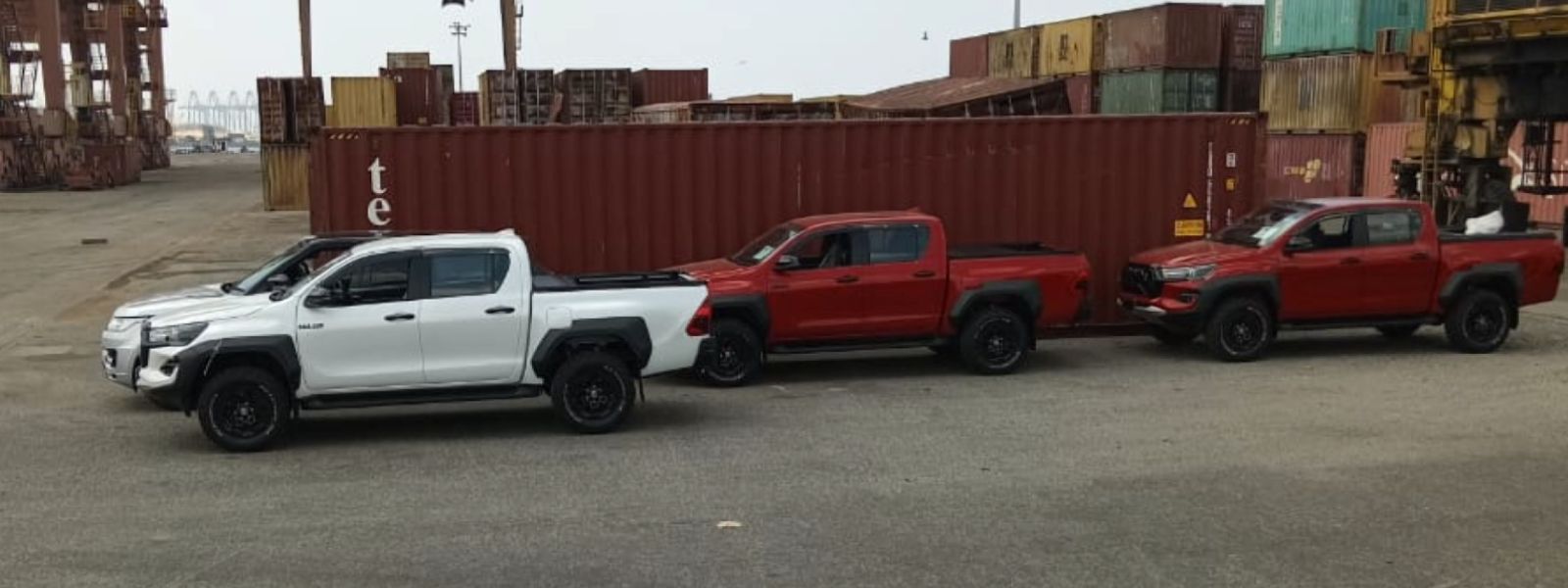

Sri Lanka welcomed its first shipment of vehicles yesterday evening at Colombo Port, marking the end of a five-year import ban imposed in 2020. The vessel, arriving from Thailand—home to manufacturing plants of Japanese automakers—delivered a range of vehicles to eager importers and consumers. A second shipment is scheduled to dock at Hambantota Port tomorrow, February 27.
According to vehicle importers, the first shipment consists mainly of double cabs and SUVs. They speculate that there will be significant price reductions compared to the current second-hand market. For example, a brand-new Suzuki Wagon R is expected to be priced lower than an older model currently sold in the local market.
The lifting of the import ban, effective from February 1, 2025, has been met with both anticipation and concern. While consumers are eager for new vehicle options, the updated tax structure has led to significant price increases, making vehicle ownership less attainable for many Sri Lankans.
Revised Tax Structure Impacting Vehicle Prices
As of February 1, 2025, Sri Lanka Customs has implemented a 30% import duty on motor vehicles, a 50% increase from the previous 20% rate. In addition to this, several other taxes are applied to imported cars:
Luxury Tax: Imposed on vehicles exceeding a specified value.
Value Added Tax (VAT) An 18% tax is applied on top of the import duty and other fees.
Special Import Tax: Calculated as a percentage of the vehicle’s value.
Excise Duty: Ranging between 200% to 300%, depending on the vehicle category.
These cumulative taxes have resulted in a substantial increase in vehicle prices, with some models experiencing price hikes of up to 600% due to import taxes.
Price Adjustments by Manufacturers
In response to the new tax regime, manufacturers have updated their pricing structures. Toyota Lanka, for instance, has released revised prices for its range of brand-new vehicles. These adjustments reflect current exchange rates, duties, and government levies, with all prices inclusive of VAT.
Consumer Concerns and Market Outlook
The surge in vehicle prices has raised concerns among consumers and industry stakeholders. The Ceylon Motor Traders Association has highlighted that the significant price increases, compared to pre-pandemic levels, have limited affordability and may lead to a shrinking market.
Despite the challenges, the reintroduction of vehicle imports is expected to stimulate economic activity and increase government revenue. However, the high costs associated with purchasing a vehicle under the new tax structure may deter potential buyers, impacting overall sales and market dynamics.
As the second shipment arrives at Hambantota Port tomorrow, the automotive industry and consumers alike will be closely monitoring how the market adapts to these changes in the coming months.