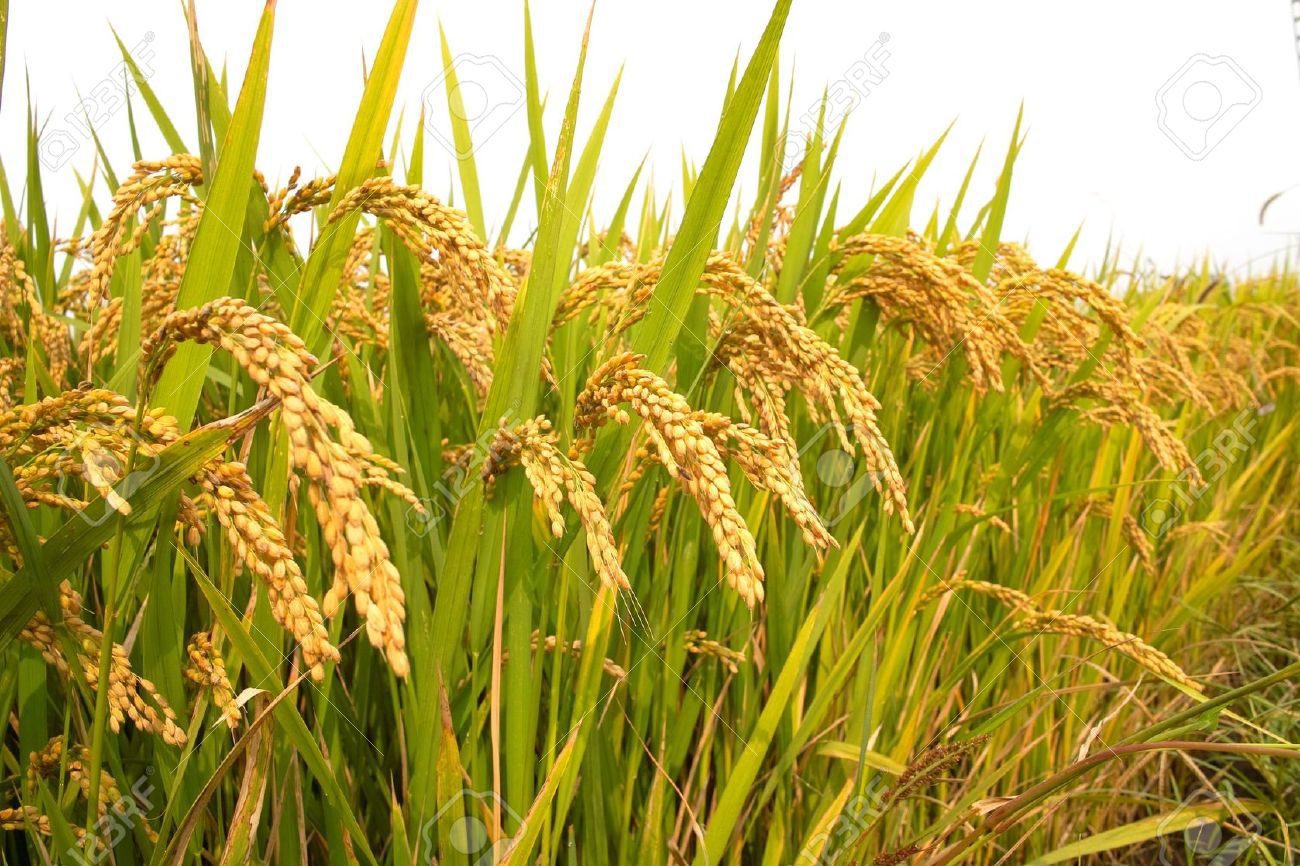

Sri Lanka’s paddy farmers are at a breaking point. Frustration is mounting across the country as government-mandated prices fail to cover the rising costs of cultivation. With extreme weather wreaking havoc on yields and private millers offering competitive rates, the situation is slipping out of control. If a sustainable solution isn’t found soon, the nation’s rice production could face an existential crisis.
Desperation in the Fields
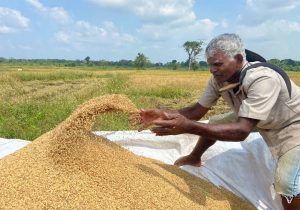
On the ground, the frustration is palpable. In Vavuniya, hopeful farmers arrived at the Paddy Marketing Board (PMB) office, expecting to sell their harvest under the government’s new pricing scheme. Instead, they were turned away—funds had not yet been allocated. For many, waiting was not an option. With loans looming and household expenses piling up, they opted to sell their Nadu rice to private collectors, who were offering a slightly higher price.
But the problem goes far beyond delayed payments. Heavy rains have devastated fields, leaving crops waterlogged and un harvestable. Farmers like Sivakuar Kandasamy , who had painstakingly cultivated three acres, found more than half their yield destroyed. With dwindling harvests, selling rice at the government’s fixed price barely covers costs, let alone turns a profit.
The struggle doesn’t end once the paddy is harvested. In Kilinochchi, drying facilities are scarce, forcing farmers to spread their grain on busy roads to catch the sun’s heat. At dawn, they jostle for space along the Paranthan-Mullaitivu road, navigating the dangers of passing traffic just to prepare their rice for sale.
A Price That Doesn’t Add Up
The government insists that its pricing formula is fair. Experts argue that with the Maximum Retail Price (MRP) of red Nadu rice set at a fixed rate, the cost of paddy should be lower to ensure market stability. But farmers see it differently. They claim the official production cost figures are unrealistically low, failing to reflect the real expenses of labor, transport, and fertilizers. While some areas like Ampara may see lower costs due to higher yields, northern farmers battling adverse conditions say they’re being left behind.
The Policy Crossroads: Subsidies or Minimum Price?
The crisis begs a crucial question—should the government step in with direct subsidies, or should it raise the minimum guaranteed price? Both approaches have their pros and cons.
The Case for Subsidies:
Targeted relief ensures support goes to the farmers who need it most, rather than disproportionately benefiting large-scale producers.
Subsidies can promote sustainable farming practices, such as encouraging farmers to leave land fallow during surplus years to protect soil quality.
Unlike a higher minimum price, subsidies don’t push up food costs for consumers, which is crucial for low-income households.
The Risks of a Higher Minimum Price:
While raising the minimum price guarantees higher earnings for farmers, it doesn’t address deeper structural problems like inefficient production methods and reliance on outdated farming techniques.
It can lead to overproduction, forcing the government to buy and store surplus rice, a costly and inefficient solution.
A guaranteed higher price may encourage excessive use of chemical fertilizers and pesticides, harming the environment in the long run.
Thinking Beyond Short-Term Fixes
Sri Lanka needs more than just a quick fix—it needs a long-term strategy to make rice farming viable. Reducing production costs through better irrigation, modern machinery, and high-yield seed varieties could ease farmers’ financial burden. Expanding government-run drying and storage facilities would prevent desperate road-side drying tactics. Encouraging crop diversification and agro-tourism could provide alternative income streams and reduce dependence on rice alone.
The clock is ticking. If Sri Lanka fails to address its paddy crisis with bold, forward-thinking solutions, the nation risks not only a farming collapse but a broader food security disaster. Farmers are demanding answers—and they need them now.