
Amid the government’s drive to promote electric vehicles (EVs) as part of its renewable energy and pollution reduction goals, public enthusiasm for EVs appears to be waning, the Electric Vehicle Owners Association (EVOA) has warned.
According to the association, the main reason for this decline is the recent actions of Sri Lanka Customs, which have detained over 1,000 BYD electric vehicles, creating uncertainty among both investors and consumers.
In July 2025, Customs officials detained two BYD shipments imported by John Keells CG Auto (Pvt) Ltd, the authorized BYD distributor in Sri Lanka. After the company filed a writ application, Customs agreed on August 7 to release 991 vehicles under a bank guarantee and another 506 vehicles on September 3. However, a further 1,000 vehicles have since been detained.
Reports indicate that the detentions are linked to allegations that the motor capacities of the vehicles were under-declared, leading to lower import duties.
The EVOA cautioned that the situation has caused serious disruption for consumers who have already purchased EVs or made advance payments. The association estimates that over 10,000 electric and plug-in hybrid vehicles were purchased in the past six months.
EVOA Convener Deelaka Pitagampola urged the government to intervene immediately to resolve the matter and ensure a smoother EV import process.
He pointed out that the Customs Department’s refusal to accept Manufacturer Certificates and the absence of internationally accredited laboratories in Sri Lanka for verifying motor power have led to confusion and a loss of consumer confidence.
“Accurate verification of motor power can only be done in properly equipped laboratories. Without such facilities, any local testing will only worsen the issue,” Pitagampola explained.
While Sri Lankan universities have the technical expertise, he said, they lack the infrastructure to perform reliable testing. He also warned that any report issued by a Customs-appointed committee without proper verification could deepen the crisis and further damage the EV sector.
The association called on Customs to seek independent certification from recognized international laboratories to verify the motor power of the detained vehicles. It also warned that prolonged delays could discourage private investment in EV charging infrastructure and service networks, ultimately slowing progress toward Sri Lanka’s carbon-neutral target for 2050.
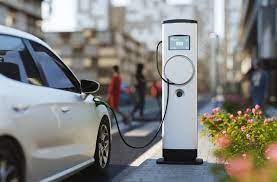
Currently, there are around 150 EV charging stations operating across the country, though experts estimate that at least 1,000 stations are needed to meet growing demand and support wider EV adoption.
“Consumers who have already invested in EVs are facing unnecessary difficulties. Authorities must act swiftly to restore order and confidence,” the association emphasized, accusing some officials of allowing the issue to persist under the pretext of a tax dispute.