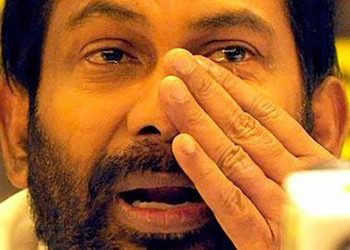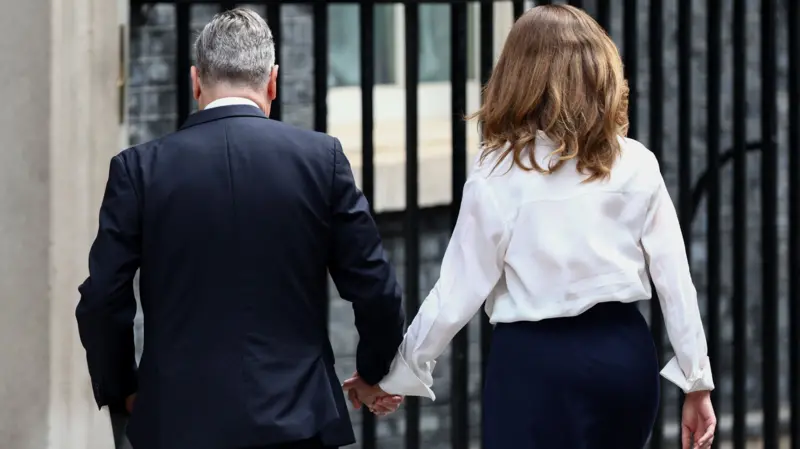

In a dramatic address outside 10 Downing Street, Prime Minister Sir Keir Starmer announced his resignation as both Prime Minister and Leader of the Labour Party, bringing to a close a tumultuous two-year tenure marked by soaring hopes and bitter disappointments. Flanked by senior cabinet members and with his wife Victoria by his side, a visibly emotional Starmer fought back tears as he conceded that internal divisions had made his position untenable.
“I have given everything to this role,” Starmer began, his voice cracking with emotion. “Every decision I have taken has been about putting the country I love first. That is why, with a heavy heart, I will resign.” The usually stoic former prosecutor paused several times, swallowing hard as he reflected on the personal toll. Witnesses described the moment as raw and unscripted, a far cry from the measured, lawyerly delivery that defined his rise to power.

Starmer’s speech mixed defiance, gratitude, and subtle self-criticism. He defended his government’s achievements stabilizing the economy after the post-Brexit and pandemic chaos, advancing green energy initiatives, and delivering on NHS waiting list reductions but acknowledged missteps that fueled the rebellion within his own party. “We moved too fast on some reforms without bringing enough people with us,” he admitted, in what insiders called a partial mea culpa on contentious policies like winter fuel payment cuts and planning reforms that alienated rural voters and traditional Labour heartlands.
The resignation comes after months of mounting pressure. A string of poor local election results, record net immigration figures, energy shortages, and backlash over inheritance tax changes on family farms eroded Starmer’s authority. The tipping point was the recent by-election triumph of Greater Manchester Mayor Andy Burnham, who is now the clear front runner to succeed him. Senior Labour figures, including several who served in Starmer’s cabinet, had privately urged him to set a departure timeline to avoid a damaging leadership contest.
In his address, Starmer struck a statesmanlike tone, praising Labour colleagues and even extending olive branches to political opponents. Yet there was an undercurrent of frustration. He criticized “short-termism” in politics and hinted at dissatisfaction with elements of his own party that “prioritized internal purity over governing for the whole country.” His voice rose with quiet intensity when addressing critics: “Change is never easy, and I stand by the tough choices we made to secure Britain’s future.”
The emotional peak came when Starmer spoke of his family. “To Victoria, and our children – thank you for your patience and love through the long nights and difficult days.” At that point, his eyes welled up, prompting a supportive arm from his wife. The moment humanized a leader often accused of being aloof and technocratic.
Starmer will remain in office as a caretaker until the Labour Party completes its leadership process, likely culminating at the autumn conference. Burnham, who won a high-profile by-election last week, is expected to move swiftly into Downing Street, potentially becoming the UK’s seventh prime minister in a decade.
Political analysts described the resignation as both inevitable and seismic. “Starmer delivered Labour’s biggest landslide in a generation but struggled with the realities of governance in a fractured Britain,” said one Westminster insider. Supporters hailed his integrity and steady hand during crises, while detractors pointed to broken promises on economic growth and immigration control.
As Starmer concluded his speech with a simple “Thank you, and God bless Britain,” the crowd outside No. 10 offered a mix of applause and jeers. The man who promised “national renewal” leaves with a mixed legacy: a party transformed but a nation still grappling with deep divisions. The era of Starmer is over; the battle for Labour’s soul – and Britain’s direction – begins anew.
Join our WhatsApp / Telegram groups below.