
S.D. Gamini Jayasooriya -PhD. Candidate.
University of Chinese Academy of Social Sciences
The Fourth Plenary Session of the 20th CPC Central Committee emphasized the strategic importance of Hong Kong, Macao, and Taiwan, framing the 15th Five-Year Plan as a key stage for China’s modernization and national rejuvenation. Hong Kong is expected to align with national development priorities, leveraging its unique advantages to contribute to prosperity. The plan is guided by six principles: Party leadership, people-centered policies, high-quality development, comprehensive reform, balanced market-government roles, and coordinated development with security, reflecting China’s strategic vision amid evolving global dynamics.
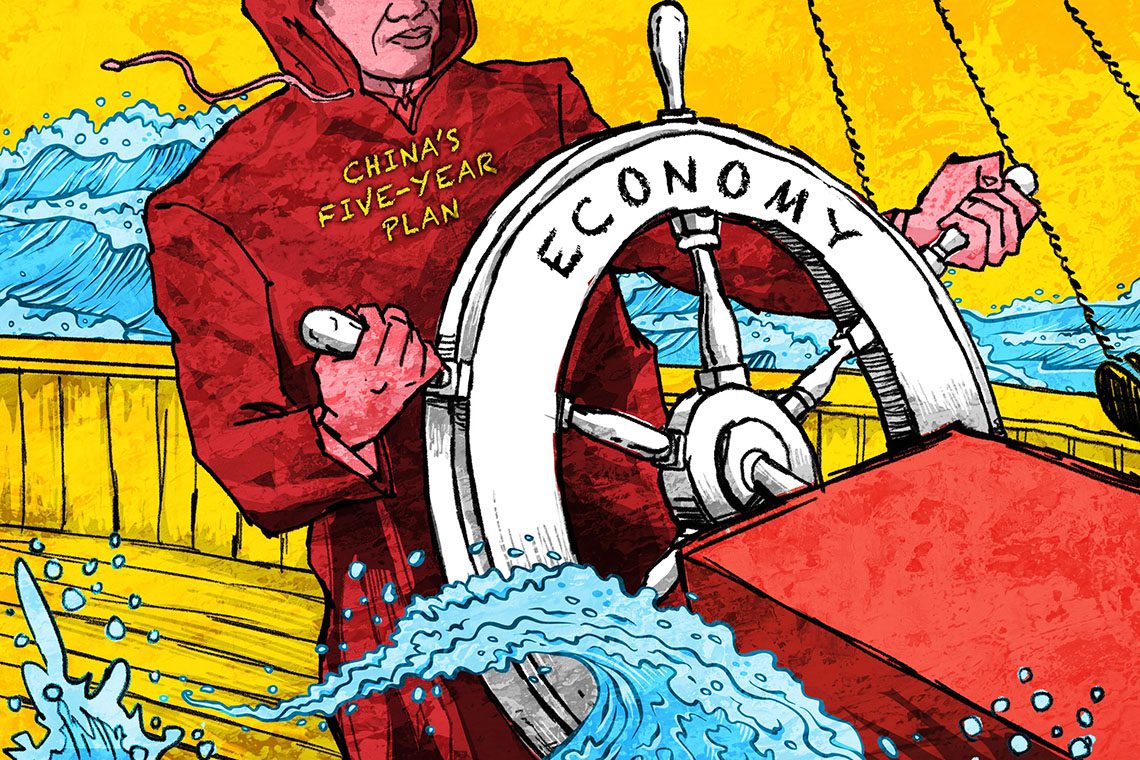
China’s 15th Five-Year Plan (2026–2030) shifts focus towards industrial modernization, innovation, and technological self-reliance, aiming to reshape its economy for sustainable growth. By prioritizing domestic demand, resilient supply chains, and high-quality manufacturing investment, the plan seeks to strengthen China’s global economic influence. It emphasizes outcome-driven development in key regions, signaling a strategic pivot in response to global challenges and positioning China for long-term modernization by 2035.
What is the value proposition for developing nations?
China’s 15th Five-Year Plan focuses on technological leadership, resilient supply chains, and high-quality manufacturing investment, reshaping both its economy and external engagement. Developing countries can benefit from expanded trade and investment in sectors like renewable energy, AI, and advanced manufacturing, with opportunities for technology transfer and market access. However, China’s emphasis on upgrading industries and self-reliance may increase competition, requiring developing nations to adapt to China’s evolving priorities to maximize benefits and mitigate risks.
What is the global significance of China’s 15th Five-Year Plan?
China’s 15th Five-Year Plan (2026–2030) focuses on high-quality, sustainable, and innovation-driven development, prioritizing technological self-reliance, modern industrialization, and comprehensive reforms. It aims to strengthen domestic demand, balance production and consumption, and integrate innovation with industrial progress. With a cautious, long-term outlook, the plan seeks to promote resilient, flexible growth, aligning with China’s modernization goals for 2035 amidst global uncertainties.
During the 15th Five-Year Plan, China will promote robust two-way investment, supporting its enterprises to “go global” while attracting foreign capital, with Belt and Road countries serving as key destinations for outbound investment. This approach signals a new era of mutual connectivity, large-scale capital flows, and enhanced openness and cooperation.
Sri Lanka and the 15th Five-Year Plan: Opportunities and Challenges.
China’s 15th Five-Year Plan offers developing nations like Sri Lanka opportunities through enhanced infrastructure, technology transfer, and green energy cooperation. By deepening connectivity via initiatives like the Belt and Road, China can help boost industrial capacity, employment, and human capital. Sri Lanka could benefit from Chinese investments in infrastructure, green technologies, and education. However, these benefits depend on strong local governance, debt management, and policy alignment with China’s global strategy to ensure sustainable, equitable growth.
Sri Lanka’s economy showed strong recovery in 2024, with GDP growth of 5.0%, driven by industry and tourism. Inflation dropped to 1.2% in 2024 and turned negative to -4.2% by February 2025. The external sector improved, with foreign-exchange reserves covering 3.0 months of imports and a recorded current-account surplus. Public external debt stood at 102.4% of GDP by end-2024. However, growth is expected to slow to 3.5% in 2025 due to lingering post-crisis impacts, global challenges, and the need for ongoing structural reforms.
To what extent will China’s 15th Five-Year Plan influence Sri Lanka’s post-crisis recovery?
Sri Lanka can reshape its economy by strategically aligning with China’s 15th Five-Year Plan (2026–2030), which focuses on green development, innovation, and high-standard opening-up. By partnering with China in renewable energy, digital infrastructure, and advanced manufacturing, Sri Lanka can attract technology transfer, investment, and skills development that strengthen its corporate sector and human capital base. Expanding exports to China’s growing consumer market and integrating into Chinese-led value chains can boost trade and industrial diversification. However, to maximize these gains, Sri Lanka must ensure sound debt management, transparent project governance, and domestic policy reforms that enhance competitiveness and sustainable growth.
Sri Lanka stands to benefit significantly from its future relationship with China, particularly through continued infrastructure development under the Belt and Road Initiative (BRI), technology transfer in areas like AI and renewable energy, and expanded trade opportunities, especially in sectors like agriculture and textiles. Chinese investments in key industries, along with financial support and debt restructuring, could diversify Sri Lanka’s economy. Additionally, enhanced human capital development, regional influence, and sustainable projects focused on green growth present further opportunities. However, careful management is needed to maximize benefits while mitigating potential risks such as rising debt.