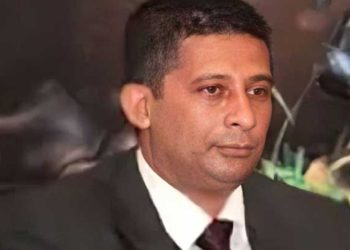
Sri Lanka’s economic recovery teeters on the edge as fresh accusations of money printing by the Central Bank of Sri Lanka (CBSL) under the National People’s Power (NPP) government ignite fears of a rerun of the devastating 2022 economic collapse. In a contentious parliamentary session on August 19, Deputy Minister of Economic Development and Labour, Professor Anil Jayantha Fernando, tried to deflect criticism by claiming recent cash injections were independent CBSL decisions, not government policy. His explanation, however, has fallen flat, with critics warning that unchecked money printing could unleash soaring prices, a weaker rupee, and a setback to the nation’s fragile progress.
Fernando faced a barrage of questions from the opposition
Fernando faced a barrage of questions from opposition MPs over reports from the Centre for Human Rights and Research (CHR) that the CBSL printed Rs. 1.2 trillion between October 2024 and June 2025, including a massive Rs. 210.3 billion in June alone. “The Central Bank operates independently under the 2023 Central Bank Act,” Fernando told Parliament, insisting the government isn’t behind the cash surge. “These are routine operations to keep markets stable, not money printing to fund budgets.” He emphasized that the NPP’s 2025 budget, with a 6.7% GDP deficit, relies on taxes and loans, including $75 million in foreign borrowing, and urged the public to check CBSL reports for clarity.
The opposition isn’t convinced, slamming Fernando’s defense as a weak attempt to dodge responsibility. Rajith Keerthi Tennakoon of CHR called the recent printing a dangerous echo of the Gotabaya Rajapaksa era, when the CBSL flooded the economy with Rs. 2.3 trillion from 2020 to 2022. That policy triggered 70% inflation, an 80% rupee collapse, and a default that left shelves empty and sparked protests that ousted Rajapaksa. “Rs. 210 billion in one month isn’t routine,” Tennakoon warned. “It risks another crisis, hitting ordinary people hardest.”
Money printing has a toxic history
Money printing, when the CBSL creates new cash, often by buying government bonds or lending to banks, has a toxic history in Sri Lanka. It fuels inflation, making food and fuel pricier, especially for the poor. It weakens the rupee, hiking import costs, and scares off investors, draining reserves. In 2022, these effects crippled the economy, with reserves dropping to $2 billion and families struggling to afford basics. Historically, the CBSL, set up in 1950, printed money during the civil war and post-2009 building sprees under Mahinda Rajapaksa, piling up debt. The 2023 Central Bank Act aimed to stop this by banning direct budget funding, but the CBSL can still inject cash through open market operations (OMOs), like the Rs. 233.9 billion added in March 2025. Critics argue these moves, while technically legal, can still flood the economy with money if overdone, as seen in the recent debt spike of Rs. 1,034 billion by April 2025.
Fernando’s claim that the CBSL acts alone doesn’t fully address whether it can print freely. The 2023 law ensures independence, stopping the government from forcing the bank to cover deficits. But OMOs give the CBSL wiggle room to manage liquidity, and excessive use can mimic printing’s dangers. In the past, political pressure often swayed the CBSL, as under Gotabaya, when it ignored warnings to fund tax cuts, leading to disaster. Today, while the NPP pledges restraint, the scale of recent cash injections raises red flags.
Economists warn that continued printing could spark inflation
Sri Lanka’s $3 billion IMF bailout, secured in March 2023, hangs in the balance. The deal bans money printing and demands a 2.3% budget surplus by 2025. Fernando insists the NPP complies, using taxes and loans to fund spending. But the budget’s higher-than-expected deficit has the IMF on edge, and any hint of printing could halt funds. Reserves have climbed to $6.5 billion, and July’s -0.3% deflation offers hope, but economists warn that continued printing could spark inflation and unravel gains.
Public anger is growing, with X users like @FinPlanKaluAja1 blasting high taxes and import rules as “poverty traps.” Opposition MP Ravi Karunanayake called for tougher oversight, saying, “The government can’t hide behind the CBSL while debt soars.” Fernando’s attempt to pin the blame on the bank’s independence hasn’t eased fears, as memories of 2022’s chaos, skyrocketing prices, a worthless rupee, and desperation linger. With the NPP’s reforms at a crossroads, Sri Lanka must tread carefully to avoid another economic meltdown.