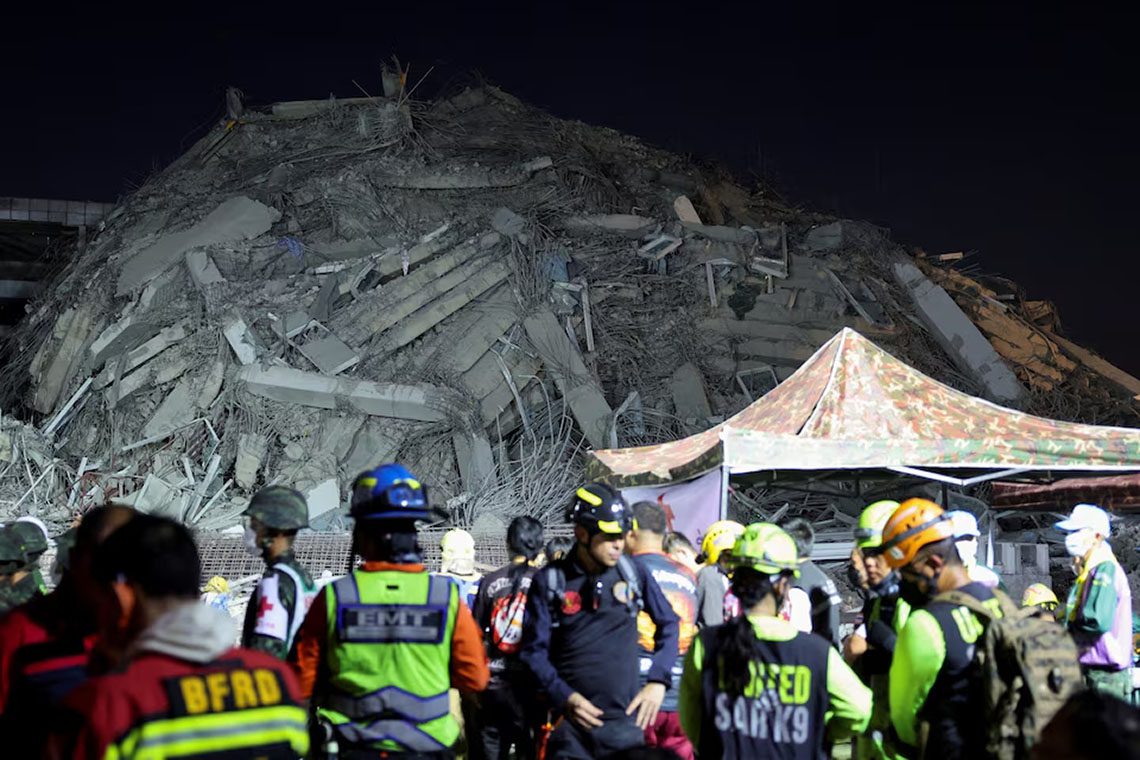

The ancient city of Amarapura, a historic Buddhist center in Myanmar, has been reduced to ruins after a powerful 7.7-magnitude earthquake struck the country. Hundreds of Buddhist monks are feared to be buried under the debris of collapsed buildings, including monasteries, in the once-glorious city that played a crucial role in reviving Sri Lankan Buddhism.
Rescue workers are struggling to reach trapped survivors as access roads are blocked and infrastructure has been severely damaged. “We have received calls from inside for help, but we do not have enough manpower and machinery to remove the rubble,” said a rescue worker, describing the disaster as “unbearable.”
The quake, which struck at lunchtime on March 28, has left at least 144 people dead and 732 injured, with officials warning that the death toll could rise further. The hardest-hit areas include Mandalay, Sagaing, and Meiktila, where buildings, roads, and bridges have collapsed.
In Amarapura’s Phaya Town monastery, dozens of monks remain trapped under the ruins. A rescue worker reported that at least 30 bodies had been recovered from collapsed apartment buildings. “Our city looks like a collapsed city,” he said, estimating that about one-fifth of the buildings have been destroyed.
The military junta, which has been in power since the 2021 coup, has called for international aid. However, humanitarian efforts are complicated by Myanmar’s ongoing civil war, economic collapse, and international isolation. The United States has offered disaster assistance through USAID, despite recent aid cuts.
The true scale of the devastation remains unclear, but the earthquake has deepened Myanmar’s existing humanitarian crisis. The United Nations warns that millions already face food insecurity, and the disaster has only worsened their plight. As the world watches, Myanmar’s people struggle to recover from one of the deadliest disasters in recent history.