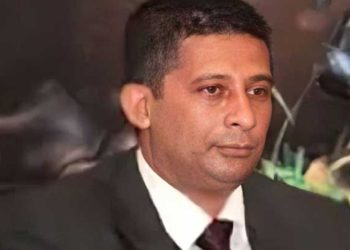
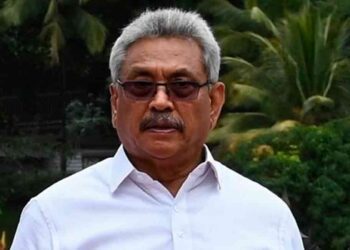
The recent announcement by the Ministry of Defense regarding the surrender of firearms issued for personal protection has raised several questions, particularly concerning the case of Yoshitha Rajapaksa, the second son of former President Mahinda Rajapaksa. It was revealed that Yoshitha Rajapaksa had been issued seven licensed firearms for personal protection, a number that seems disproportionate for an individual in his position.

Initially, Yoshitha surrendered five of his firearms, but the Ministry has since confirmed that the remaining two have now been handed in as well. This raises the question: why did he, or anyone else, need so many firearms in the first place? Was there a specific threat or reason that justified this quantity of firepower?
Explanations
Further fueling speculation is the lack of clear explanation about whether Yoshitha was under direct threat or targeted by any particular group. If there was no such danger, it might appear that his possession of such firearms was excessive, perhaps even pointing to an abuse of power or influence. In this context, the question arises as to whether the issuance of these weapons was an attempt to intimidate or dominate society, or whether it was simply a sign of privilege, allowing individuals with powerful connections to amass personal arsenals.
The Ministry of Defense’s review of the matter might bring more clarity, but until then, the situation leaves many wondering about the underlying reasons behind the large number of firearms in the possession of a single individual, especially someone so closely tied to political power. If it was an unnecessary accumulation of weapons, it may also reflect deeper concerns about the potential for abuse of power and the dangers of enabling figures of authority to wield excessive force without clear accountability.