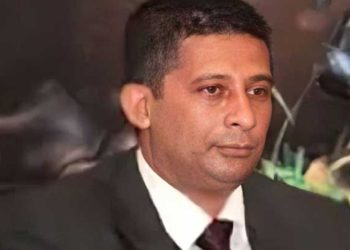
Sugath Wasantha de Silva is poised to make history as the first visually impaired Member of Parliament in Sri Lanka. He has been appointed as a National List MP representing the National People’s Power (NPP) in the upcoming general election. Currently serving as the Chairman of the Sri Lanka Council of Visually Impaired Graduates, Sugath’s journey is a remarkable tale of resilience, determination, and advocacy for equal rights. Below is an excerpt from a recent interview with him published in the *Mawbima* Sunday Newspaper.
Where were you born?
“My village is Balapitiya, in the Galle District.”
Could you share memories of your early life?
“I was born in 1967. My father worked as a mechanic in the Electricity Board, and my mother was a housewife. I have an older brother and two younger brothers. Ours was a family of men.”
I attended several schools. From kindergarten to grade three, I went to Kandegoda Junior College. Then, from grade three to five, I studied at Siri Abeitissa Junior College in Wathugedara. After that, I attended Ratmalana Blind College, and finally, I completed my schooling at Dharmashoka College in Ambalangoda.”
You weren’t born blind, were you?
“No, I wasn’t. I was a very stubborn child in the family. When I was in the fifth grade, I was hit hard in the eye by a tennis ball while playing cricket. I didn’t tell my parents, but after a few days, my eye started hurting. My mother noticed and took me to several doctors. Despite treatment, my vision worsened, and eventually, I lost my sight completely. This happened when I was eleven years old.”

How did your family cope with the situation?
“My mother tried everything to find a cure for me. My father was tough and rarely showed emotions, but I vividly remember the day he hugged me tightly and cried after doctors of Mahamodara Hospital in Galle said they couldn’t help me. It was a heartbreaking moment for our family.”
What did you feel when you realized you were blind?
At first, I thought it was just a bad dream. I believed I would wake up the next day and see again. But that never happened.”
Did your schooling stop after losing your sight?
“For a while, yes. My family loved me immensely and didn’t want me to feel abandoned. However, my grandmother insisted I be sent to Ratmalana Blind School. Initially, my mother was against the idea, but she eventually agreed. I joined the school in early 1979 and stayed in the hostel there. It was a turning point in my life.”
How was your time at Ratmalana Blind School?
“My days there were transformative. I learned Braille and other essential skills. The teachers were dedicated, helping us build confidence and independence. I even learned to sew buttons on my shirts using innovative methods taught by older students. As the top student, I excelled academically, passing my Ordinary Level exams.”
What happened after completing your O/L exams?
“I went to Dharmasoka Maha Vidyalaya in Ambalangoda to pursue my Advanced Levels. I was the only visually impaired student, but my peers treated me like a brother, which gave me great strength. I was deeply involved in the JVP movement during this time, which also influenced my worldview.”
What about university life?
“I entered the University of Colombo, where I studied Sinhala, Political Science, and History. I graduated in 1994 with first-class honors in History. University life was enriching, filled with debates, political activism, and friendships that shaped me.”
What did you do after university?
“I worked at the Student Counseling Office of the University of Colombo before joining the Department of Social Services as a Social Service Officer in 1999. I served there for 25 years until I recently retired.”
Did your family have a political background?
“Yes. My father was a staunch socialist, my mother supported the Sri Lanka Freedom Party, and my older brother was involved with the JVP. Their influence naturally guided me toward activism and education as tools for change.”
Can you tell us about your personal life?
“I am married to Nalini Ranasinghe, who is also visually impaired. She graduated from the University of Peradeniya. We met through our small community of visually impaired graduates, became friends, and later got married. Although we don’t have children, we’ve supported each other for over 20 years. She works in a government job as well.”

What do you hope to achieve as an MP?
“My main goal is to ensure equal opportunities for people with disabilities. According to a 2012 survey, 1.7 million Sri Lankans have disabilities, and 71% of them rely on others for their livelihood. I aim to create a society where they can live with dignity and independence.”
Is becoming an MP your ultimate goal?
“Not at all. Even if I’m entrusted with a ministry like Women’s Affairs, I’ll work with the same dedication. Representing my community and advocating for their rights is my primary mission.”
What message would you like to share?
“My blindness did not limit me—it fueled my determination. Education was my light in the darkness, and I hope to use this platform to illuminate the path for others with disabilities.”
Sugath Wasantha de Silva’s journey is a testament to resilience, determination, and the power of education. From losing his sight as a child to making history as Sri Lanka’s first visually impaired MP, his story inspires us all.