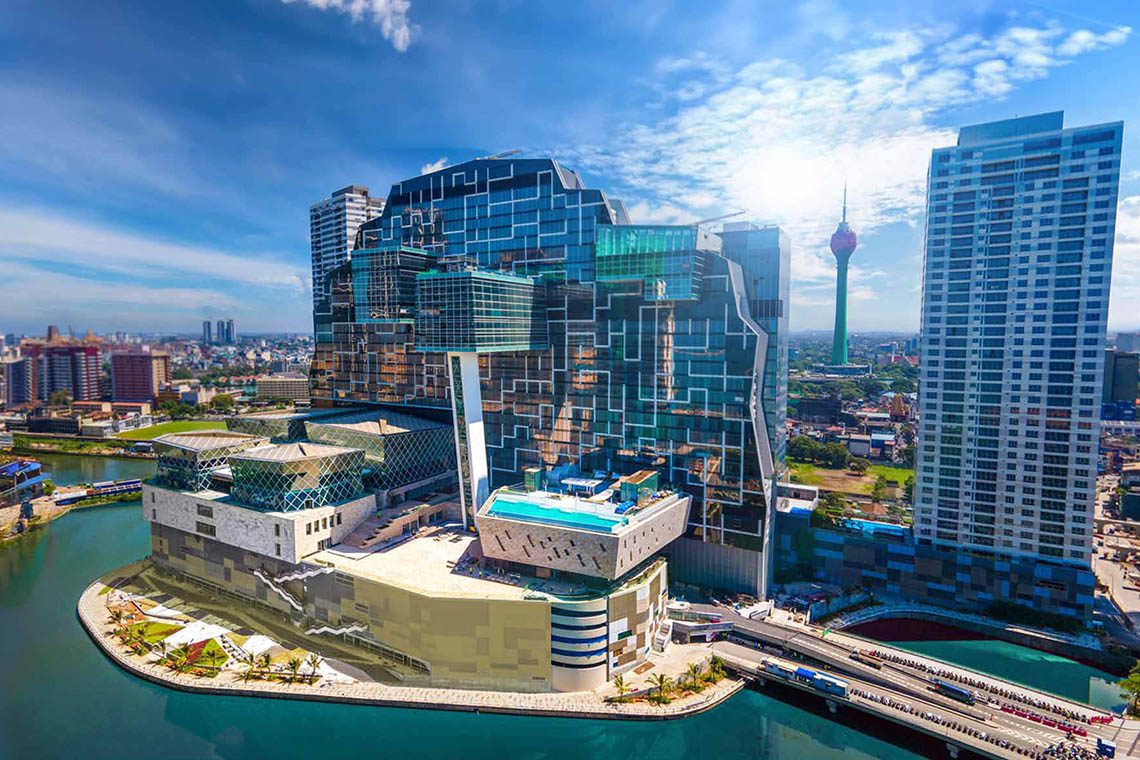

Those who hear about a new casino being built as part of Asia’s largest integrated tourism project in Colombo, Sri Lanka, often react with alarm. Many fear that it will attract gambling addicts, corrupt the nation’s cultural values, and breed corruption.
But these fears often stem from a lack of understanding. Critics of the project are frequently unfamiliar with casinos, the global tourism industry, the laws of the country, or even the broader cultural and economic realities at play.
The Legal Foundations of Casinos in Sri Lanka
The casino being developed in Colombo is entirely legal and regulated. Approximately US\$125 million has already been invested in this international-standard facility, which is expected to generate a gross gaming revenue of US$200–250 million annually. A 45% tax on gaming revenue ensures that the majority of this income directly benefits the public treasury, provided there are no loopholes in enforcement.
Casino operations in Sri Lanka are not new. The industry has evolved over decades, beginning with the *Gambling Ordinance of 1889, and later strengthened by the Casino Business (Regulation) Act No. 17 of 2010. This act modernized licensing and reporting requirements and was an extension of the Betting and Gaming Tax Act No. 40 of 1988, which has been amended multiple times in 2005, 2006, 2013, 2015, and 2023 to tighten regulation and adjust tax rates.
In 2024, legislation increased licensing and renewal fees for casinos to US$31 million for 20 years, making Sri Lanka one of the highest-taxed gaming destinations in the region.
2025 Reform: A Unified Gaming Authority
A major reform is now underway. The Gaming Regulatory Authority Bill, approved by the Cabinet in April 2025 and tabled in Parliament in May and June, will replace outdated laws, including the Casino Business Act, Gambling Ordinance, and Horse Racing Betting Ordinance.
This single regulatory body will oversee all forms of gambling: land-based casinos, online gambling, gaming on ships in Sri Lankan waters, and even software providers. Operators will be subject to strict anti-money laundering rules and responsible gaming standards, with heavy penalties for violations including fines of up to Rs. 10 million, license suspension, or imprisonment.
Until the new law is in effect, the Betting and Gaming Tax Act (with 2023 amendments) and the Casino Business Act 2010 remain the governing legislation.
A Casino for Tourists, Not for the Villager Next Door
It is crucial to understand the purpose behind this ambitious casino project. This is not a facility designed for locals. It is a strategic tourism investment aimed at attracting foreign visitors who can spend significantly more dollars per day.
Sri Lanka’s tourism income peaked at US$5.6 billion in 2018, before the Easter attacks and the COVID-19 pandemic devastated the industry. By 2022, revenue had plummeted to US$1.26 billion, recovering slightly to US$3.17 billion in 2024, still well below 2018 levels.
With the nation now facing bankruptcy and desperate for foreign exchange, the government has designated tourism as its primary dollar-earning sector. But competing on the global stage requires bold, creative strategies.
The City of Dreams Sri Lanka: A Regional Powerhouse
At the heart of this new vision is the City of Dreams Sri Lanka, a US$1.2 billion integrated tourism project spearheaded by John Keells Holdings PLC, one of Sri Lanka’s largest conglomerates, in partnership with Melco Resorts & Entertainment (MRE), a Hong Kong-based global leader in integrated resorts.
This development is not just a casino. It is an international-scale resort that combines entertainment, art, culture, hospitality, and events. The CinnamonLife hotel, which opened in October 2024, already offers 687 rooms, while the upcoming Nuwa ultra-luxury hotel will add another 113 rooms, bringing the total accommodation units to 800.
The project’s integrated casino, operated by Melco Resorts & Entertainment, will be one of the most sophisticated gaming and entertainment complexes in Asia. With its 20-year license and international standards, it is expected to attract wealthy visitors who would otherwise spend their tourism dollars in Macau, Singapore, or Malaysia.
Competing with Asia’s Tourism Giants
The scale of City of Dreams Sri Lanka is unprecedented. This is the largest integrated tourism project in Asia—bigger than Singapore’s iconic Marina Bay Sands or Malaysia’s renowned gaming complexes. Even Japan and India have yet to develop a comparable tourism investment.
There are predictions that Colombo’s coastline will soon rival the world’s top tourism and entertainment hubs. If successful, the project could create an economic ripple effect similar to the role Marina Bay Sands plays in Singapore’s economy.
For a nation that has endured years of economic despair, the City of Dreams Sri Lanka offers a new sense of possibility.
A Moment to Think Bigger
This project is more than bricks, mortar, and a casino floor. It is about reimagining Sri Lanka’s place in the global tourism market.
To access this reality, however, Sri Lankans must expand their collective mindset. Without bold, high-value ventures, the nation risks being left behind in a hyper-competitive industry.
City of Dreams Sri Lanka gives a struggling nation a reason to dream again. But whether that dream becomes reality depends on embracing a forward-looking vision—and addressing fears with facts, not misconceptions.