

Imagine a world where cars drive themselves, robots deliver your food right to your doorstep, doctors diagnose illnesses with pinpoint accuracy in minutes, and machines help farmers grow crops more efficiently. This is not science fiction, this is the reality being shaped by Artificial Intelligence (AI) and Robotics.
These groundbreaking technologies are revolutionizing industries, improving lives, and redefining what’s possible. From healthcare to space exploration, their potential is limitless. But what does this mean for us, and how will it impact society? Let’s explore the fascinating future of AI and robotics and why it matters to everyone.
What Are AI and Robotics?
AI refers to the simulation of human intelligence by machines. It enables systems to learn from experience, adapt to new inputs, and perform tasks that usually require human intelligence, such as decision making, problem solving, and speech recognition. AI is what powers your virtual assistant, helps recommend shows on streaming platforms, and even predicts traffic patterns to give you faster routes.
Robotics is the science of designing and building machines, that can perform specific tasks. Unlike simple machines, robots often have sensors and processors that allow them to interact with their surroundings.
When AI and robotics are combined, they create “smart robots” capable of thinking and acting independently. For example, a robot vacuum not only cleans your home but also learns the layout of your rooms to become more efficient over time. This pairing has opened up a world of possibilities, bringing science fiction closer to reality.
The Future Applications of AI and Robotics
AI and robotics are already making waves in various fields, but their future potential is even more exciting. Here are some key areas where these technologies are expected to play a significant role:
- Healthcare Revolution

AI-powered robots are transforming healthcare by providing faster and more accurate diagnoses. AI systems can analyze medical data, like scans and test results, to detect diseases such as cancer at early stages, saving countless lives.
Robotic surgeons are assisting doctors in performing delicate operations with precision. These robotic systems minimize human error and help patients recover faster.
Looking ahead, we could see Nanobots, tiny robots that travel inside the human body to deliver medicine directly to affected areas or even repair damaged cells. Personalized medicine, tailored to an individual’s unique genetic makeup, is also becoming a reality, thanks to AI algorithms that analyze genetic data
- Transforming Education

AI is reshaping how we learn by making education more accessible and tailored to individual needs. AI-powered learning platforms can adapt lessons to a student’s pace and provide instant feedback, helping them understand difficult concepts more effectively.
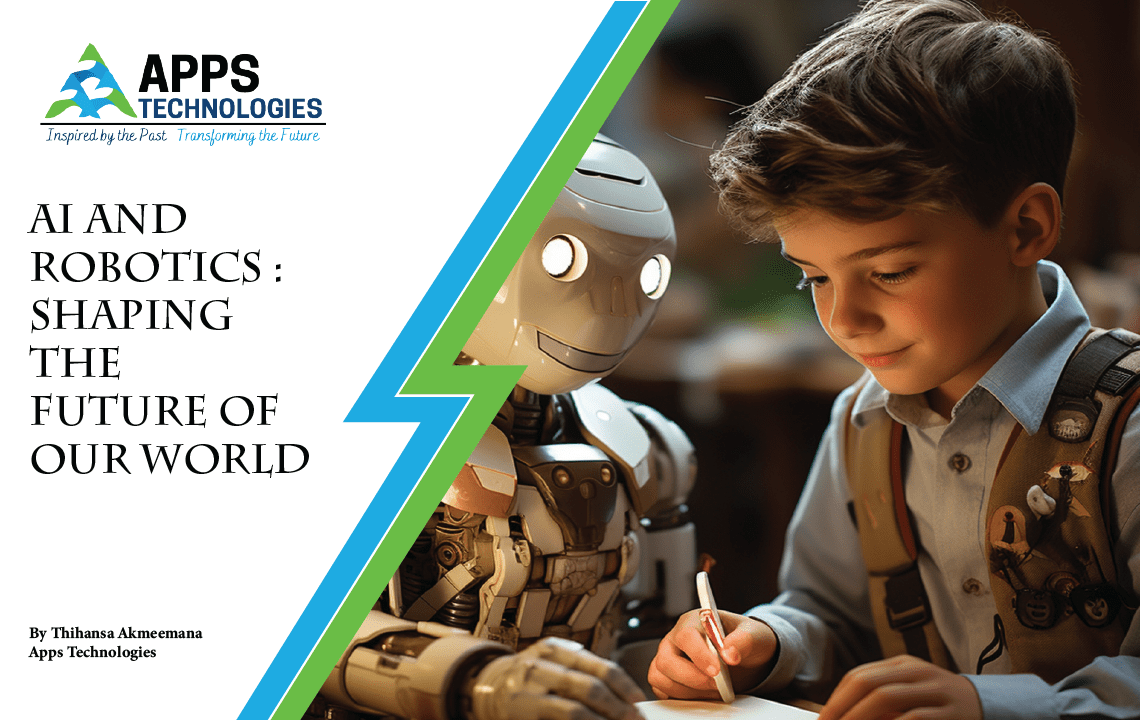
In the future, robots could assist teachers in classrooms by offering one-on-one tutoring, helping students who need extra support, and managing administrative tasks so that teachers can focus on teaching. Imagine having a robot that can explain math problems step-by-step or teach you a new language in an interactive way.
- Smarter Cities and Homes

AI and robotics are the driving forces behind “smart cities.” These technologies optimize resources, reduce waste, and make cities more livable. For example, traffic management systems powered by AI can adjust traffic lights in real time to reduce congestion.
In homes, AI-enabled robots can assist with everyday tasks like cleaning, cooking, or even caring for elderly family members. Imagine coming home to a clean house and a hot meal prepared by your robot assistant.
Smart homes with AI systems can also save energy by learning your preferences. For instance, your air conditioning could adjust itself based on the weather and your schedule, reducing energy costs and benefiting the environment.
- Revolutionizing Agriculture

AI and robotics are tackling one of humanity’s oldest challenges: food production. With a growing global population, efficient farming has become more critical than ever.
Robots equipped with AI can monitor crop health, detect diseases, and manage resources like water and fertilizers with precision. Autonomous tractors and drones are already being used in some parts of the world to plant seeds, spray crops, and even harvest produce.
These innovations not only increase efficiency but also reduce waste, making it possible to grow more food with fewer resources. In the future, AI-driven vertical farming could help cities grow fresh produce locally, reducing transportation costs and carbon emissions.
- Space Exploration

AI and robotics are essential for exploring the final frontier: space. Robots equipped with AI are already collecting data on planets like Mars, helping scientists understand their environments.
In the future, these technologies could be used to build habitats on the Moon or Mars for human colonization. Robots could perform tasks like assembling structures, mining resources, and maintaining life-support systems, paving the way for humans to live and work in space.
- Disaster Management and Rescue
During natural disasters, AI-powered robots can be lifesavers. These robots can navigate through dangerous or inaccessible areas to search for survivors, deliver supplies, and provide critical aid.
AI systems can also predict disasters by analyzing weather patterns and geological data, helping communities prepare and minimize damage. Imagine a world where advanced warning systems save lives by providing accurate predictions of hurricanes, earthquakes, or floods.
Why This Matters to Society

The integration of AI and robotics into our daily lives raises important questions about ethics, jobs, and societal values. While these technologies promise immense benefits, they also require thoughtful regulation and responsible use to ensure they serve everyone fairly.
One major concern is job displacement. As robots take over repetitive tasks, some jobs may become obsolete. However, this shift also creates new opportunities. For instance, people will be needed to design, program, and maintain these systems.
Education will play a crucial role in preparing society for this transition. Governments and institutions must invest in training programs to equip people with the skills needed to thrive in an AI-driven world.
Another challenge is ensuring that AI and robotics are used ethically. Systems must be designed to avoid biases and protect user privacy. Regulations should be in place to ensure that these technologies benefit humanity rather than harm it.
How Can You Be Part of This Future?
If you’re a student or someone curious about technology, now is the time to get involved. AI and robotics need creative thinkers, problem-solvers, and dreamers to unlock their full potential.
Start by learning about these fields. You don’t need a technical background many online resources and courses can help you get started. Whether you’re interested in coding, design, or even philosophy, there’s a place for you in the world of AI and robotics.
Who knows? Your ideas could lead to innovations that change lives, solve global problems, or inspire the next generation of technology.

AI and robotics are not just about creating smarter machines, they’re about creating a better world. A world where technology enhances human potential, addresses global challenges, and brings people closer together.
As these technologies continue to evolve, their applications will touch every aspect of our lives, from how we learn and work to how we care for our planet. The future is bright, but it is also a shared responsibility.
By embracing AI and robotics, we can build a future where innovation and compassion go hand in hand. Together, let’s harness the power of these technologies to create a world that benefits all of humanity.
Author: Thihansa Akmeemana
Reviewed by: Sammani Vishara, Kavithi Kulatunge, Dinuk Pathiraja