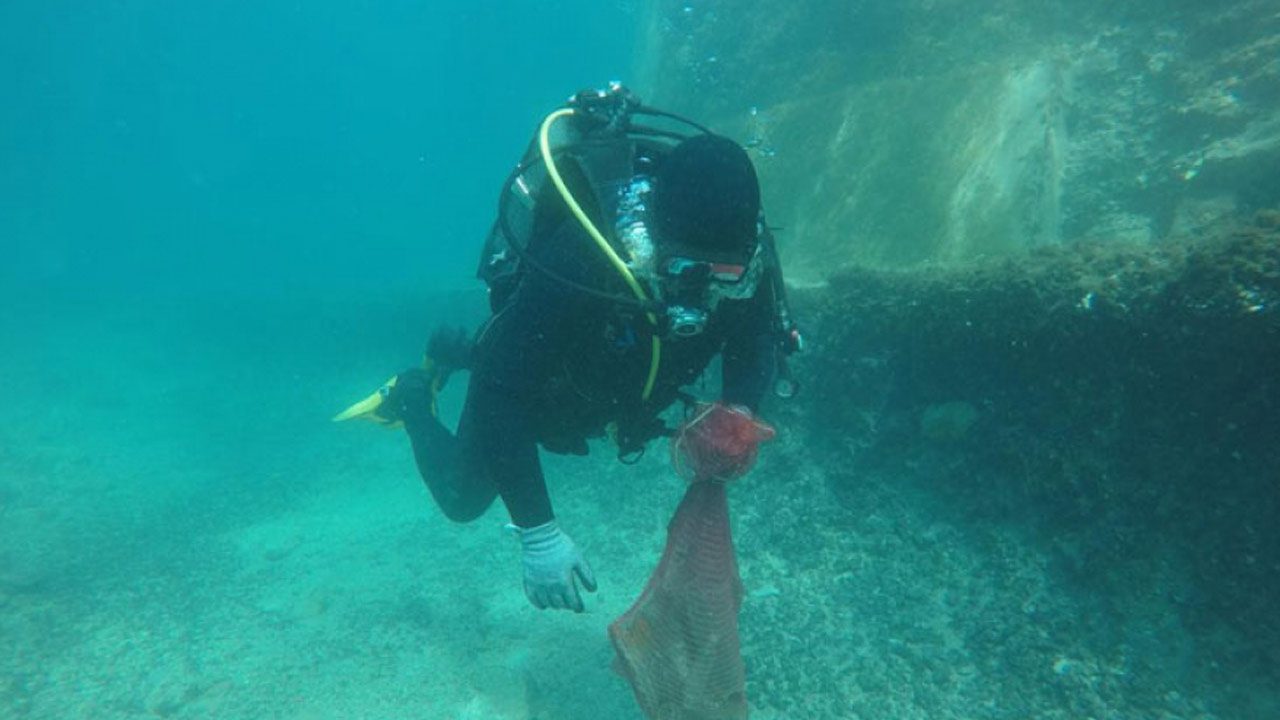

As the Clean Sri Lanka programme is gathering momentum marine conservationist are pointing out that there is an urgent need to remove underwater marine litter & stranded fishing gear from the sea of Sri Lanka
A recent survey by the National Aquatic Research Agency (NARA) revealed that approximately 80% of the seabed in the Western Province is polluted, primarily due to household and industrial waste.
With over 25% of Sri Lanka’s population living near the coast, much of this waste inevitably makes its way into the ocean. While less than 15% of litter remains buoyant, the majority sinks to the seabed, accumulating in sensitive areas such as coral reefs, seagrass meadows, shipwrecks, and sandy bottoms.
This accumulation poses severe threats to marine ecosystems, leading to habitat loss, increased water acidity, and the spread of microplastics. Marine life, including sea turtles, fish, and seabirds, suffers greatly, with an estimated 41% of sea turtles in Sri Lankan waters becoming entangled in ghost nets made from nylon and polyester, which also damage critical ecosystems such as coral reefs.
Clean up Trends
Advanced technologies, including drones, autonomous systems, and specialized marine equipment, are increasingly being used to clean up marine litter and reduce pollution at sea.
Community Engagement and Education: Successful projects often integrate education and outreach, teaching communities and individuals about responsible waste disposal and sustainable practices.
Circular Economy and Upcycling: Upcycling initiatives that turn waste into valuable products are becoming a key focus, providing economic opportunities while reducing the impact of pollution.