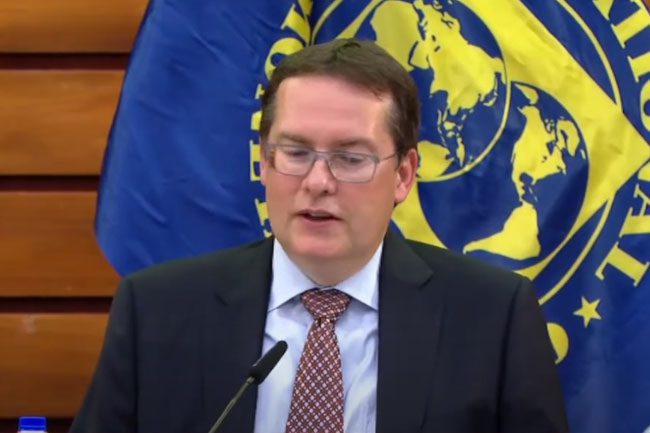

The International Monetary Fund (IMF) has announced a staff-level agreement with Sri Lanka on the third review of its Extended Fund Facility (EFF). However, final approval of the agreement by the IMF management and Executive Board will depend on Sri Lanka fulfilling specific conditions, including submitting a 2025 budget that aligns with the program’s objectives.
An IMF delegation, led by Senior Mission Chief Peter Breuer, visited Colombo from November 17 to 23, 2024, for discussions with Sri Lankan authorities. Following these meetings, Breuer and Deputy Mission Chief Katsiaryna Svirydzenka issued a joint statement outlining the progress made during the review. They emphasized that in addition to preparing the 2025 budget in line with program parameters, Sri Lanka must demonstrate progress in debt restructuring and confirm multilateral financing commitments to secure final approval of the agreement.
If the conditions are met, Sri Lanka will receive an additional SDR 254 million (approximately USD 333 million) under the program, bringing total disbursements to SDR 1,016 million (around USD 1.33 billion). The EFF arrangement, approved in March 2023, provides Sri Lanka with a total of SDR 2.3 billion (about USD 3 billion) over four years to support the country’s economic recovery.
The IMF commended Sri Lanka’s progress under the program, noting that reforms have yielded positive results. The economy grew by an average of 4% year-on-year in the four quarters ending in June 2024, with expansion evident across all sectors. Inflation has been contained, and gross official reserves increased to USD 6.4 billion by the end of October 2024, supported by significant foreign exchange purchases by the Central Bank. Public finances have also improved due to fiscal reforms, though social spending targets have yet to be fully met.
The IMF urged Sri Lanka to maintain its reform momentum to ensure macroeconomic stability and restore debt sustainability. Key recommendations include improving revenue collection, avoiding new tax exemptions, and adhering to cost recovery measures in fuel and electricity pricing to minimize fiscal risks. The IMF also stressed the importance of enhancing social safety nets, such as the Aswesuma program, to protect the most vulnerable during this period of economic adjustment.
The recent agreement in principle with Sri Lanka’s bondholders was identified as a significant milestone in the country’s path toward debt sustainability. The IMF highlighted the need to finalize commercial debt restructuring and secure bilateral agreements with official creditors to restore confidence and achieve program goals.
The statement also acknowledged the new government’s commitment to the program’s objectives, which has reinforced confidence in Sri Lanka’s economic recovery. The IMF emphasized that governance reforms and efforts to address corruption risks will play a critical role in rebuilding trust, driving growth, and ensuring that the benefits of economic recovery are distributed equitably among all citizens.
During their visit, the IMF delegation met with President and Finance Minister Anura Kumara Dissanayake, Central Bank Governor Dr. P. Nandalal Weerasinghe, Treasury Secretary K. M. Mahinda Siriwardana, and other senior government officials. They also engaged with Parliamentarians, private sector representatives, civil society organizations, and development partners.
The IMF concluded by expressing gratitude to Sri Lankan authorities for their collaboration and reaffirmed the importance of collective efforts to achieve lasting economic recovery.