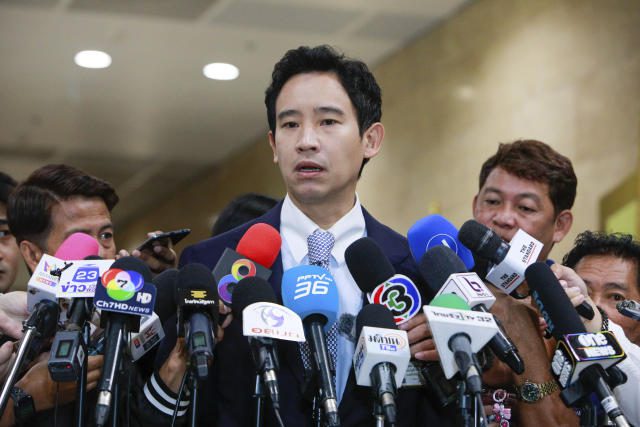

Thailand’s political landscape witnessed a significant development on August 7, 2024, when the Constitutional Court dissolved the Move Forward Party (MFP), the largest opposition party. The court unanimously ruled that the MFP had violated the constitution by proposing to amend the lese-majeste law, which forbids criticism of the monarchy. This decision has raised concerns about the state of democracy in Thailand, particularly given the MFP’s strong electoral support in the 2023 general elections, where it secured over 14 million votes.
The court’s ruling not only dissolved the MFP but also imposed a 10-year political ban on 11 of its executives, including former leader Pita Limjaroenrat. The decision has drawn widespread criticism both domestically and internationally. Observers from the U.S. State Department and the European Union have expressed concerns that the ruling undermines Thailand’s democratic process and disenfranchises millions of voters. The move has sparked fears of a regression in political freedoms and an increasing influence of conservative forces within the country’s political system.
In response to the court’s decision, members of the now-dissolved MFP swiftly announced the formation of a new political entity, the People’s Party (Prachachon), just two days later. Led by 37-year-old tech entrepreneur Natthaphong Ruengpanyawut, the new party seeks to continue the progressive agenda of the MFP. Notably, the 143 lawmakers who were not subject to the political ban can retain their parliamentary seats by joining the People’s Party within 60 days.

Natthaphong has emphasized the party’s commitment to pushing for reforms, including changes to the lese-majeste law, and aims to establish a government dedicated to change by the next elections in 2027. This quick transition reflects the determination of former MFP members to maintain their political influence and advocate for the reforms that resonate with their supporters, particularly among the youth and urban populations.
The creation of the People’s Party underscores the ongoing tensions in Thailand’s political arena, where progressive movements face significant challenges from conservative elements entrenched in the establishment. The international community continues to closely monitor these developments, urging the Thai government to uphold democratic values and respect the will of the electorate.
As Thailand navigates this complex political landscape, the future of the People’s Party will depend on its ability to unite supporters and effectively advocate for change within a system resistant to reform. While the dissolution of the MFP may have temporarily disrupted the progressive movement, the rapid formation of the People’s Party signals a strong commitment to democratic ideals and the pursuit of a more inclusive political framework in Thailand.