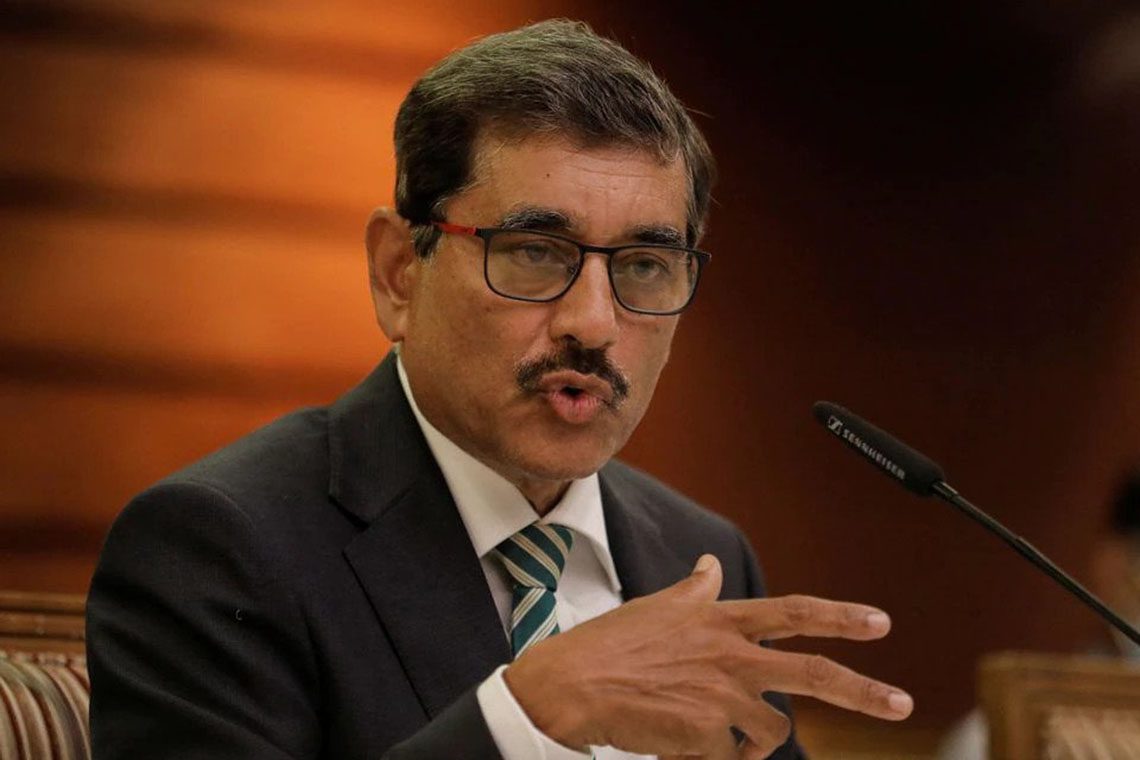

Sri Lanka’s ongoing programme with the International Monetary Fund (IMF) is likely to be adjusted to accommodate the economic fallout from Cyclone Ditwah, Central Bank Governor Dr. Nandalal Weerasinghe said, signalling a possible recalibration of fiscal targets in upcoming engagements with the Fund.
Addressing a meeting with newspaper editors and heads of electronic media on Wednesday (14), Dr. Weerasinghe said the IMF had been informed that the scale of damage caused by the cyclone would need to be reflected in future discussions, particularly in relation to public expenditure limits.
Under the Public Finance Management Act, Government expenditure is capped at 13% of GDP. However, Sri Lanka has already agreed with the IMF that this ceiling could be adjusted in the event of a major disaster. In this context, the Governor said Cyclone Ditva could necessitate additional spending of around 1.3% of GDP, an adjustment that would require IMF concurrence.
The Government, he noted, has already earmarked Rs. 500 billion in the 2026 Budget for compensation payments and infrastructure rehabilitation linked to the Ditwah disaster.
Dr. Weerasinghe also pointed out discrepancies in post-disaster damage assessments. While the World Bank had initially estimated losses at around $4.1 billion, the government’s post-estimate figure is significantly lower, with the President placing the damage at approximately $2.8 billion.
Responding to concerns circulating about Sri Lanka’s external debt repayment obligations resuming in 2028, the Central Bank Governor dismissed claims that the country would slide back into the kind of economic crisis experienced in 2022. He described such narratives as politically motivated and harmful to investor confidence.
“There is absolutely no such risk when one looks at the country’s current financial behaviour,” he said, adding that repeated claims of an impending crisis only serve to undermine international confidence at a time when macroeconomic indicators are improving.
Dr. Weerasinghe said Sri Lanka’s foreign reserves have risen to $6.8 billion, while the current account has recorded a surplus of $1.5 billion after accounting for imports and debt servicing. He noted that around $4 billion was spent on foreign debt repayments this year, alongside approximately $2 billion on vehicle imports, yet the budget deficit has still been reduced to 5.1% of GDP.
Looking ahead, he said annual external debt repayments over the next decade are expected to remain below $4 billion per year, easing pressure on the country’s balance of payments.
Commenting on US sanctions against Iran, Dr. Weerasinghe clarified that Sri Lanka’s existing arrangement with Tehran involves the export of tea worth about $250 million in settlement of past petroleum imports, with no active financial transactions taking place. As a result, he said the recently announced 25% tariff by the US President does not apply to Sri Lanka under this arrangement. He also noted that the sanctions do not extend to food and beverage exports.
Overall, the Governor maintained that while Cyclone Ditwah has introduced new fiscal pressures, Sri Lanka’s economic recovery remains on track, provided policy consistency is maintained and unfounded fears are not amplified.
IMF Mission to Assess Cyclone Impact as Sri Lanka’s Program Faces Fresh Pressures