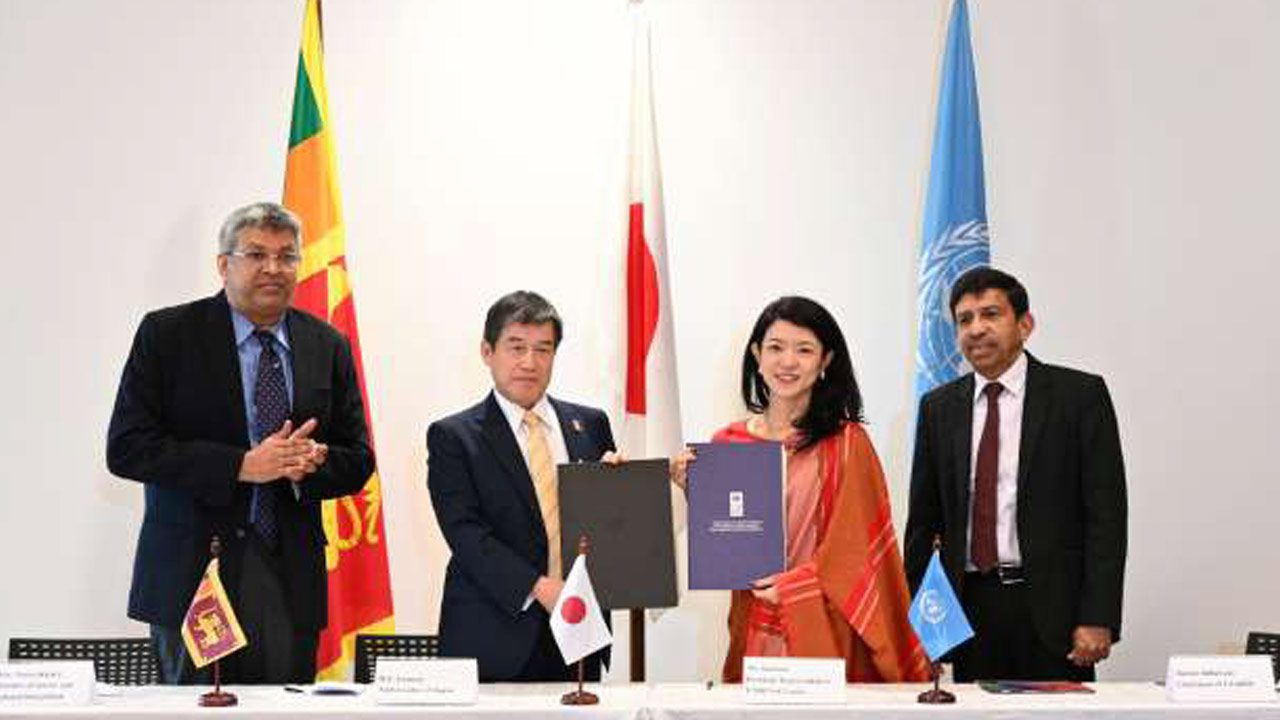

In a major step toward strengthening Sri Lanka’s anti-corruption framework, the Commission to Investigate Allegations of Bribery or Corruption (CIABOC) has launched a cutting-edge digital case tracking system, supported by the Government of Japan and the United Nations Development Programme (UNDP). The new system is designed to streamline investigations, improve transparency, and enhance the overall efficiency of CIABOC’s operations.
Speaking at the launch, Naoaki, Minister and Deputy Head of Mission of the Embassy of Japan, reaffirmed Japan’s continued commitment to Sri Lanka’s governance reforms. “We believe the new case tracking system will further enhance CIABOC’s capacity for investigation. Eradicating corruption is important not only for restoring public trust in the government but also for increasing foreign investment, which will contribute to the economic revitalisation of Sri Lanka. Japan remains committed to assisting Sri Lanka’s efforts in tackling corruption and strengthening good governance,” he said.
The initiative marks a milestone in Sri Lanka’s broader digital transformation agenda, embedding technology in key public institutions to reduce inefficiencies, minimise delays, and establish stronger safeguards against corruption.
The system complements other digital governance initiatives supported by UNDP and development partners, including the e-Record Room system at CIABOC, the e-Procurement Monitoring System, and the forthcoming e-Asset Declaration platform. These reforms align with IMF recommendations to strengthen the investigation and prosecution of corruption cases through comprehensive case data management and improved procedural flow.
To operationalise the new system, the Government of Japan, together with UNDP, handed over hardware infrastructure valued at USD 202,000 and conducted targeted training sessions for CIABOC officers. The training is expected to enhance technical expertise and ensure the effective, long-term use of the system.
By embracing digital innovation, CIABOC is taking a decisive step toward institutional independence, transparency, and accountability. The initiative not only reinforces Sri Lanka’s commitment to clean governance but also contributes to the country’s Sustainable Development Goals (SDGs) and long-term efforts to build public trust.