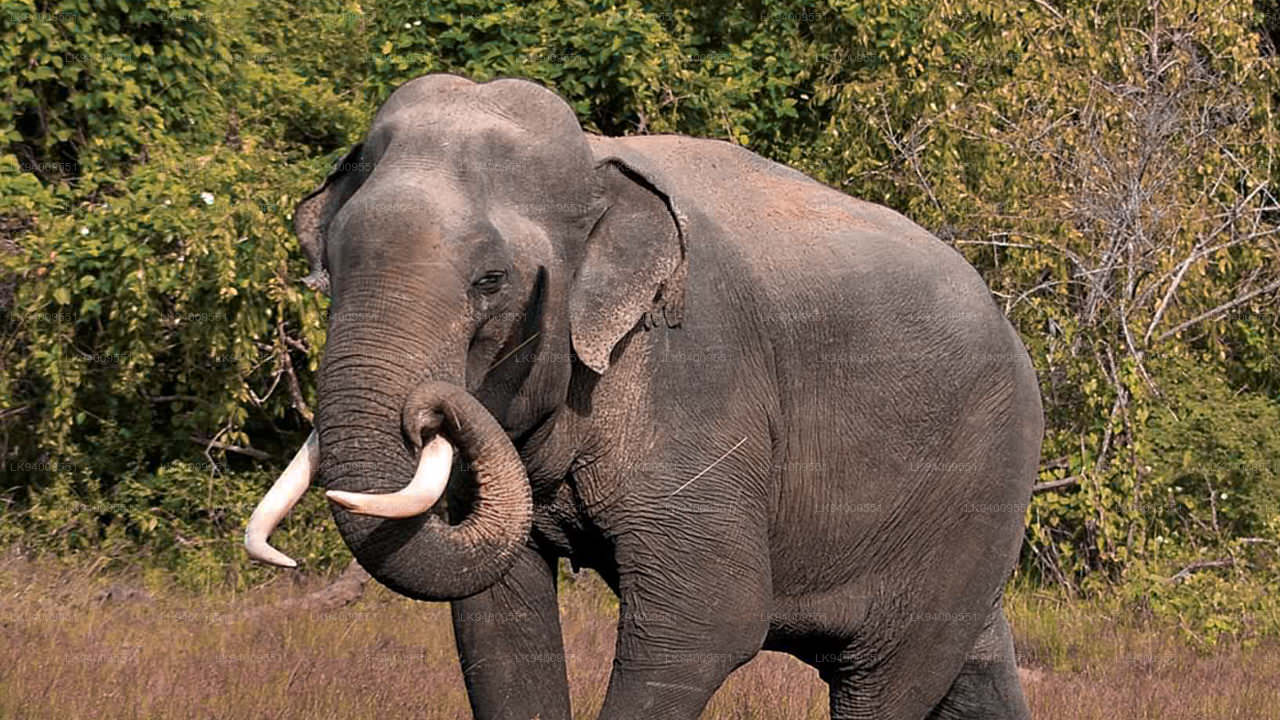

The recent operation to remove elephants from Anuradhapura has led to several serious issues.
The situation began when the elephants, instead of following the expected route to the Wilpattu Forest, travelled toward farms in Oyamada. Now, the wildlife officials who were supposed to address the elephant issue in Oyamada are tasked with resolving this new dilemma.
A similar elephant relocation operation that began recently in Giribawa, Kurunegala, is facing resistance from farmers.
Elephant relocation operations in Sri Lanka date back six decades, starting in 1959. These operations, aimed at managing human-elephant conflicts, have largely been unsuccessful.
Farmers note that, rather than solving the human-elephant conflict, the removal of elephants often leads to more aggressive behavior from the animals, exacerbating the problem and undermining conservation efforts.
Failed Attempts :
A 2020 report titled “National Action Plan for Reducing Human-Elephant Conflict in Sri Lanka” revealed that elephant relocation operations have not yielded successful results.
In the most recent operation, wildlife officers expected the elephants to follow a specific path, but instead, they moved toward Oyamada, creating additional problems for nearby farms. On December 15th, wildlife officials began relocating elephants from the Moragoda, Ulukkulama, Alayapathuwa, and Ranorawa areas through a national wildlife sanctuary. However, the elephants did not follow the planned route and instead headed toward the farms in Oyamada.
Assistant Director of the Anuradhapura Wildlife Zone, W. M. K. S. Chandrarathna, stated, “We had planned the operation with the cooperation of the military and civil defense forces, using drone technology from the Air Force. However, we were hindered by rain. Afterwards, we adjusted the method, using four mobile vehicles to direct the elephants into the sanctuary, but the elephants ended up heading towards the Oyamada farms instead. Despite setting up a route, the elephants’ movement patterns changed.”
Meanwhile, a similar operation in Giribawa, Kurunegala, was delayed due to opposition from farmers whose crops were being damaged.
The ongoing challenge of managing elephant movements in Sri Lanka is complex and deeply rooted in the country’s history and socio-economic landscape. The human-elephant conflict (HEC) has been a major issue for decades, with both elephants and humans suffering casualties. According to the International Union for Conservation of Nature (IUCN), Sri Lanka has the highest annual rate of elephant deaths and the second highest rate of human fatalities due to HEC. In 2022 alone, 443 elephants and 145 humans lost their lives because of this conflict.