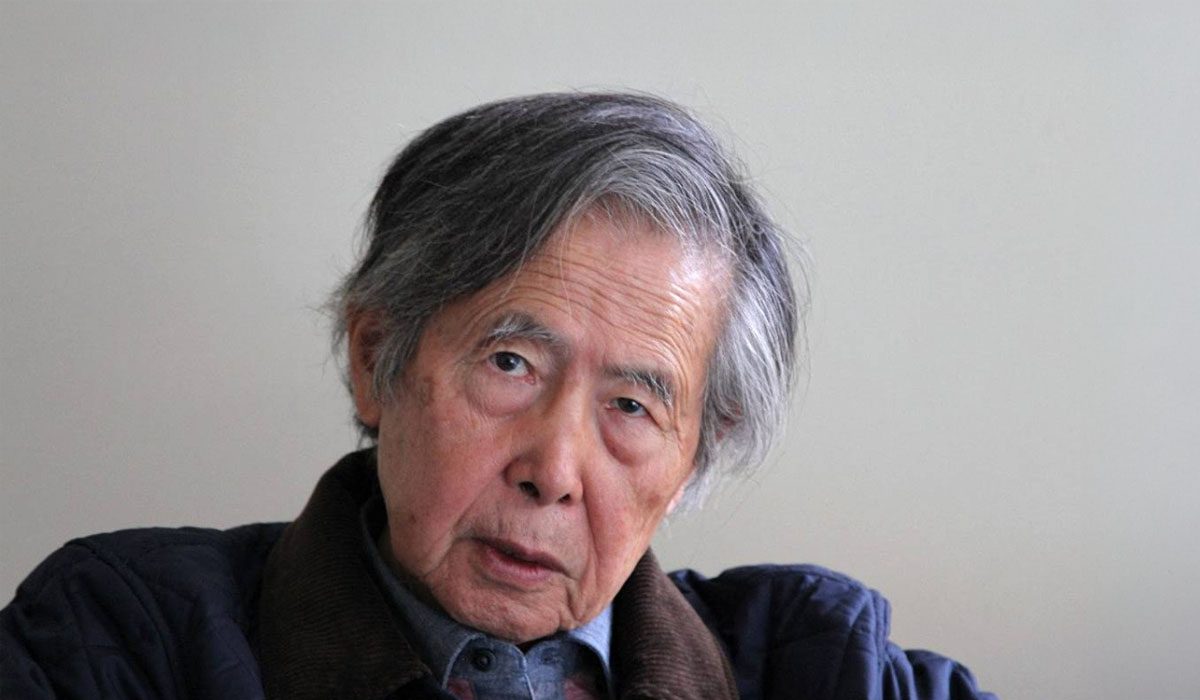

Peru’s former president Alberto Fujimori, has died in his Lima residence at his age of 86. His daughter Keiko Fujimori confirmed his father’s death X (Twitter) post. According to the family sources Mr. Fujimor was suffering from some ailments and died of a cancer. Alberto Fujimori is a name that many people in Peru and across the world remember for his strong leadership, but also for his controversial actions. He served as the President of Peru from 1990 to 2000, and his time in office is marked by both success and scandal. To understand who Alberto Fujimori is, we need to look at his background, his rise to power, his achievements, and the controversies that surrounded him.
Early Life and Background
Alberto Fujimori was born on July 28, 1938, in Lima, Peru. His parents were Japanese immigrants who had moved to Peru in search of a better life. Growing up in a humble family, Fujimori was able to receive a good education. He attended the National Agrarian University in Peru, where he studied agricultural engineering. He later moved to France and the United States to further his education.
Despite his Japanese heritage, Fujimori identified as Peruvian. His background in education and science made him different from the typical politicians in Peru, most of whom came from elite or military backgrounds. Fujimori had little political experience before running for president in 1990, but his fresh approach appealed to many people.
The Presidential Election of 1990
In the late 1980s, Peru was going through a tough time. The country was suffering from severe economic problems, including high inflation, unemployment, and a growing national debt. Additionally, the country was dealing with violent groups like the Shining Path (Sendero Luminoso), a terrorist organization that wanted to overthrow the government.
The 1990 presidential election had two main candidates: Mario Vargas Llosa, a famous author, and Alberto Fujimori, who was relatively unknown in politics. While Vargas Llosa was expected to win, many people were unhappy with his economic plans, which involved harsh reforms that would make life harder for poor Peruvians. Fujimori, on the other hand, promised to fix the economy and defeat terrorism without causing too much suffering for ordinary people.
Fujimori’s campaign slogan was “Honesty, Technology, and Work.” His humble background, outsider status, and promises of change helped him win the election in a surprising victory.
Fujimori’s Achievements
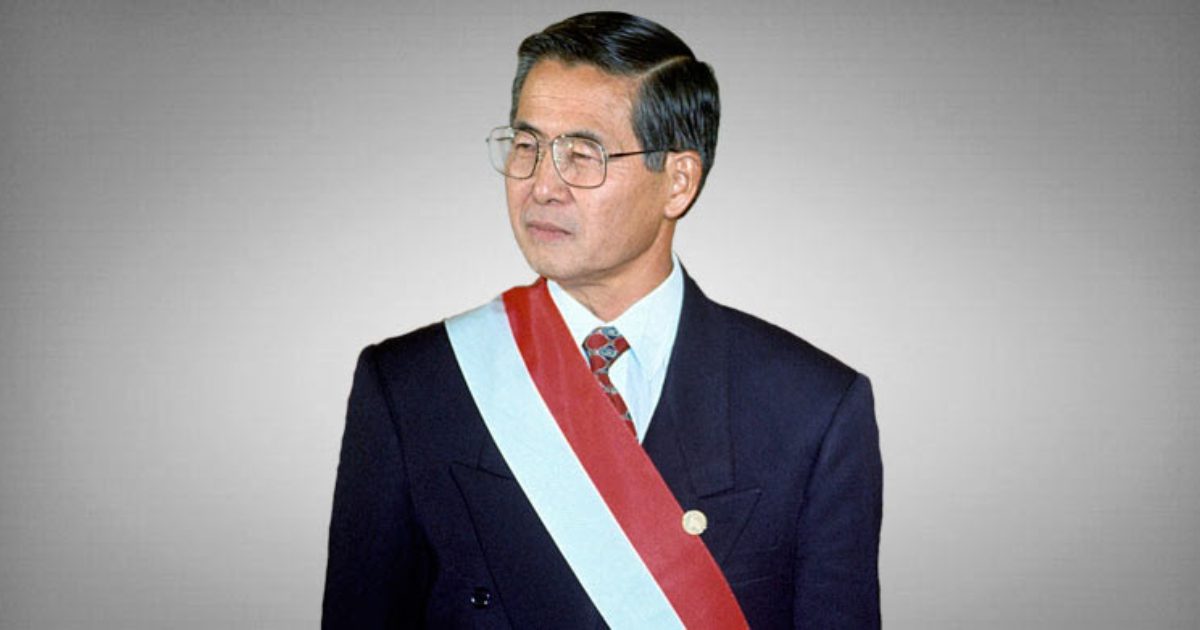
Once in office, Fujimori faced the huge challenge of rebuilding Peru. His presidency had three main priorities: fixing the economy, dealing with terrorism, and improving public services. Let’s look at each of these areas.
1. Economic Reforms:
When Fujimori took office, Peru’s economy was in crisis. Inflation was over 7,000%, and the country was deep in debt. To fix this, Fujimori introduced strict economic reforms, including cutting government spending, reducing inflation, and privatizing state-owned companies. These measures were painful for many Peruvians, but they helped stabilize the economy. Inflation dropped dramatically, and the economy began to grow again. However, these reforms also increased unemployment and poverty in the short term, which led to criticism.
2. Fighting Terrorism
One of Fujimori’s most significant achievements was his success in fighting terrorism. The Shining Path and another rebel group, the Túpac Amaru Revolutionary Movement (MRTA), were responsible for widespread violence in Peru. Fujimori’s government took a hardline approach to fighting these groups. In 1992, his security forces captured Abimael Guzmán, the leader of the Shining Path, which significantly weakened the organization. By the mid-1990s, the threat of terrorism in Peru had greatly decreased.
3. Improving Public Service
Fujimori also focused on improving infrastructure, health care, and education in Peru, especially in rural areas. His government built new roads, schools, and hospitals, helping to improve the lives of many people living in poverty. These efforts made him popular among poorer Peruvians, who had long been neglected by the political elite.
The 1992 Self-Coup
While Fujimori’s early years in office were marked by success, his presidency became more controversial in 1992. On April 5, 1992, Fujimori dissolved the Peruvian Congress and suspended the constitution in what is known as a “self-coup” (auto-golpe). He claimed that the Congress was blocking his efforts to fix the country and that extreme measures were needed.
This move shocked the world and was seen as an attack on democracy. However, many Peruvians supported Fujimori’s decision because they believed that the political system was corrupt and inefficient. With the military’s support, Fujimori took full control of the government and ruled by decree for a time. He later rewrote the constitution, which gave him more power and allowed him to run for a second term.
Human Rights Violations
During Fujimori’s time in office, his government was accused of serious human rights abuses. While the fight against terrorism was largely successful, it came at a high cost. Security forces were accused of committing extrajudicial killings, torture, and disappearances. One of the most notorious events was the Barrios Altos massacre in 1991, where government forces killed 15 people, including an 8-year-old child, in an operation against suspected terrorists.
In addition, Fujimori’s government was involved in a forced sterilization program in the late 1990s. Over 200,000 women, mostly indigenous and poor, were sterilized without their consent as part of a family planning initiative. This program was meant to reduce poverty, but it caused widespread suffering and violated the rights of thousands of women.
The Fall of Fujimori
Fujimori’s downfall began in 2000, during his campaign for a third term in office. Despite the fact that the constitution limited presidents to two terms, Fujimori found a legal loophole that allowed him to run again. His victory in the 2000 election was widely criticized as fraudulent, and protests erupted across the country.
The final blow came when a corruption scandal involving Fujimori’s intelligence chief, Vladimiro Montesinos, was exposed. Montesinos was caught on tape bribing politicians and media figures, and the scandal quickly spread. Fujimori’s government lost all credibility, and he fled to Japan, where he resigned from office via fax.
Fujimori’s Extradition and Trial
After years of living in exile, Fujimori was arrested in Chile in 2005 while on a trip from Japan. He was extradited to Peru in 2007 to face charges of corruption and human rights abuses. In 2009, Fujimori was found guilty of ordering killings and kidnappings during his presidency and was sentenced to 25 years in prison.
Despite his conviction, Fujimori remained a divisive figure in Peru. Many people, especially those from poor and rural areas, continued to support him and believed that he had saved the country from economic collapse and terrorism. Others saw him as a dictator who had violated human rights and undermined democracy.

Fujimori’s Legacy
Alberto Fujimori’s legacy is complex. On one hand, he is credited with stabilizing Peru’s economy and defeating terrorism, two major achievements that improved the lives of millions of Peruvians. On the other hand, his presidency was marked by authoritarianism, corruption, and human rights abuses.
In recent years, there have been debates in Peru about whether Fujimori should be pardoned or allowed to serve the rest of his sentence under house arrest due to his age and poor health. In 2017, he was briefly pardoned on humanitarian grounds, but the pardon was later overturned after widespread protests.
Fujimori’s daughter, Keiko Fujimori, has also followed in his footsteps, running for president several times and maintaining a strong political presence in Peru. Her political career shows that, even after his downfall, Alberto Fujimori’s influence on Peruvian politics remains strong.
Alberto Fujimori’s rise to power was fueled by his promises to rebuild Peru, and in many ways, he succeeded. However, his methods of achieving those goals came at a great cost. His presidency is remembered for both its successes in economic reform and counter-terrorism, as well as for the abuses and authoritarian practices that led to his eventual fall from power. Today, he remains one of the most controversial figures in modern Peruvian history.